Academia Street
9.25.2026
Where Is the Real Street? Tribeca New Music opened its season at Benzaquen Hall at the DiMenna Center. I went to hear its program of young composers and to find out.
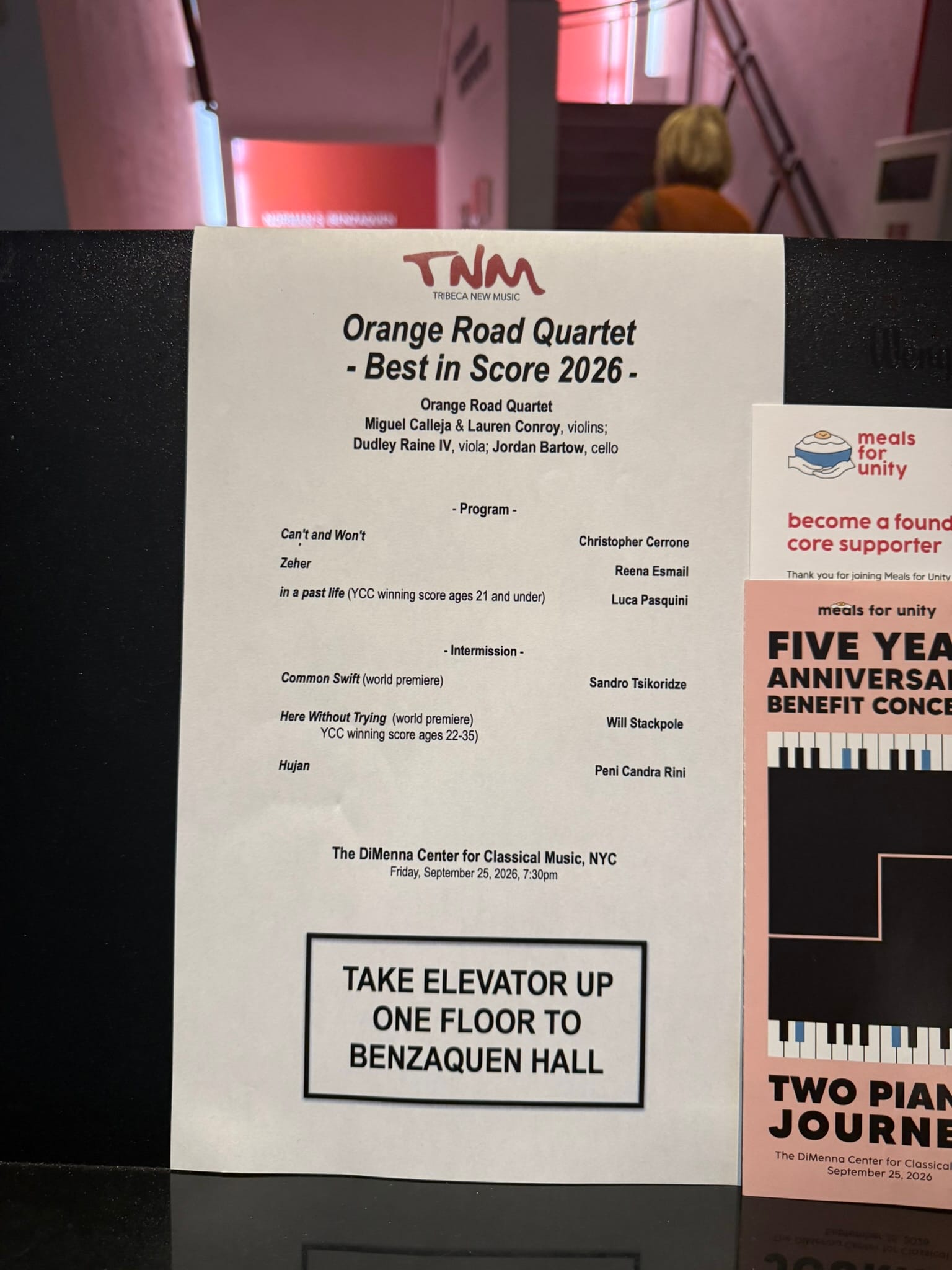
Best in Score 2026
Location
The DiMenna Center — Benzaquen Hall, 10018
Artist
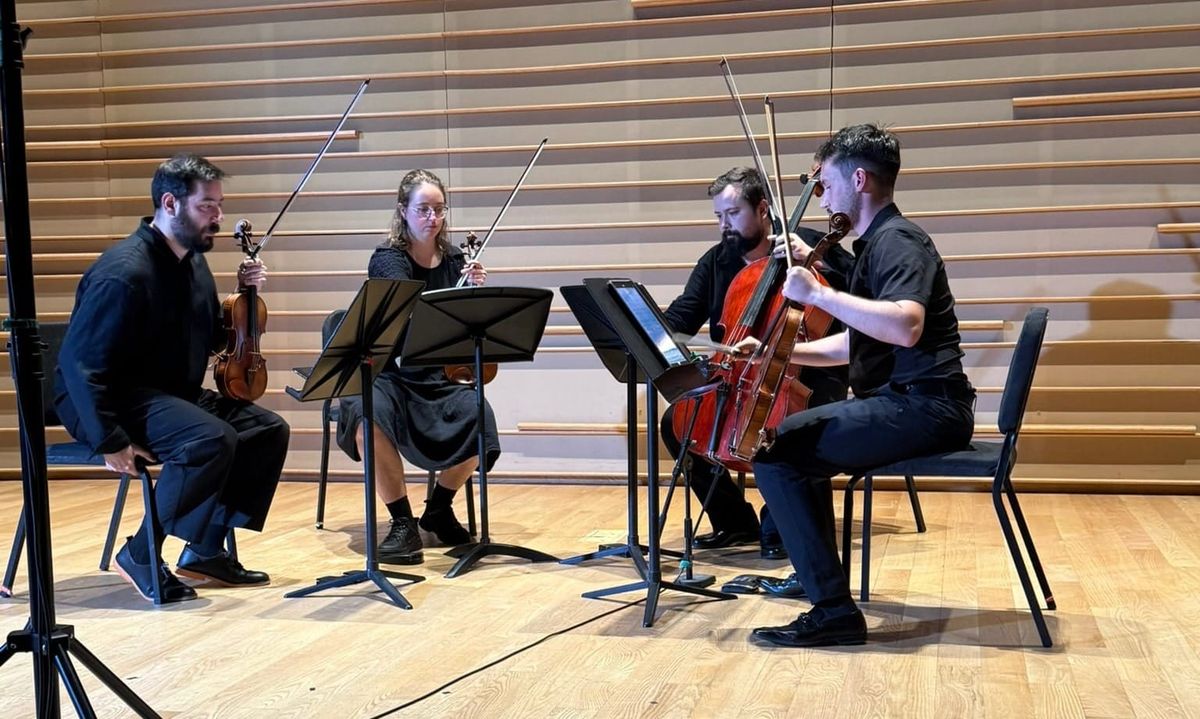
ORANGE ROAD QUARTET
Lauren Conroy and Miguel Calleja, violins
Dudley Raine IV, viola
Jordan Bartow, cello
The house opened at 7, they said, so I sat on a sofa near the reception desk and looked through the program. The young woman at the desk was talking about her personal life with someone the whole time. She lived in Brooklyn, apparently near where I used to live. She was moving somewhere with her husband. From the way she talked, I could tell she was excited about the new life ahead. Where am I? What did I come here for? No one seemed to care about the music that was about to begin. Lauren, the quartet’s violinist, came to the desk with the composer Matthew. They were talking about tickets. After a while, two women arrived. They gave their names at the desk, went inside before 7, and took the seats in the center of the front row. A system where some people are given priority even when they arrive an hour early.
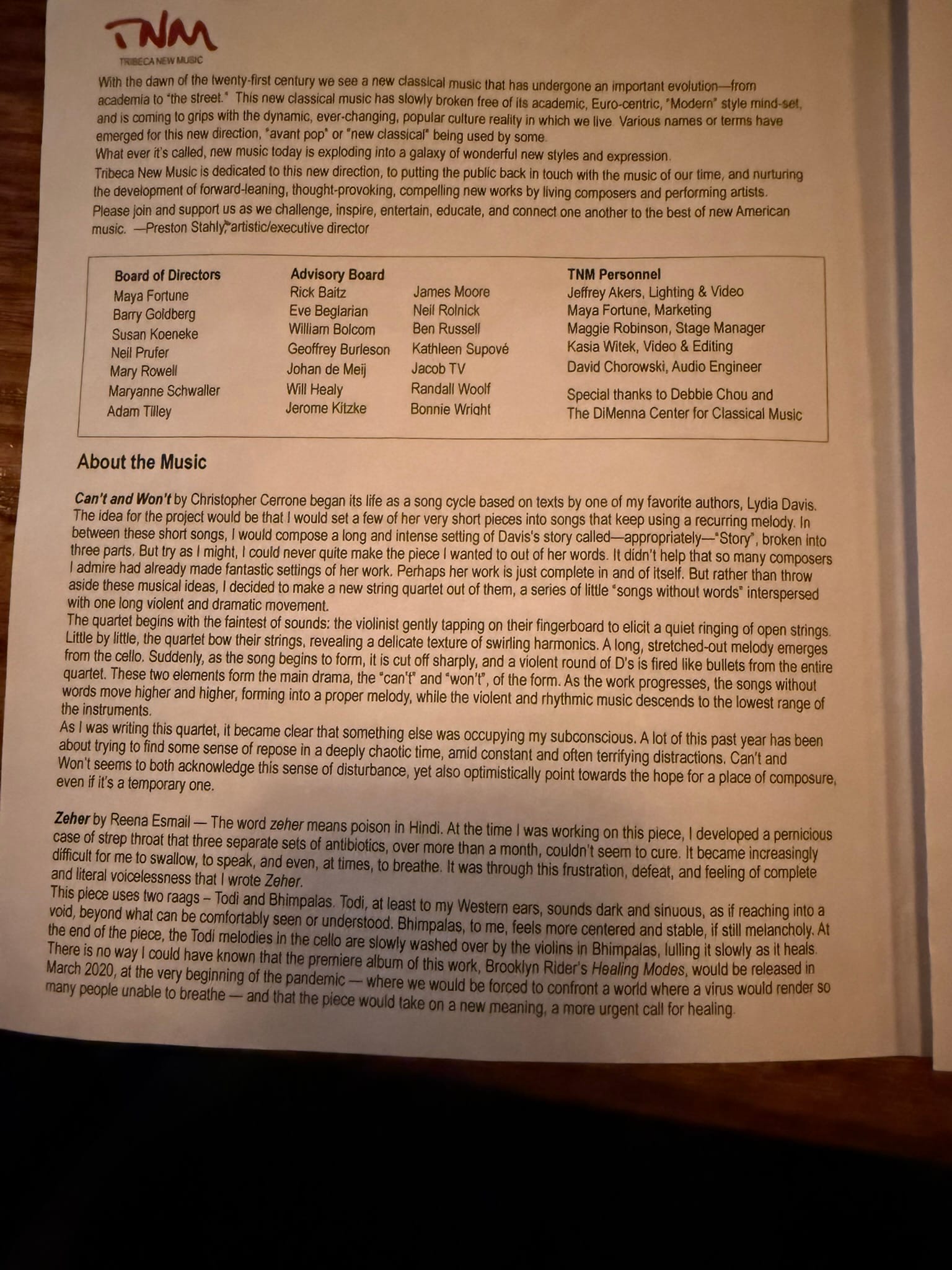
Cerrone’s Can’t and Won’t — “I can’t, and I won’t” — had the feel of the residue of a composer’s accumulated craft. He is a professor at a music school. He knows how to make the voice of the music inside him appear distant and faint. As if trying to refine the sound even further, what we might call a beautiful melody begins to drift through the music. Then, from somewhere behind it, an extreme tremolo emerges. It has the urgency of Siegfried being driven to the edge, like the opening of Wagner’s Die Walküre. None of the phrases ever completely resolve. As I was swallowed up by that storm, music that sounded like the rock I used to listen to began to drift somewhere far away. The music hadn't returned. Only the memory of music remained inside me, rising from a distance. The contrast of Orange Road’s intense tremolos and the melodies emerging from its deeply concentrated layers of sound seemed to call up something deep in the human psyche. Perhaps this was the temporary place of calm Cerrone was talking about. I was drawn to the feeling of trying to do something and being prevented from doing it. But it was far removed from the raw pain of people whose lives are disrupted by sound twenty-four hours a day by the creaking floors and vibrations of apartment buildings in Queens.
Esmail’s Zeher followed. The title means “poison” in Hindi, and she wrote the piece about her recovery from an infection. Two ragas pull the melody in different directions. Just as one melody tries to settle, the other pushes it away. Rather than blending into a clean harmony, they overlap while retaining their separate contours. Two different currents seemed to enter the body at once, as raw as the pain of gradually recovering from nausea and sickness. The solo instruments, including the cello, moved through the music as if crawling through the body while imitating the ragas. But every time the music returned to the ensemble, as if entering a coda, it suddenly became fixed, and I felt as if I had been abruptly brought back from the distinctive world of the ragas into a Western framework.
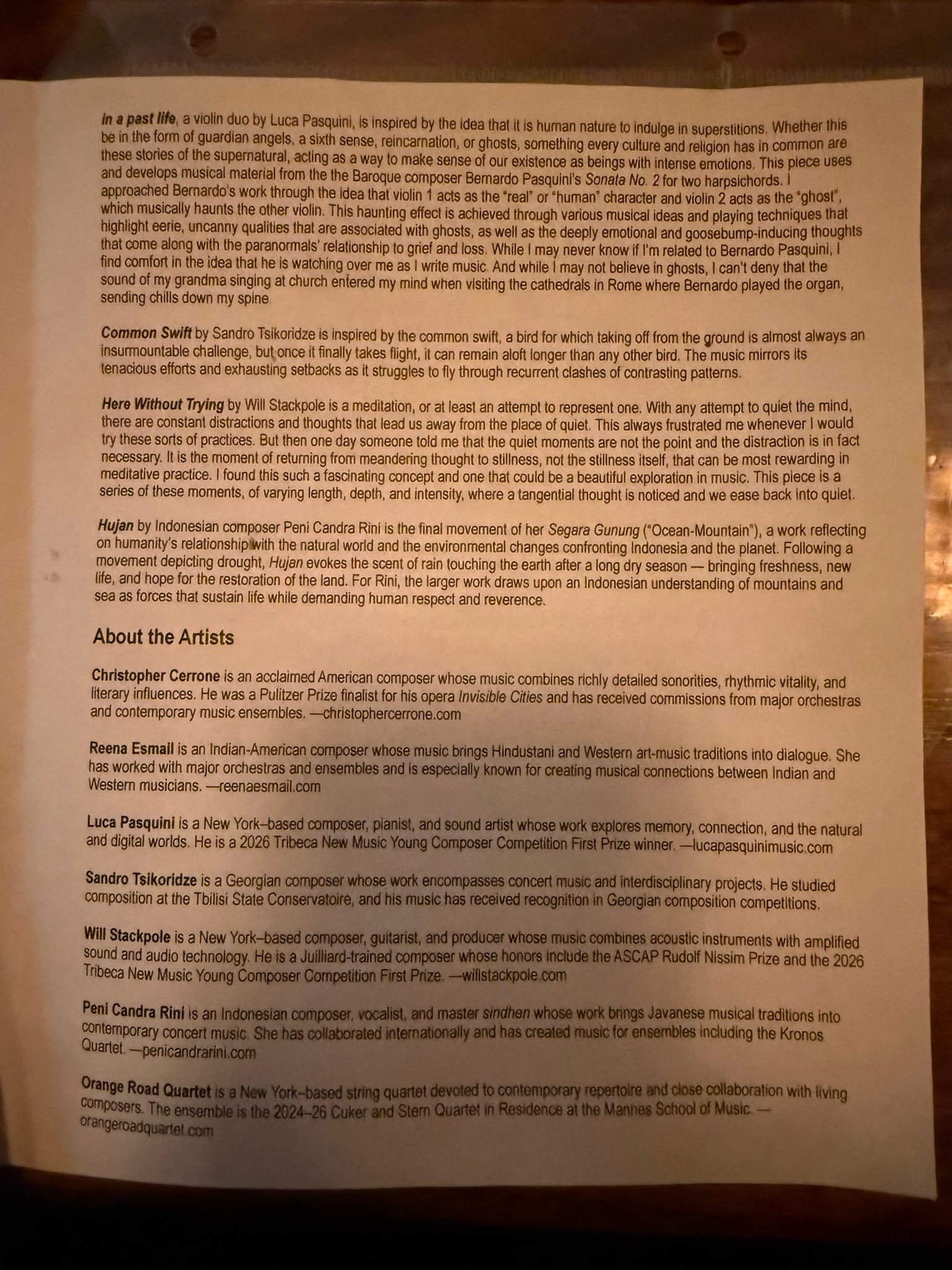
Pasquini is a 22-year-old NYU student. Arpeggios played by two violins swept around in wide circles, and two different times seemed to move toward and away from each other. Because I had read the program beforehand, I began to feel as if the time of someone who had lived before me was overlapping with my own. As I listened, the circling sound of the violins created a sense of the present and the past meeting. The two times moved apart in great circles, then came close again. Each time the distance changed, it sounded as if the distance between someone in the distant past and myself, here and now, was changing too.
Sandro’s piece about the flight of a swift contained both the struggle before taking flight and the sensation of the moment it finally flew. It sounded like a kind of techno unique to Tbilisi. Something rose from deep inside the body, then suddenly came the feeling of being released from gravity. It was different from the idea of flight found in classical music. It was closer to the body, closer to the night of a city. I thought this was not the kind of sound you could find just anywhere. It was music that could only come from that place, and I loved hearing it.
Will had turned meditation into music. He chants what is essentially “Om,” trying to settle his mind and meditate quietly. But one thing after another keeps entering his consciousness. Still, he keeps trying to return. At some point, he begins humming while playing his instrument. Something about how absurd contemporary music can be almost made me laugh. At the end, all four members of the quartet let out a long breath. It was almost exactly like being in a yoga studio with a room full of people, trying to be still while hearing someone else breathe, feeling bodies move, and watching your own mind wander away. It had almost the same mood as that studio. I thought of Sam’s piece from last week about the noise of Brooklyn. That piece, too, felt like a little scene from the neighborhood itself. The inability to concentrate, the humor, even the breathing while trying to meditate had all become music. Julia Wolfe’s piece about an Italian lesson felt something like this too, except that at Zankel Hall the audience was literally asleep, and their breathing became part of the piece.
The program ended with Peni Candra Rini. Listening to the Indonesian folk song “Rain,” I thought back through the five pieces I had just heard. Flight, poison, two times, meditation, and rain. And that was how the concert ended.
This is charitable work: opening contemporary music from academia to the street. In reality, I saw young composers who had studied at good schools performing in a proper venue, in a carefully constructed program.
I felt the same phenomenon I had sensed at Tanglewood. It reminded me of the PTA in the Japanese school system. The structure of classical music itself remains largely unchanged, while new composers and people from different cultural backgrounds are brought into it, making the world appear more open.
Where Is “the Street”? — Tribeca New Music
アカデミアストリート
9.25.2026
「アカデミアからストリートへ」を掲げるTribeca New Musicの若い作曲家たちによるプログラムを聴きに、ディメンナ・センターのBenzaquen Hallへ出かけた。70席ほどのスタジオで、弦楽四重奏を聴くにはちょうどいい。ジュリアードのMorse Hallと同じくらいだろうか。ただ、音の印象は少し違う。こちらのほうが落ち着いている。Morse Hallが音のエネルギーを引き出すのに対して、Benzaquen Hallは音をそのまま受け止めるように感じる。
7時に中に入れると言われたので、受付前のソファに座ってプログラムを眺めていた。 受付の若い女性は、ずっと自分の身の上話を誰かとしていた。ブルックリンに住んでいて、私が昔住んでいたところの近所らしい。夫とどこかへ引っ越すという。その話し方から、これから始まる新しい生活にウキウキしている様子が伝わってきた。ここはどこだ。私は何をしにここへ来たのだろう。誰もこれから始まる音楽のことなど気にしていない。カルテットのバイオリニスト、ローレンが作曲家のマシューと一緒に受付にやってきた。チケットの話をしている。しばらくすると、女性が二人やってきた。受付で名前を告げると、7時になる前に中へ入り、一番前の真ん中の席に座っていた。1時間前に来ても、誰かが優先されるストリートだ。
セローネのCan’t and Won’t、できないし、するつもりもないには、積み上げてきた作曲家の手垢のようなものを感じた。彼は音楽学校の先生だ。自分の心の中にある音楽の声を、遠く、薄く見せる技術。そこからさらに音を研ぎ澄まそうとするように、いわゆる美しいメロディが漂ってくる。すると、その奥から極まったトレモロが現れる。ワーグナーのワルキューレの冒頭のような、追い詰められたジークフリートの切迫感だ。どのフレーズも完全には解決しない。そのままその嵐に飲み込まれていくうちに、昔よく聴いていたロックのような音楽が遠くのどこかで漂っている。オレンジロードの激しいトレモロのコントラストと、深く集中した音の層から浮かび上がるメロディは、人の深層心理を呼び起こす。これがセローネの言う、一時的に落ち着ける場所なのかもしれないが、私は、しようとしても邪魔されてできない感覚に惹かれた。しかし、これはクイーンズのアパートビルで床の軋みや振動のため、24時間、音で生活を妨げられている人々の生々しい痛みからは程遠い。
続くエズマイルのZeherは、ヒンディーで毒を意味し、彼女の感染症からの回復を曲にしたという。二つのラーガが、それぞれ別の方向へ旋律を引っ張っていく。一方の旋律が落ち着こうとすると、もう一方がその場所を押し返す。音程がきれいに溶け合うというより、互いの輪郭を残したまま重なり、身体の中に二つの異なる流れが同時に入り込んで、気持ち悪さから少しずつ回復していくときの痛みのように生々しかった。チェロなどのソロ楽器がラーガを模倣する演奏が、体の中を這うように動いた。しかし、コーダのようなユニットに戻るたび、音楽は急に固定され、独特のラーガの世界からいきなり西洋の枠に戻された気分がした。
パスクワーニは22歳のNYUの学生だ。二本のヴァイオリンによる分散和音が大きく旋回し、二つの時間が遠ざかったり近づいたりする。先にプログラムを読んでいたから、自分より前に生きていた誰かと、今の自分の時間が重なるように感じた。実際に聴いていると、バイオリンの音の旋回が、今と過去が出会うような感覚を覚えさせる。二つの時間が大きく旋回しながら離れていき、また近づいてくる。その距離が変わるたびに、遠い過去にいる誰かと、今ここにいる自分との距離が動いているように聴こえた。
サンドロの燕の飛翔を描いた曲には、飛び立つまでの苦しみと、飛翔した瞬間の感覚があった。それが、トビリシ独特のテクノのように聴こえた。身体の奥から何かがせり上がり、突然、重力から解放されるような感覚。クラシック音楽の中にある飛翔とは少し違う。もっと体に近く、もっと都市の夜に近い。こういう音は、どこに行っても手に入るものではないと思った。その土地の感覚からしか出てこない音楽が聴けて最高に楽しかった。
ウィルは瞑想を音楽にしていた。いわゆるオームと唱え、心を整えて静かに瞑想しようとする。けれど、意識には次から次へといろんなものが入り込んでくる。それでもまた戻ろうとする。そのうち、楽器を弾きながらハミングし始める。コンテンポラリー音楽独特のナンセンスさに、思わず笑いそうになる。最後にカルテットの4人がハーッと息を吐く。それは、ヨガのスタジオでたくさんの人たちと一緒にクラスを受けて、静かにしようとしても、誰かの呼吸が聞こえ、身体が動き、意識がどこかへ行ってしまう。あのスタジオにあるムードと、ほとんど同じだった。先週聴いた、ブルックリンの喧騒を描いたサムの曲を思い出した。あの曲も、まるでその近所の一コマだ。瞑想しようとしている最中の、集中できなさや可笑しさや呼吸まで、そのまま音楽になっていた。ジュリア・ウォルフィ―のイタリア語レッスンという曲もこんな感じだったが、その時、ザンケルの客はガチで寝ていて、寝息も作品の一部だった。
最後はPeni Candra Rini。インドネシアの民謡の「雨」を聴きながら、これまでの5人の曲を思い返していた。飛翔、毒、二つの時間、瞑想、そして雨。こうして公演は終わった。
この慈善活動は現代音楽をアカデミアからストリートへ開くことだという。実際は、いい学校で学んだ若い作曲家たちが、きちんとした会場で、きちんとしたプログラムに仕立てられた演奏をする姿だった。
これはタングルウッドと同じ現象を感じた。日本の学校制度にはPTAというものがあるがそれとも似ていた。クラシック音楽の仕組みそのものはあまり変えず、その中に新しい作曲家や新しい文化的背景を持つ人たちを加えることで、“開かれた世界”に見せている。
本物のストリートはどこだ!
Comments ()