The Last Dance: Petrenko and the Berlin Philharmonic at Carnegie Hall
10.11.2026
The Berlin Philharmonic at Carnegie Hall: Day Four
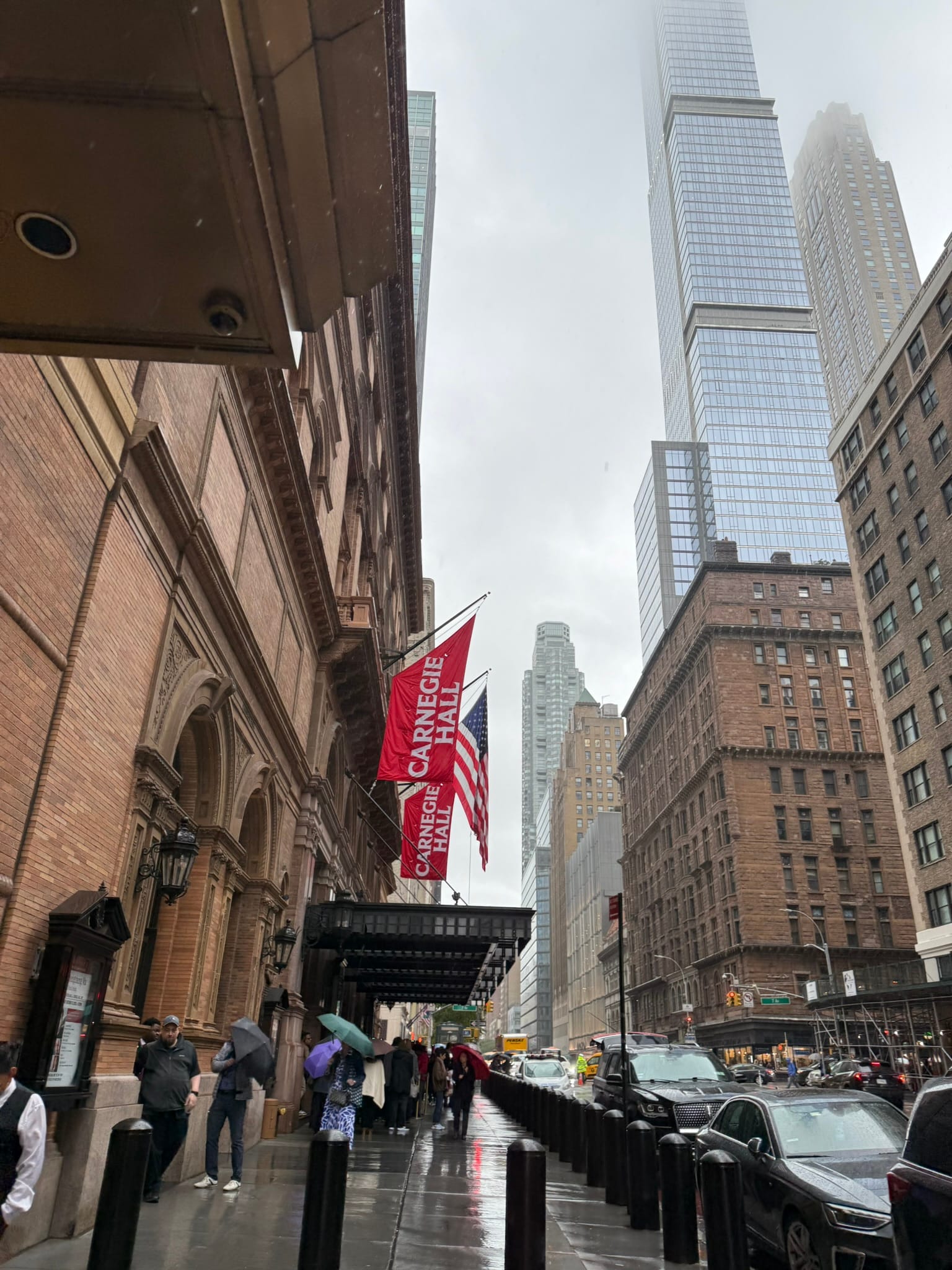
Rain.
The fourth and final performance of the Berlin Philharmonic’s Carnegie Hall residency. The program matched Friday’s: Brahms and Strauss. Familiar music fans sat beside me. The orchestra appeared onstage. The string section looked different from the previous performances, with more veteran faces among the players. Diyang Mei, one of the principal violists, was absent, and Amihai Grosz took the principal’s seat last.
The tuning ended. The audience waited with bated breath for Petrenko and Ólafsson to appear. But the two took their time. I hadn’t looked at the clock, so I had no idea how long we had been waiting. It felt like sitting on a runway, waiting for a plane to take off.
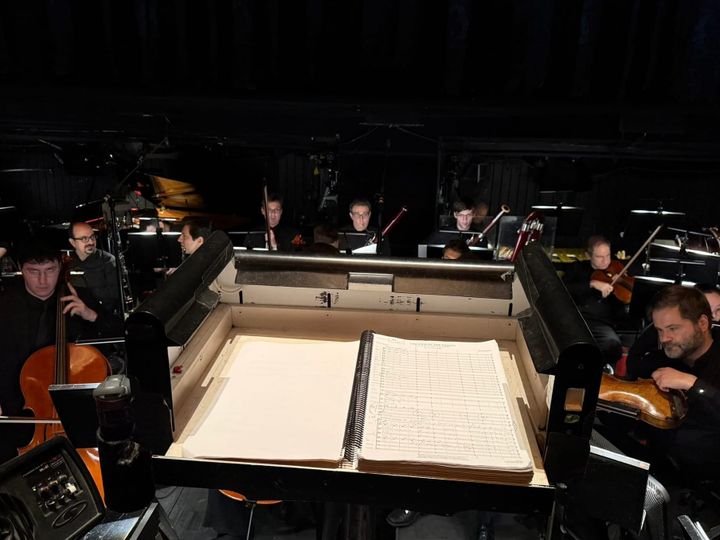
The orchestra members kept making sounds, checking their fingers and reeds, pulling different instruments and tools from their cases, and switching things around. They were preparing themselves and their instruments to begin the performance in the best possible condition.
The delay stressed the audience, too. Still, I enjoyed listening to the little sounds spilling out of the instruments, from the double basses to the timpani. The fragments overlapped, sounding like contemporary music. As I talked with the people beside me, Kinoshita, and the others about why the performance was delayed, we also talked about Brahms.
Eventually, someone appeared onstage and explained that a member of the orchestra needed urgent medical attention. It did not seem to involve the conductor or the pianist. After a while, another announcement came: the performance would begin in a few minutes. The audience was given a break in the meantime. Many people had arrived late through the rain, but it seemed they, too, would be able to hear Brahms from the beginning. I left my seat and went to rest at the café. In the hallway, I noticed a photograph of Bruno Walter.
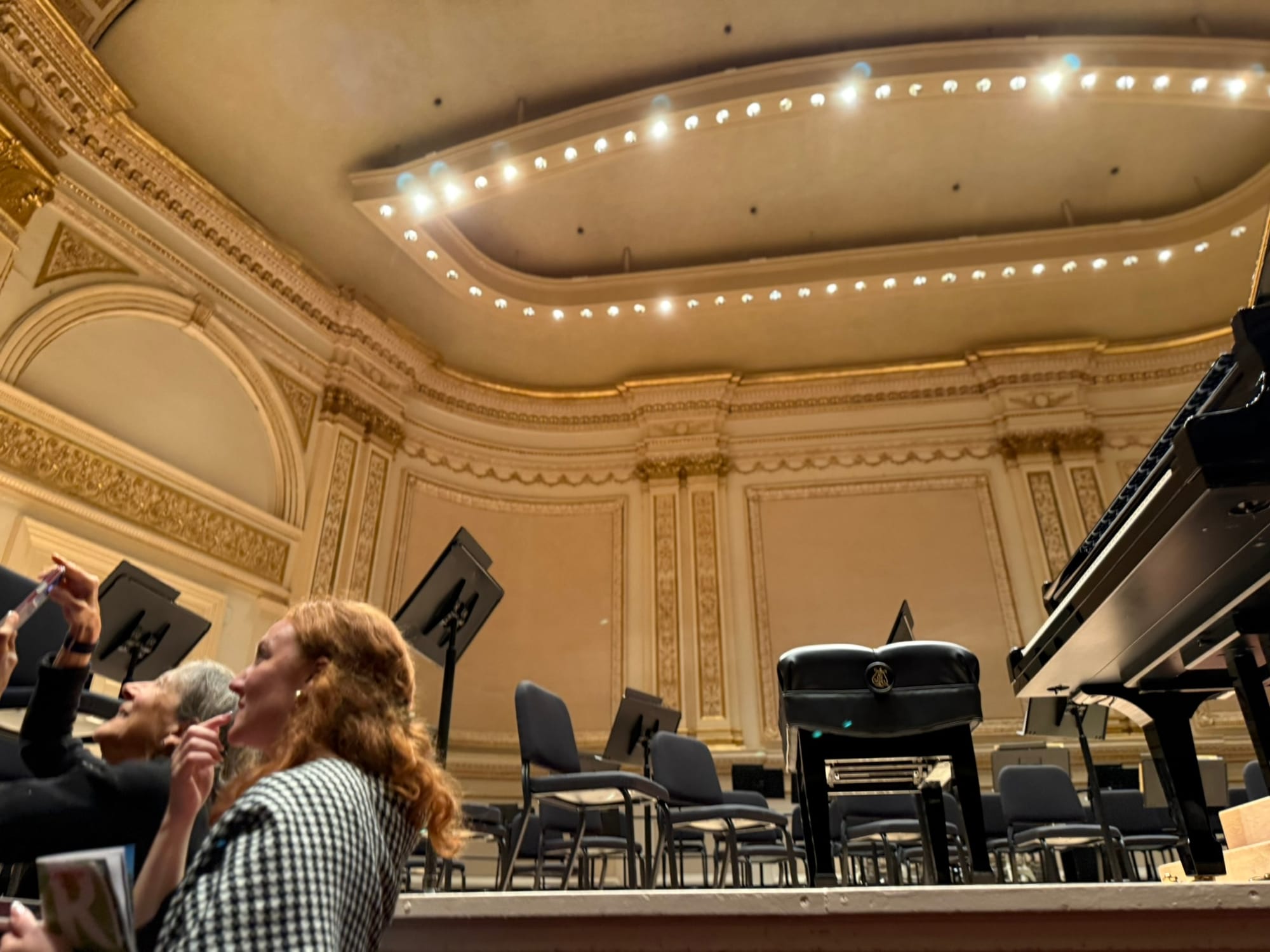
When I returned to my seat, several people were taking pictures in front of the stage. People of different ethnic backgrounds had gathered there. It was almost as if the concert belonged to them. To me, it felt like a timeless Carnegie Hall scene.
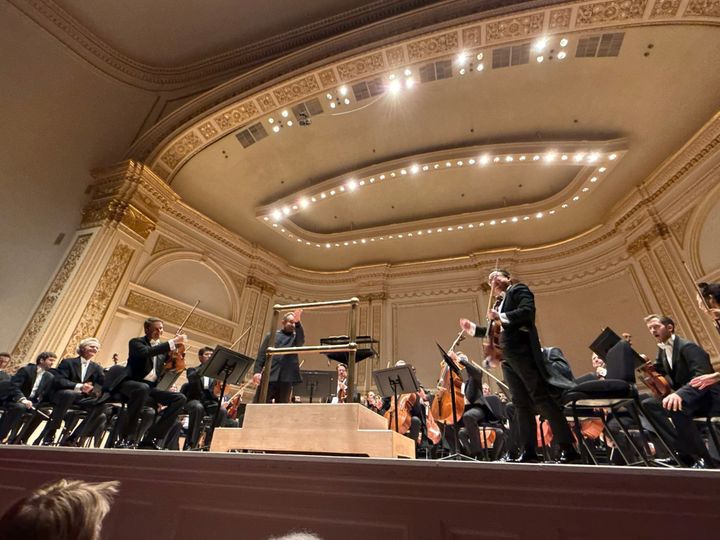
The performance was about to begin again. The musicians returned to their seats. Once everything was ready, Petrenko appeared with the pianist Víkingur Ólafsson. Petrenko’s face was bright red. He looked angry.
They seemed to have reached peak readiness right up to the moment they stepped onstage. The delay had been an unexpected disruption. Yet when they began Brahms’s Piano Concerto No. 1, they were already sharpened and focused for the performance. Wieland Welzel’s timpani raged and thundered, almost like violence. The impact of a typhoon. The Berlin Philharmonic was growling.
Ólafsson’s touch sounded far more substantial than it had two days earlier. Why?
The brief opening solo by Daishin Kashimoto, Stefan Dohr's horn solo, the exchanges between the piano and oboe that followed, and the fresh tone of Emmanuel Pahud’s flute all stood out. Ólafsson’s high notes rang out with a piercing kaaan. The body of the Steinway was releasing Brahms. Rather than hearing Ólafsson’s performance alone, I heard the piano's entire body sounding Brahms.
The exchanges among the strings felt like the markings of the human soul. Daishin and the other players curled their bodies inward, then leaned far back, sometimes almost rising from their seats. They released the sound through their whole bodies. The impulses and explosions of individual musicians gathered together, and the orchestra began to sound like a single instrument. The very cells of the Berlin Philharmonic were unfolding Brahms’s passion across Carnegie Hall.
Their performance was unmistakably different from the one two days earlier. The musicians seemed like wild creatures making sound, their playing sparking against Petrenko’s consciousness. Even players seated beside one another at the same music stand checked each other’s tone through bow and string, shifting it ever so slightly, competing and refining one another. I sensed this instinctively. Something in the Berlin Philharmonic’s DNA felt different from Vienna. Something about them was different from other orchestras.
Even in the second movement, in passages that seemed to tighten around the heart, I was not swept away by emotion. Instead, I enjoyed the extraordinary range of colors in the sound and Ólafsson’s pianism. It felt like dissolving into the human heart. When I raised my head once, I saw Ólafsson resting his head against the piano. It was as if he were listening intently to the voice emerging from the piano’s body. We heard Brahms's voice as a piano, through Ólafsson.
In the third movement, Ólafsson played the Steinway concert grand almost as if it were a harpsichord. The piano and orchestra engaged in a dialogue with such intimacy that the vast concert hall seemed to transform into a private salon. The fourth-day performance had several times the resolution of the one I had heard two days earlier. The sound's contours were sharper, and the timbres of the individual instruments more vivid. When the piano spoke, the orchestra answered; when the orchestra posed a question, the piano responded. Their exchanges sounded more intricate and more incisive. Ólafsson continued playing without surrendering to personal emotion, maintaining a kind of emotional neutrality. As the rhythmic figures pressed forward, the piano sounded increasingly like a harpsichord, and the sound seemed to detach itself from the instrument, taking shape and floating in the space.
During the fugue, I felt as if time itself were moving backward. The piano imitated the passage in changing keys, then headed toward the climax once more. The theme spread through the orchestra, and the music swelled into a great climax. It was a grand, exuberant dance, reminiscent of the rondo in the finale of Beethoven’s Piano Concerto No. 5. Petrenko led the music with the ferocity of a beast, driving the orchestra and igniting each finely honed note. The Berlin Philharmonic’s sound was vivid in every detail, yet the orchestra as a whole surged like a gigantic living organism. The Brahms that filled Carnegie Hall was so incandescent that it seemed almost impossible to believe it was the same work.
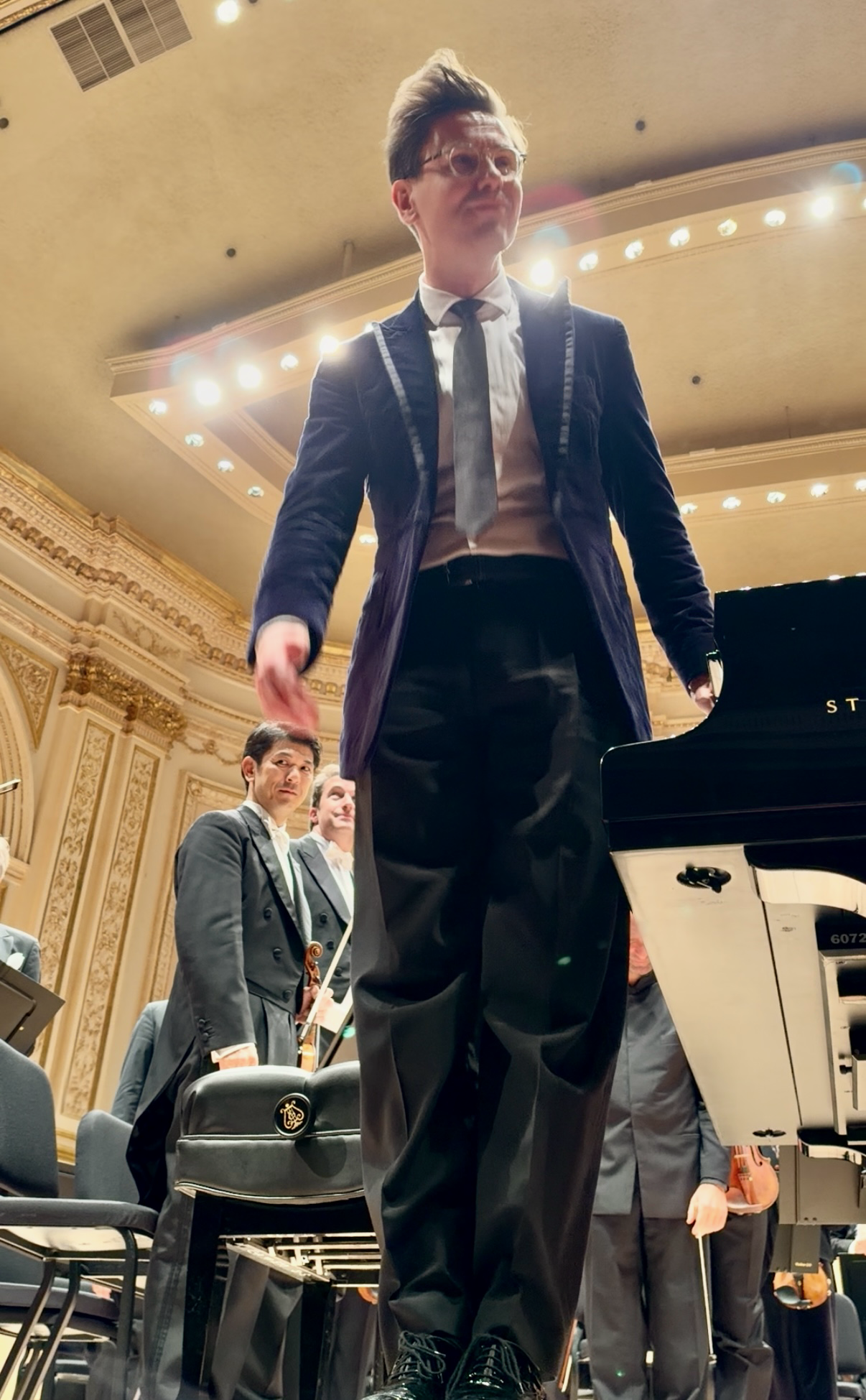
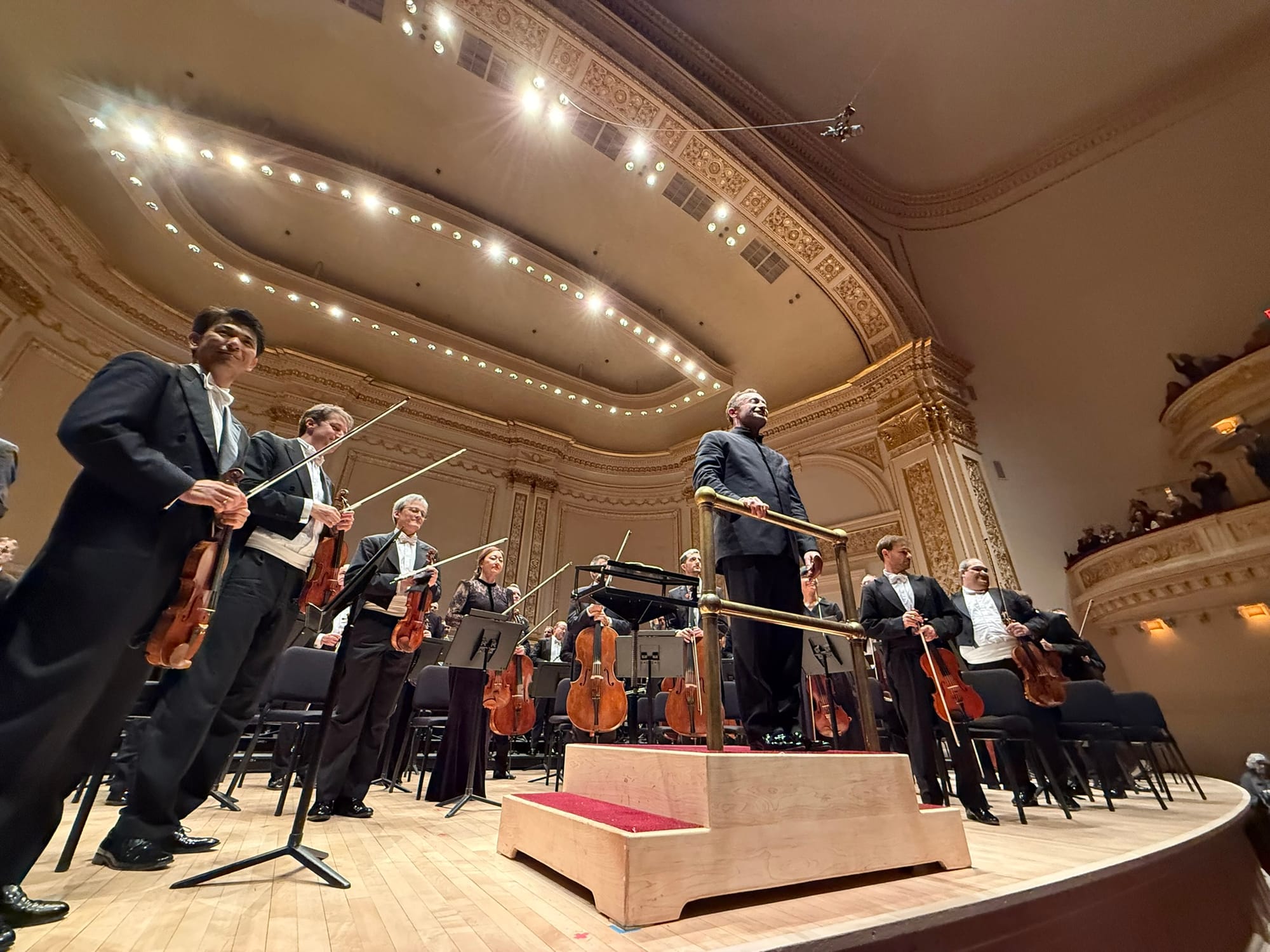
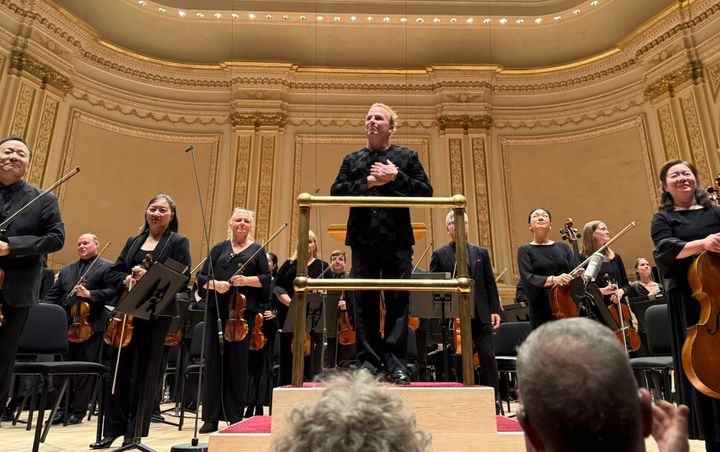
When the performance ended, Petrenko stood between Ólafsson and the orchestra, beaming broadly and smiling out at us.
The orchestra had previously presented monumental late-Romantic works, including Bruckner and Mahler. This time, it turned to Brahms, a central composer in the Berlin Philharmonic’s repertoire. To my ears, Petrenko revealed a Brahms utterly different from Abbado’s or Rattle’s. The details emerged with striking clarity, and the musicians shaped the music through their constant responses to one another. That intricate dialogue joined with the energy radiating from Petrenko’s body, setting the entire orchestra in motion like a single living organism.
After the intermission, the orchestra began Also sprach Zarathustra. The second performance was more fully realized than the first in every respect, from its scale to its detail. I felt the distinctive breath of the Berlin Philharmonic, its musicians calling to one another and responding to each other’s sounds as they played.
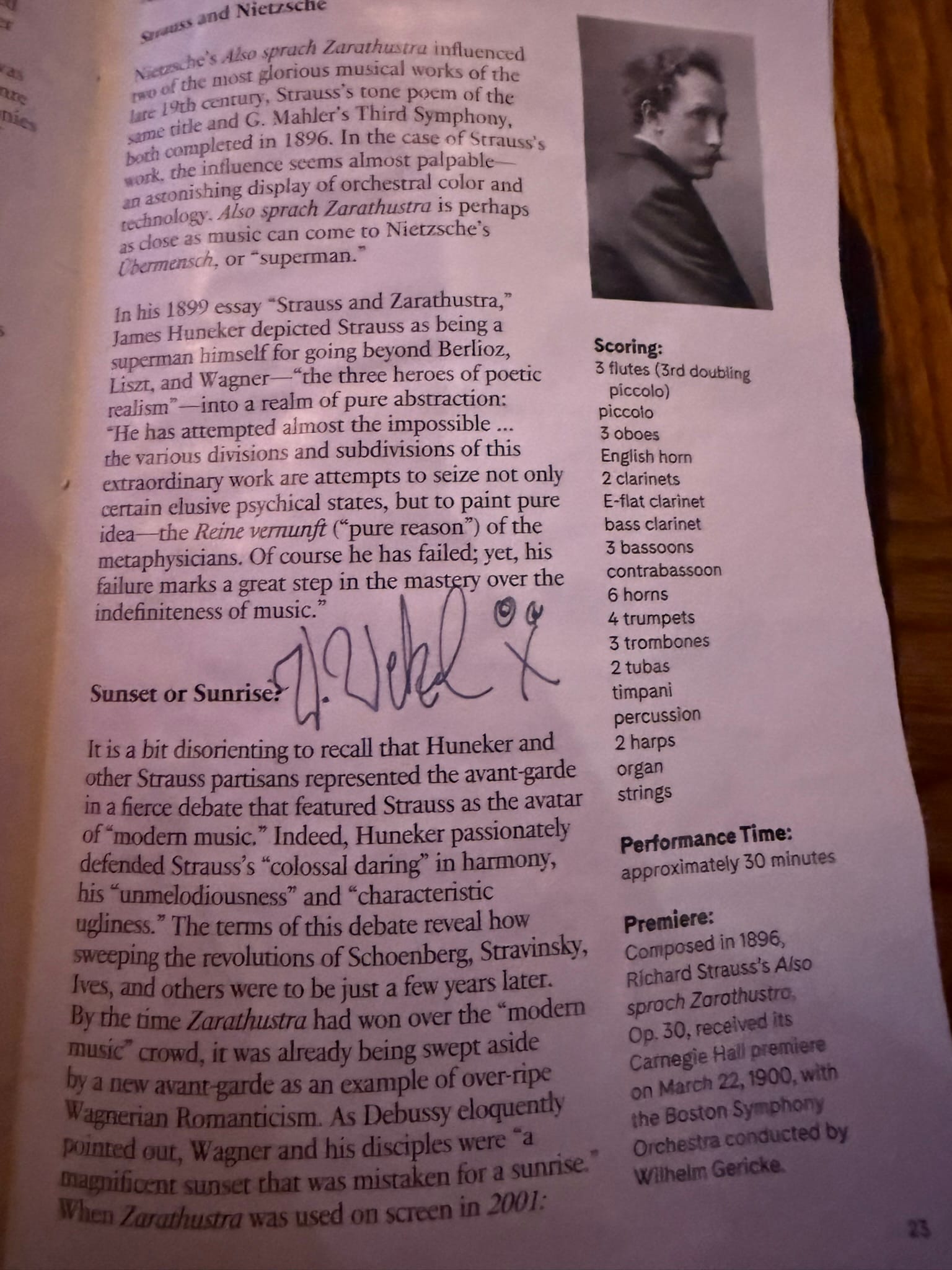
Also sprach Zarathustra is widely known as a musical attempt to express Nietzsche’s idea of the Übermensch, or “Superman.” Writing in a style that recalls the Bible, Nietzsche challenged Christian values. Eternal recurrence, the Dionysian affirmation of life, the possibilities of human existence. Strauss translated these ideas into sound, bringing to life the power and longing latent within humanity.
What drew me in was the coexistence of two forces: the human will to understand the world and nature's power extending beyond it.
The opening begins with sunrise. Having withdrawn from the world, Zarathustra descends the mountain into the rising sun.
Petrenko shaped the trumpet’s entrance so that the sound rose naturally, like the sun slowly emerging above the horizon. He seemed to seek nature's movement in the sound. The orchestra caught the trumpet’s ascent and reflected its light. The sound spread through the space, and the process of merging with the trumpet’s overtones unfolded almost in slow motion. The human spirit became one with nature: an experience beyond reason and intellectual understanding. The Übermensch making the Übermensch resound.
The timpani rolled like light bouncing off the earth, while the organ and bass drum made Carnegie Hall tremble deep within its structure. The heat generated by Petrenko and the Berlin Philharmonic filled the hall. In the second performance, the scale, the layers of sound, and the interactions between instruments came through with greater clarity.
Petrenko’s insight and vision brought the music into being, here and now.
In a passage where sweet melodies intertwine, evoking human longing, the principal viola changed from Diyang Mei to Amihai Grosz. The shapes of sound Amihai traced in that space were beyond words. It was as if he were cutting out the space itself. Seeing it, I understood what it means to be struck speechless.
Diyang’s viola had humanity. Amihai’s viola, by contrast, seemed to reveal the instrument's sound itself, beyond the player's individuality. Although Amihai was playing, I heard the viola itself emerge into existence.
Daishin’s solo, too, had more momentum than in the previous performance. His exchanges with the other musicians were increasingly compelling. In the final duet between Daishin and Noah Bendix-Balgley, seated beside him, every bow movement was played with care, as if bringing these four days to a close. I strongly felt the presence of the Berlin Philharmonic, led by those two.
Petrenko’s wrists and fingers, knees and shoulders, were relaxed and free of tension. From that looseness, he could unleash a crescendo in an instant, driving the Berlin Philharmonic to top speed. The force of his conducting had not changed since 2018, when I watched him from the seat directly behind him. I still felt, as I had then, that his conducting itself was the highest form of art.
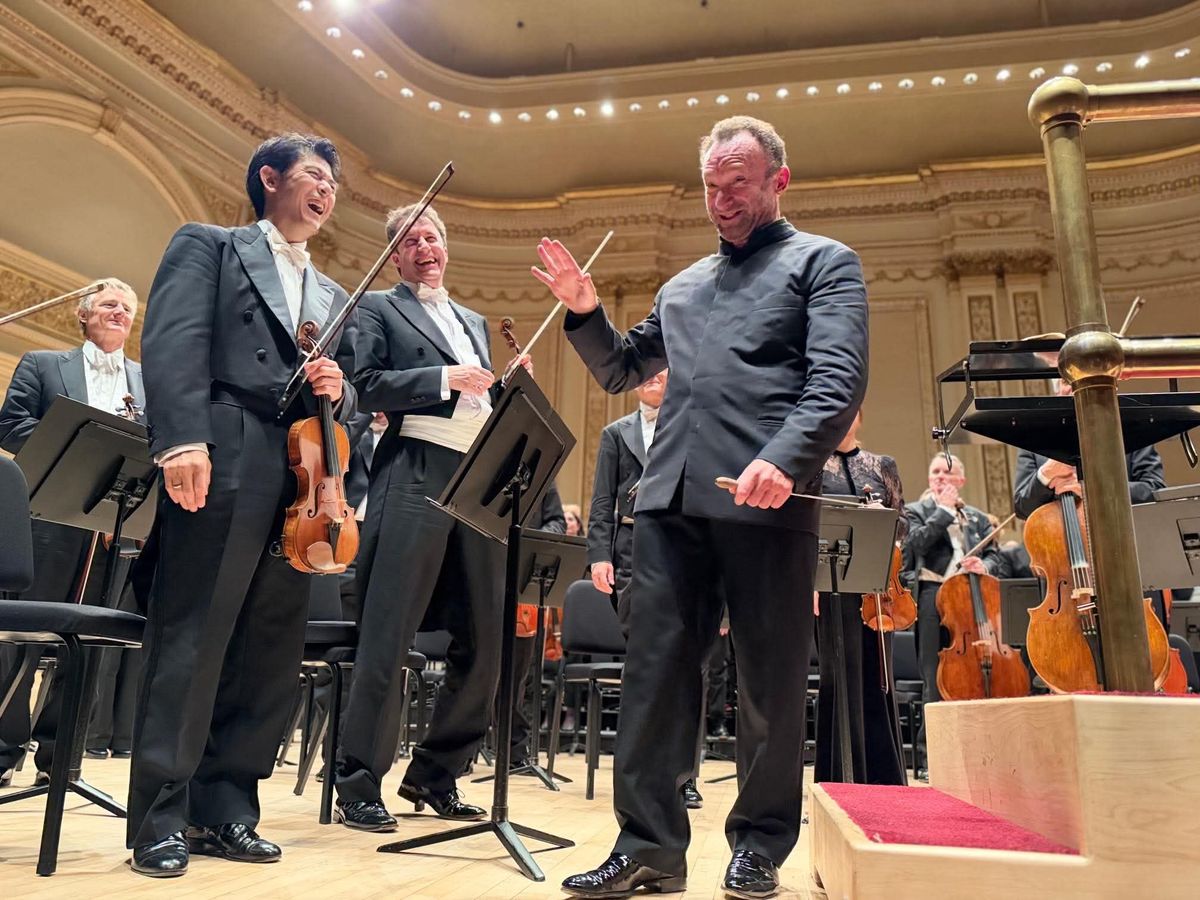
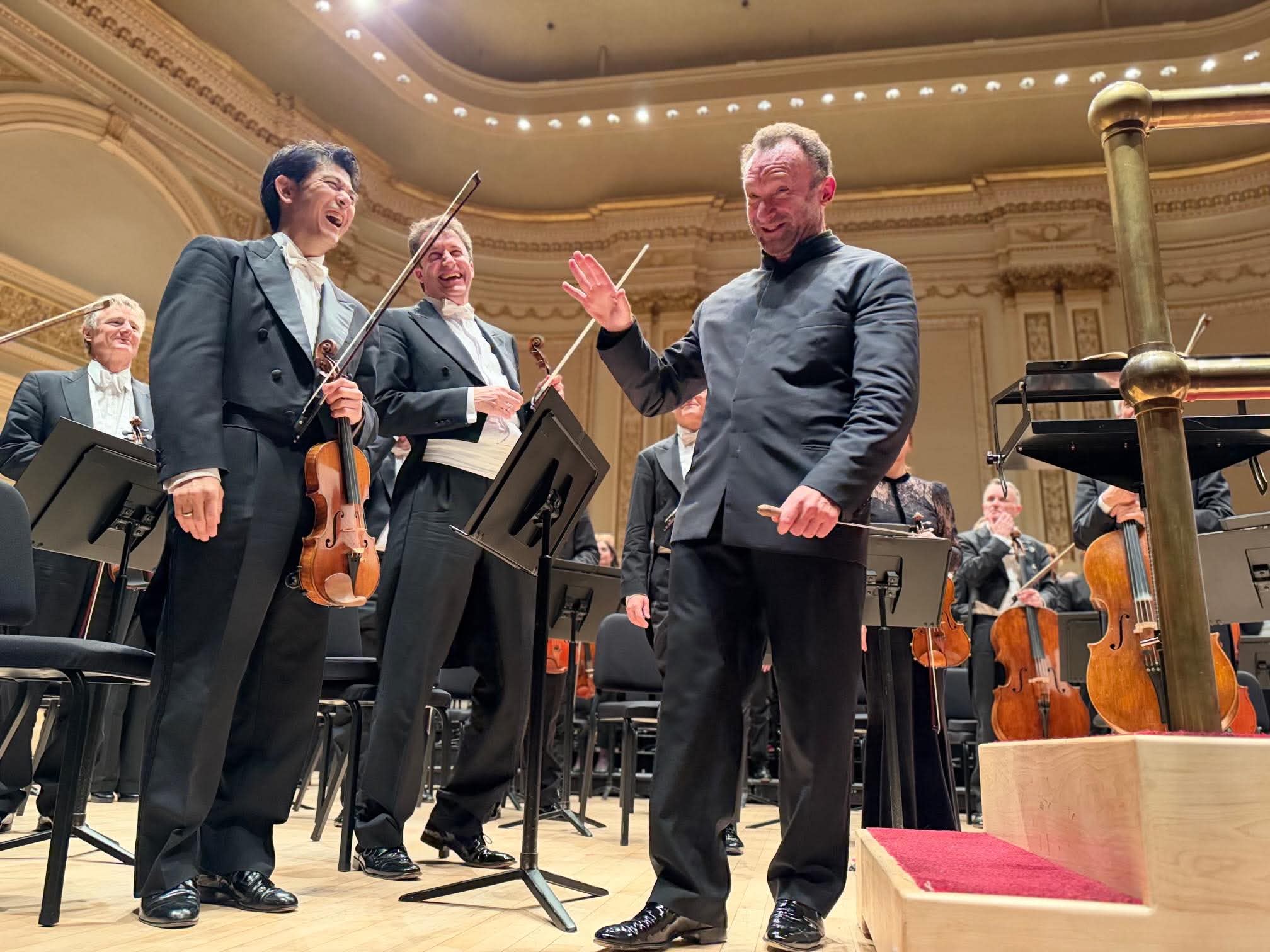
When the performance ended, someone in the audience shouted for an encore. At the fourth curtain call, Petrenko seemed to hear something from Daishin and Noah, and the three of them burst into laughter.
“Maestro! They’re asking for an encore!”
“No, no, we’re good! That’s enough!”
That was how it looked to me, as if they were exchanging those words.
What a wonderful four days with the Berlin Philharmonic at Carnegie Hall.
Performers
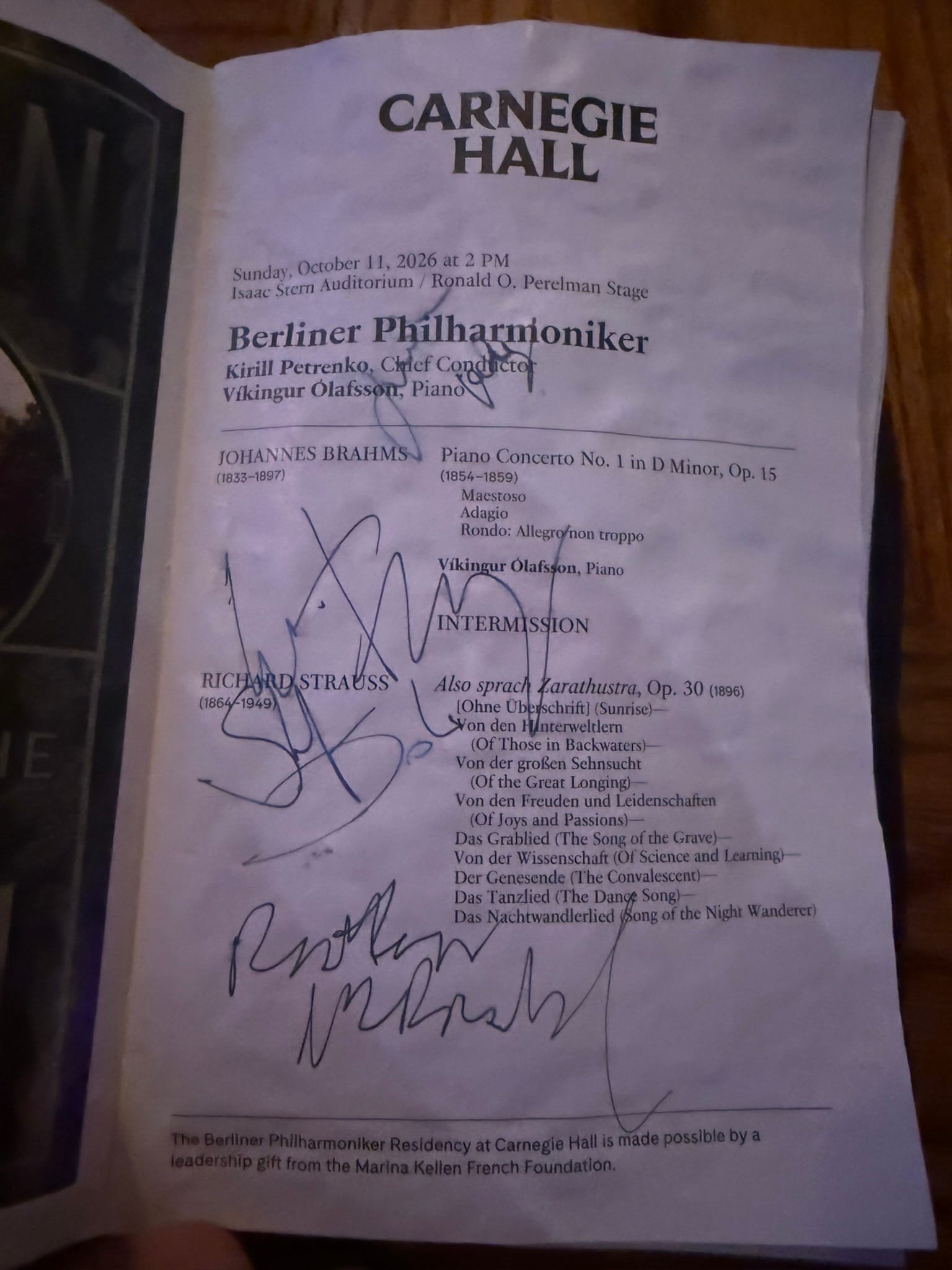
Berliner Philharmoniker
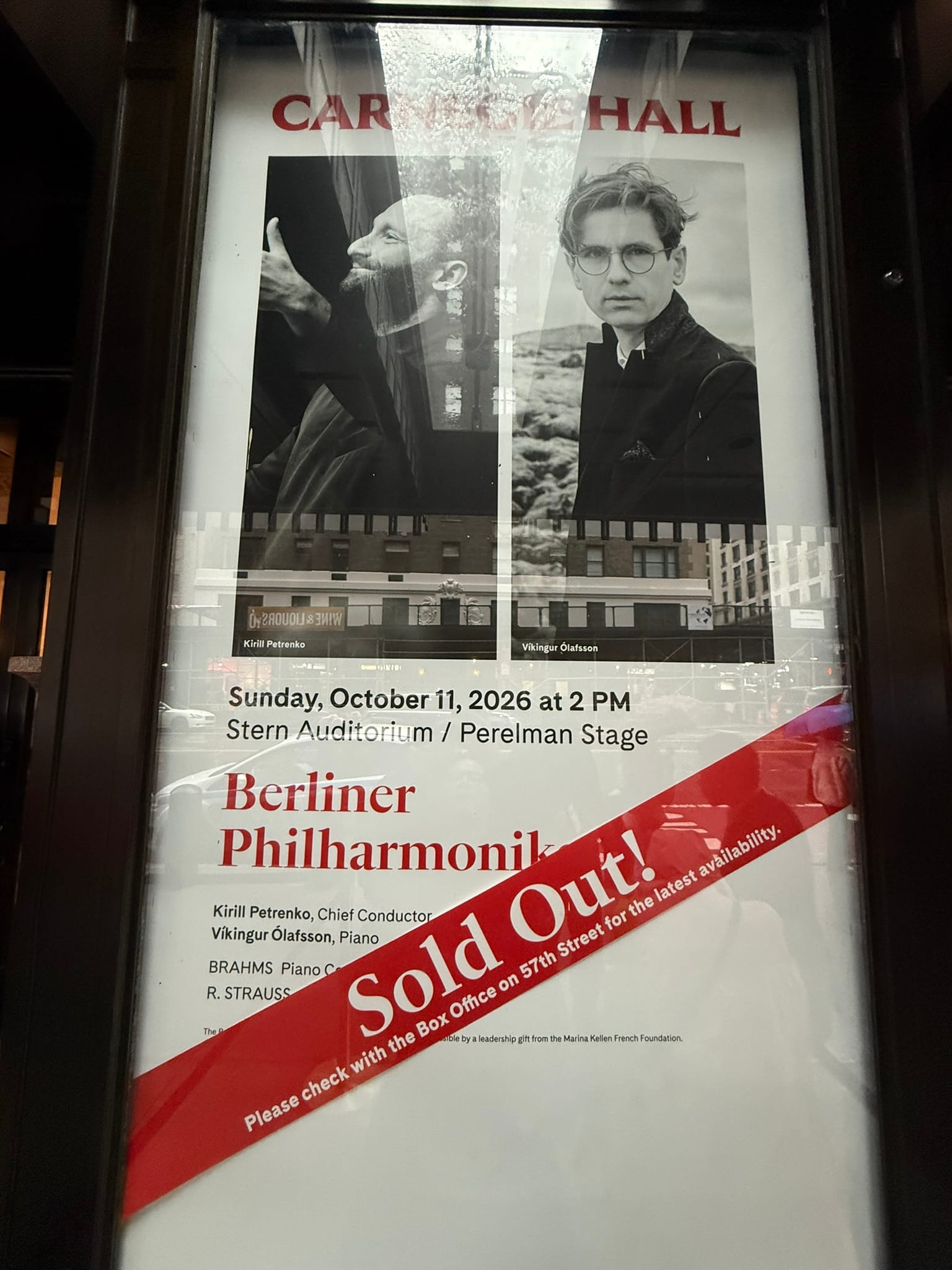
Kirill Petrenko, Chief Conductor
Víkingur Ólafsson, Piano
Program
BRAHMS Piano Concerto No. 1
R. STRAUSS Also sprach Zarathustra
10.11.2026
ベルリンフィル、カーネギー公演4回目。雨。
金曜日と同じプログラム、ブラームスとシュトラウス。私の隣には、いつもの音楽ファンたちが座っている。オーケストラがステージに現れた。弦楽器のメンバーがいつもと違う。ベテランの顔が多い。ヴィオラのディアンの姿はなく、首席の席にはアミハイが最後に座った。
チューニングが終わる。客席は固唾をのんで、ペトレンコとオラフソンの登場を待つ。しかし、二人はなかなか現れない。時計を見ていなかったので、どのくらい時間が経ったのかはわからない。まるで滑走路で離陸を待つ飛行機のようだった。
オーケストラのメンバーたちは、指やリードの具合を確かめるように音を出したり、ケースから別の楽器や道具を取り出して交換したりしている。最高の状態で演奏を始めるために、彼らは自分自身と楽器を整えている。
開演の遅れは、客席にとってもストレスだ。それでも私は、コントラバスやティンパニをはじめ、それぞれの楽器からこぼれる細かな音を聴くのが楽しかった。断片的な音が重なり合い、まるで現代音楽のように聴こえてくる。両隣の人や、きのしたさんたちと、なぜ遅れているのだろうと話しながら、ブラームスのことも話した。
やがて誰かがステージに現れ、メンバーの一人に緊急の医療対応が必要になったため、開演が遅れているらしいと伝えられた。指揮者やピアニストのことではないようだった。しばらくして、もう一度アナウンスがあった。数分後に開演するという。客席の人々は、いったん休憩を取ることになった。雨のなかを遅れて到着した人たちも多かったが、彼らもブラームスを最初から聴くことができたようだ。私は席を立ち、カフェで休むことにした。廊下では、ブルーノ・ワルターの写真が目に入った。
席に戻ると、ステージの前で数人、写真を撮っていた。さまざまな人種の人々が集まっている。まるで彼ら自身のコンサートのようだ。私の心にはこれが、カーネギー・ホールの変わらない風景だと映った。
仕切り直しとなり、楽員たちが再び席につく。すべてが整ったところで、ペトレンコがピアニストのヴィキングル・オラフソンとともに現れた。ペトレンコの顔は真っ赤だった。怒っている。
彼らはステージに立つその瞬間まで、自分自身を最高の状態へと高めていく。開演の遅れは思いがけないアクシデントだった。それでも、ブラームスのピアノ協奏曲第1番の冒頭を始めるとき、彼らはすでに演奏に向けて研ぎ澄まされていた。ウェンツェルのティンパニが、まるで暴力のように荒れ狂い、轟いた。台風のような衝撃。ベルリン・フィルが唸っている。
オラフソンの打鍵は、2日前よりも音の実体がずっと充実して聴こえた。なぜだろう。
冒頭の大進の短いソロも、ドールのホルンのソロも、そこから受け継がれるピアノとオーボエの掛け合いも、パユのフルートの音色も瑞々しい。オラフソンの高音がカーンと甲高く響く。スタインウェイのボディがブラームスを解き放っている。オラフソンの演奏というより、ピアノのボディ全体がブラームスを鳴らしているように聴こえた。
弦楽器が奏でる掛け合いは、人間の魂の刻みのようだった。大進たちの体は、小さく丸まり、ときに大きくのけぞり、ほとんど立ち上がるような姿勢になる。楽器から体ごと、空間へ音を解き放つ。奏者ひとりひとりの衝動と爆発が集まり、オーケストラは一つの楽器のように鳴り始める。ベルリン・フィルの細胞が、ブラームスの激情をカーネギー・ホールに繰り広げていく。
彼らの演奏は、2日前とは明らかに違っていた。音を鳴らす野生の生き物のように、ペトレンコの意識と火花を散らす。同じ譜面台を挟んで並ぶ奏者同士も、弦と弓を通して互いの音色を確かめ、わずかにずらしながら、競い合い、磨き合っている。そのことを本能的に感じた。ベルリンのDNAには、ウィーンでも感じたことのない何かがある。他のオーケストラとは何かが違う。
第2楽章の、胸が締め付けられるような部分でも、私は感情に飲み込まれることなく、音の卓越した彩りとオラフソンのピアニズムを楽しんでいた。人の心の中へ溶けていくような体験だった。一度だけ頭を上げると、目の前のオラフソンは頭をピアノにつけていた。まるで、ピアノの体から生まれる声に耳を澄ませているようだった。私たちが聴いていたのは、オラフソンを通して聴く、ブラームスというピアノの声だったのだ。
第3楽章では、オラフソンがスタインウェイのフルコンサート・グランドピアノを、まるでハープシコードのように弾いてみせる。ピアノとオーケストラは、巨大なコンサートホールを室内サロンに変えてしまうような親密さで、対話を繰り広げていく。4日目の演奏は、2日前に聴いたものよりも数倍、解像度が高かった。音の輪郭はさらに鮮明になり、それぞれの楽器の音色が冴えわたる。ピアノが語りかけるとオーケストラが応え、オーケストラが問いかけるとピアノが応答する。そのやりとりが、より細やかに、より鋭く聴こえてくる。オラフソンは個人的な感情に溺れることなく、フラットな姿勢を保ちながら音を鳴らし続ける。縦の刻みが進むにつれて、ピアノはますますハープシコードのように響き、音は楽器から離れて、形となって空間に浮かび上がっていく。
フーガの場面では、それまで流れていた時間が逆戻りしていくように感じられた。調を変えながら、ピアノがパッセージを模倣し、再び頂点へと向かう。テーマはオーケストラ全体へと伝わり、音楽は大きなうねりとなって広がっていく。ベートーヴェンのピアノ協奏曲第5番のロンドを思わせる、華やかな大演舞。その音楽を率いるペトレンコも、猛獣のような気迫でオーケストラを動かし、研ぎ澄まされた音の一つひとつに火をつけていく。ベルリン・フィルの音は、細部まで鮮明でありながら、全体として巨大な生命体のようにうねっていた。カーネギー・ホールに響くブラームスは、同じ作品とは思えないほどの鮮烈さを帯びていた。演奏が終わると、ペトレンコは満面の笑みを浮かべ、オラフソンとオーケストラの間に立ち、私たちに向かって笑顔を向けていた。
これまで彼らは、ブルックナーやマーラーなど、後期ロマン派の巨大な作品を披露してきた。今回は、ベルリン・フィルのレパートリーの中核をなすブラームスを取り上げた。そこでペトレンコが示したのは、アバドやラトルとはまったく異なるブラームスだったように思う。細部の鮮明さと、奏者同士の絶え間ない反応。そして、ペトレンコの身体から放たれるエネルギーが、オーケストラ全体を一つの生きた存在のように動かしていた。
休憩後、《ツァラトゥストラはこう語った》が始まった。2回目の演奏は、1回目よりもスケール、ディテール、そのすべてがさらに充実していた。ベルリン・フィルが呼び合い、互いの音に反応しながら奏でる、ベルリン・フィルならではの呼吸を感じた。
《ツァラトゥストラはこう語った》は、ニーチェの「超人(Übermensch)」という理念を音楽で語る試みとして知られる。ニーチェは聖書を思わせる文体を用い、キリスト教の価値観を問い直した。永劫回帰、ディオニュソス的な生の肯定、人間の可能性。シュトラウスはこうした思想を音に移し、人間の内に潜む力や憧れを響きとして立ち上げている。
私が惹かれたのは、シュトラウスの人間が世界を理解しようとする意志と、人間の意志を超えて広がる自然の力が、同時に存在していたことだ。
冒頭は日の出から始まる。世を離れたツァラトゥストラが、日の出を浴びて山を下りていく場面だ。
ペトレンコは、トランペットの発音が、太陽が地平線からゆっくり姿を現すように、音が自然に立ち上げ、自然の動きをそのまま音にしようとする。トランペットの上昇を受けた、オーケストラの光の反射。響きは空間いっぱいに広がり、やがてトランペットの倍音と溶け合う過程がまるでスローモーションのようだ。人間が自然と一体になる、その精神の動きを理屈や頭の理解を超えた体験だ。超人が超人を響かせている。ティンパニは、光が大地に跳ね返るように転がり、オルガンとバスドラムが、カーネギー・ホールの空間をミリミリと震わせる。ベルリン・フィルとペトレンコが生み出す熱が、ホール全体に充満し、2回目は、そのスケールの大きさだけでなく、音の重なりや楽器同士の反応までが、いっそう鮮明に聴こえた。
ペトレンコの洞察とビジョンは、一層今ここで音楽を生み出していた。
甘美なメロディが幾重にも絡み合う人間の憧憬を象徴する場面では、ヴィオラ首席がディヤンから、アミハイに変わる。その空間にアミハイが描き出す音の形は、言葉では表せない。空間そのものを切り取るようにも思える。それを目にしたとき、声が出なくなるとはまさにこういうことなのだと思った。ディヤンのヴィオラには人間味が滲み出ていた。一方、アミハイのヴィオラからは、奏者の個性を越えて、ヴィオラという楽器そのものの響きが聴こえてくる。アミハイが弾いているのに、私の耳にはヴィオラそのものが現れたように感じられた。
大進のソロも、前回より音がのっていた。彼に絡むさまざまな演奏家との共演も、ますます充実していた。隣に座るノアと大進の最後のデュエットでは、一つひとつの弓の運びが、この4日間の締めくくりを飾るように、大切に奏でられていた。2人がリードするベルリン・フィルの姿を強く感じた。ペトレンコの手首や指、膝や肩から力が抜けている。そこから一瞬でクレッシェンドをかけ、ベルリン・フィルをトップスピードへと導く。その勢いは、2018年に彼の後ろの席で目撃したときから変わっていない。彼の指揮そのものが最高のアートであるという思いは、今回も変わらなかった。
演奏が終わると、客席からは「アンコールやれ!」と野次を飛ばす人もいた。4回目のカーテンコールで、ペトレンコは大進とノアから何かを言われ、3人は大爆笑していた。
「マエストロ! みんなアンコールって言ってますよ!」
「いやー、もう大丈夫! もう十分!」
私には、そんな会話を交わしているように見えた。
本当に楽しい、ベルリン・フィルとのカーネギー公演4日間だった。
Comments ()