Petrenko’s Living Tchaikovsky
10.10.2026
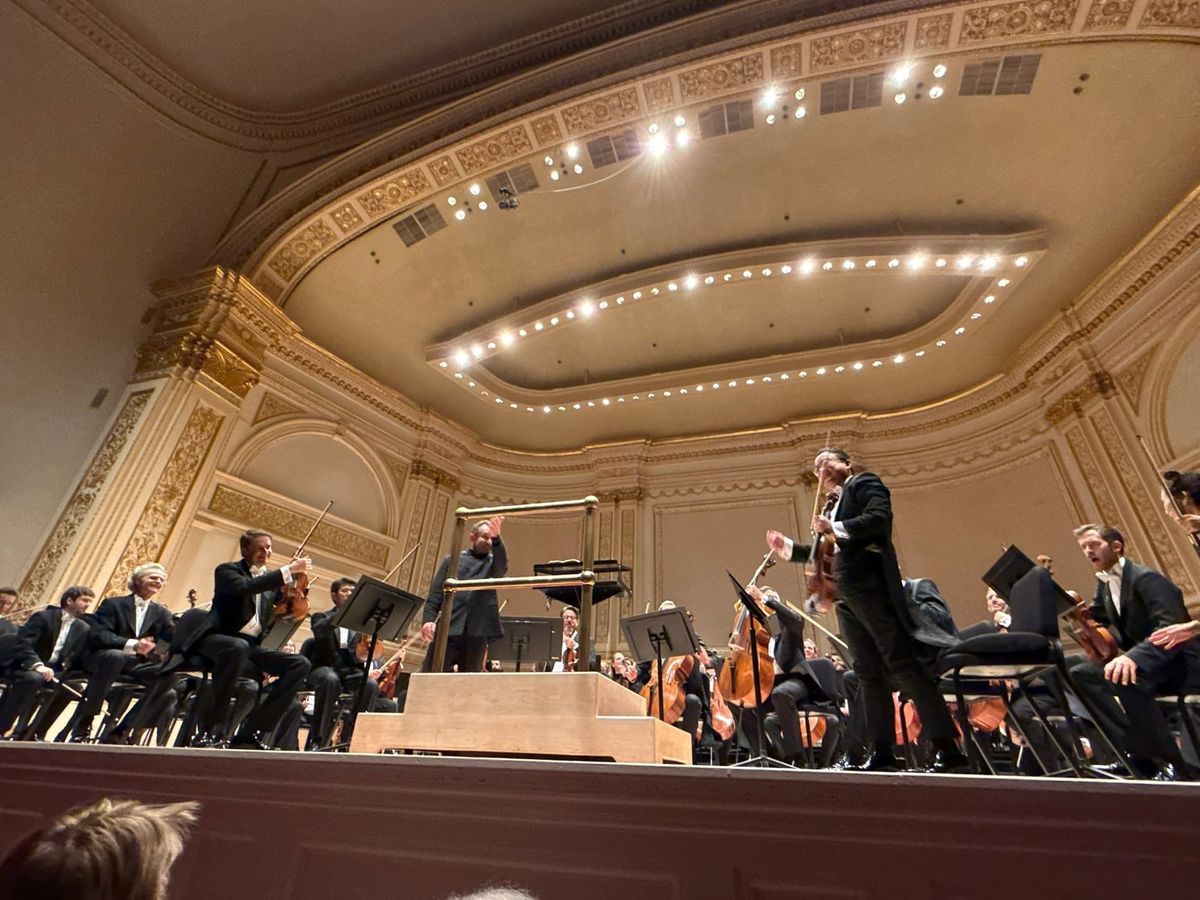
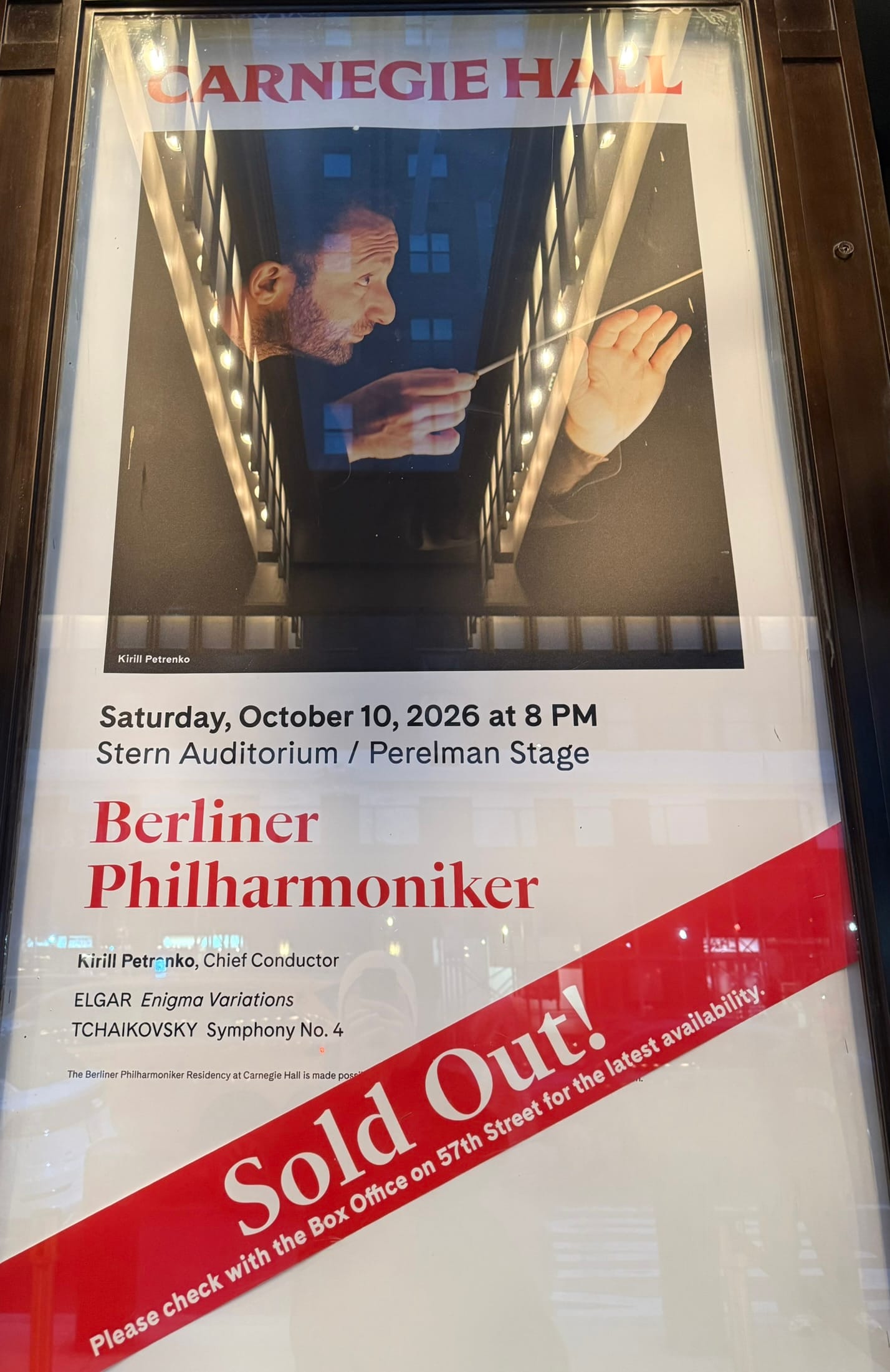
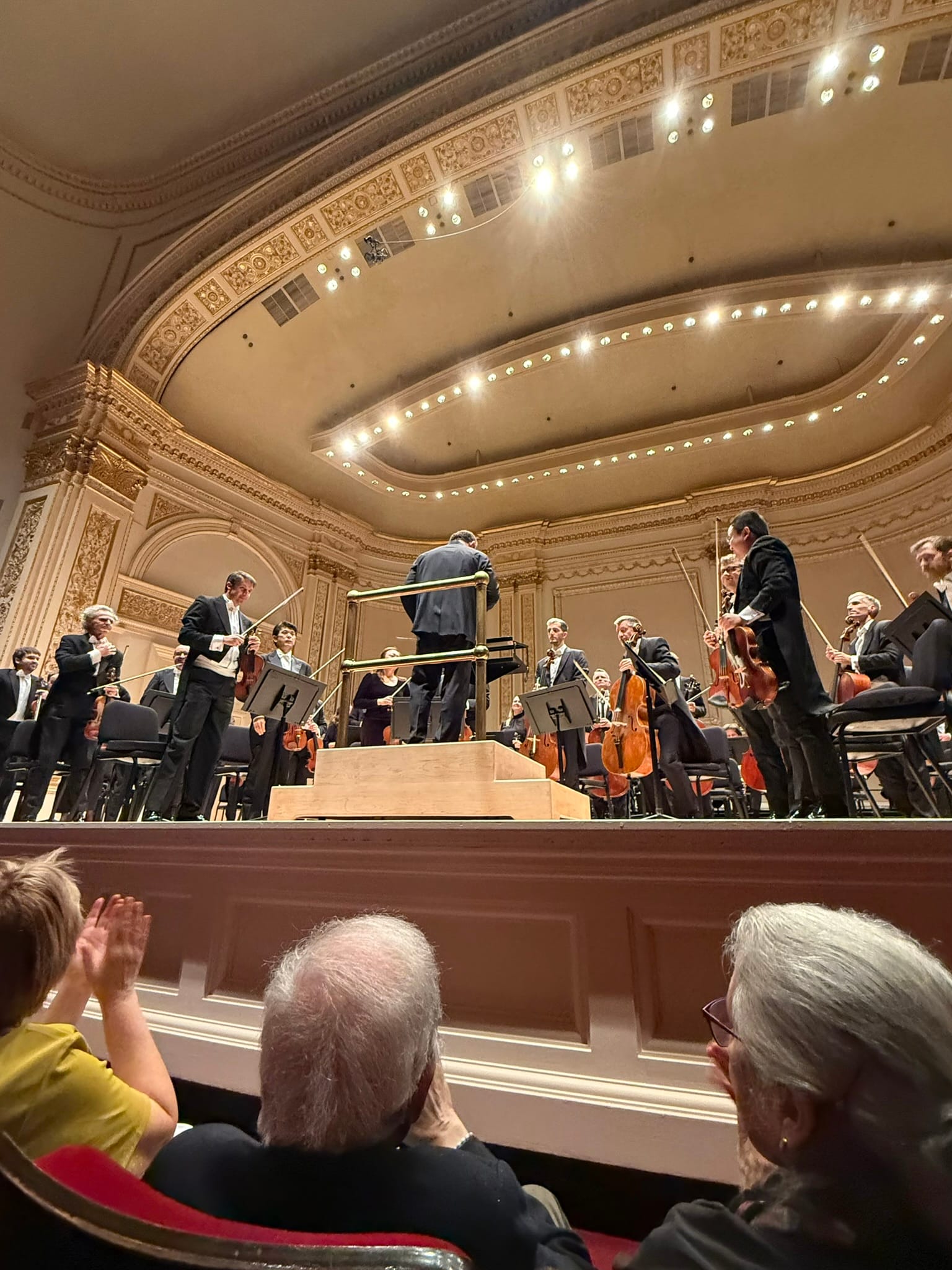
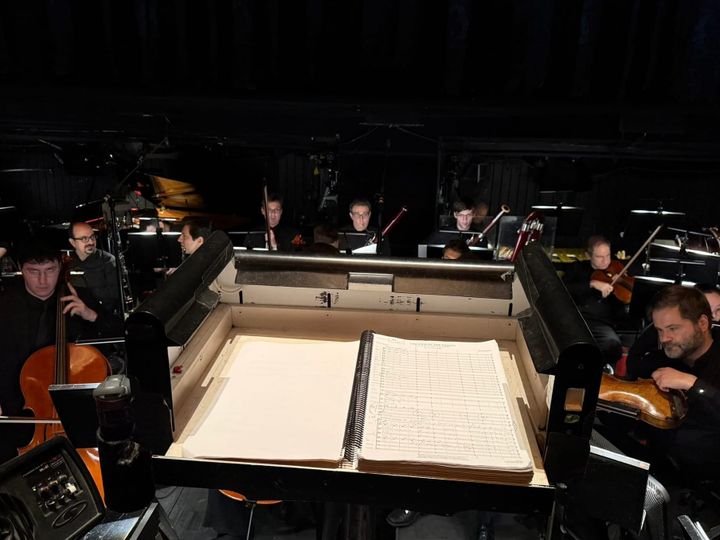
The Berlin Philharmonic’s third Carnegie Hall performance opened with Enigma Variations. Completed in 1899, when Elgar was 41, the work portrays the personalities and individual traits of his close friends through a series of variations on a single theme. In the Berlin Philharmonic’s performance, the strings and wind colors brought out a different character in each variation. The strings had a rich sense of depth and shadow, while the woodwind melodies spoke with an intimate warmth. Individual instrumental voices emerged from the orchestral texture and came together in a larger musical whole. I also spotted Kilian Herold, the orchestra’s new clarinetist, and Stefán Ragnar Höskuldsson, formerly principal flute of the Chicago Symphony Orchestra.
In the opening statement of the Enigma theme, the weighty strings moved up and down as the winds accompanied them. The variation portraying Elgar’s wife, Alice, unfolded in a rich, tranquil mood. In the variation depicting a pianist friend, delicate, quick-moving figures ran through the orchestra, as if dancing across the fingertips.
The fifth variation captures an actor whose voice would leap unexpectedly into a high register. The winds bring this quality to life, with the flute and clarinet repeatedly ascending through chromatic figures. Elgar observes an individual's personal quirks with affection, weaving them into the orchestral fabric. This attention to the finer details of individual character also illuminates the many facets of human personality explored in Tchaikovsky’s symphony later in the program.
In the next variation, the music unmistakably conveys a country squire's pompous manner. Another, portraying a poet's son, moves between earnestness and humor.
Throughout the variations, the opening Enigma theme remains present beneath the surface. Each character is distinct, yet the music remains unified. This is what makes Petrenko’s interpretation so compelling.
The twelfth variation portrays a bright, sophisticated female friend. The music is light and elegant, with a restrained sense of humor. The original theme never quite disappears, yet each personality emerges with remarkable clarity. The refined clarinet and flute playing brings out the subtle differences between the individuals. Elgar’s gift for capturing human character through music and the Berlin Philharmonic’s ability to bring those details vividly to life matched perfectly.
The thirteenth variation, Nimrod, portrays Elgar’s close friend August Jaeger. It begins with quiet strings, and the orchestral sound gradually swells. Emotion rises like a wave, then slowly recedes. The variation is inspired by a memory of Jaeger discussing Beethoven's slow movements. The Berlin Philharmonic never forced the listener’s emotions, letting the changing colors and the sound's power speak. As the music grew, the emotion deepened naturally. Elgar’s admiration for his friend emerged from the sound itself.
In the following variations, the music evokes a young woman's whispers and dance. In another passage, the brass sounds like a barking dog. The individual mannerisms of Elgar’s friends are translated into orchestral colors and movements. A variation portraying an amateur cellist features the cello's warm, singing voice and the viola. A woman-associated episode is expressed through a clarinet solo. The work concludes with a variation representing Elgar himself.
Both works in this program turn human experience into music. In Enigma Variations, the orchestra brings out the individual personalities of many friends, each taking shape in a different variation. In Tchaikovsky’s Symphony No. 4, by contrast, the orchestral sound explores the inner life of a single person in depth. One work distinguishes among many personalities; the other seeks to penetrate the depths of one individual. Hearing them side by side reveals how many different expressions and emotions can coexist within a single person.
Tchaikovsky’s Symphony No. 4 begins with the trumpet’s statement of the fate motif. The theme passes from the strings to the winds, then shifts from a strange bassoon-led dance into a dreamlike waltz.
Each time the theme returns in a new form, the orchestra's energy grows stronger. A seamless musical flow carries a succession of solo passages. In the latter part of the first movement, as the texture thins, fragments of wind solos emerge and disappear. It is as if an art gallery of the Berlin Philharmonic’s soloists appears and vanishes within the sound.
From the sound's purity, without exaggeration, the drama suddenly erupts. Under Petrenko’s meticulous direction, the individual instruments connect in an almost dreamlike flow. The music focuses on a tiny point, then slips through the narrowest opening. This intricate movement continues until, in the next instant, a powerful barrage of brass strikes the body. Amid the music's flow, I was suddenly overcome by a feeling of desperation, like discovering at my apartment door that I had lost my key.
The second movement begins with an oboe solo, a quiet lament that seems at a loss for where to turn. Hesitation and uncertainty emerge from its restrained tone. The clarinet then enters, answering the oboe. As the woodwind voices begin to overlap, the solitary lament gradually changes its expression.
The key is gone. I cannot get inside. Replacing the lock will cost money. I am frustrated with myself for having lost it. As I listened to the oboe's opening melody, these practical worries and the time spent confronting my own foolishness came to mind.
With the clarinet's entrance, the music finds a new direction. Other instruments respond in their own voices, passing the melody from one to another. A solitary lament gradually expands into a song carried by the entire orchestra. Petrenko draws out each instrument's character while connecting the melodic lines naturally, allowing the music to move forward.
The third movement begins with pizzicato strings. Countless tiny points of sound dart through the space, responding to one another and generating intricate patterns of movement. The effect resembles a murmur or rustling. The Berlin Philharmonic’s strings articulate each note with remarkable clarity, weaving intricate rhythms into the music’s light, agile motion.
The Allegro of the fourth movement marks a dramatic change of mood. A folk-like theme races through the Berlin Philharmonic’s strings. As the brass and percussion join in, the music gathers momentum and transforms into a vast celebration that sweeps up the entire orchestra. Petrenko carefully shapes the interplay of the instruments, guiding their uninhibited energy into one great, surging current.
In this way, Tchaikovsky takes life's anguish at its lowest point and transforms it into a magnificent musical celebration.
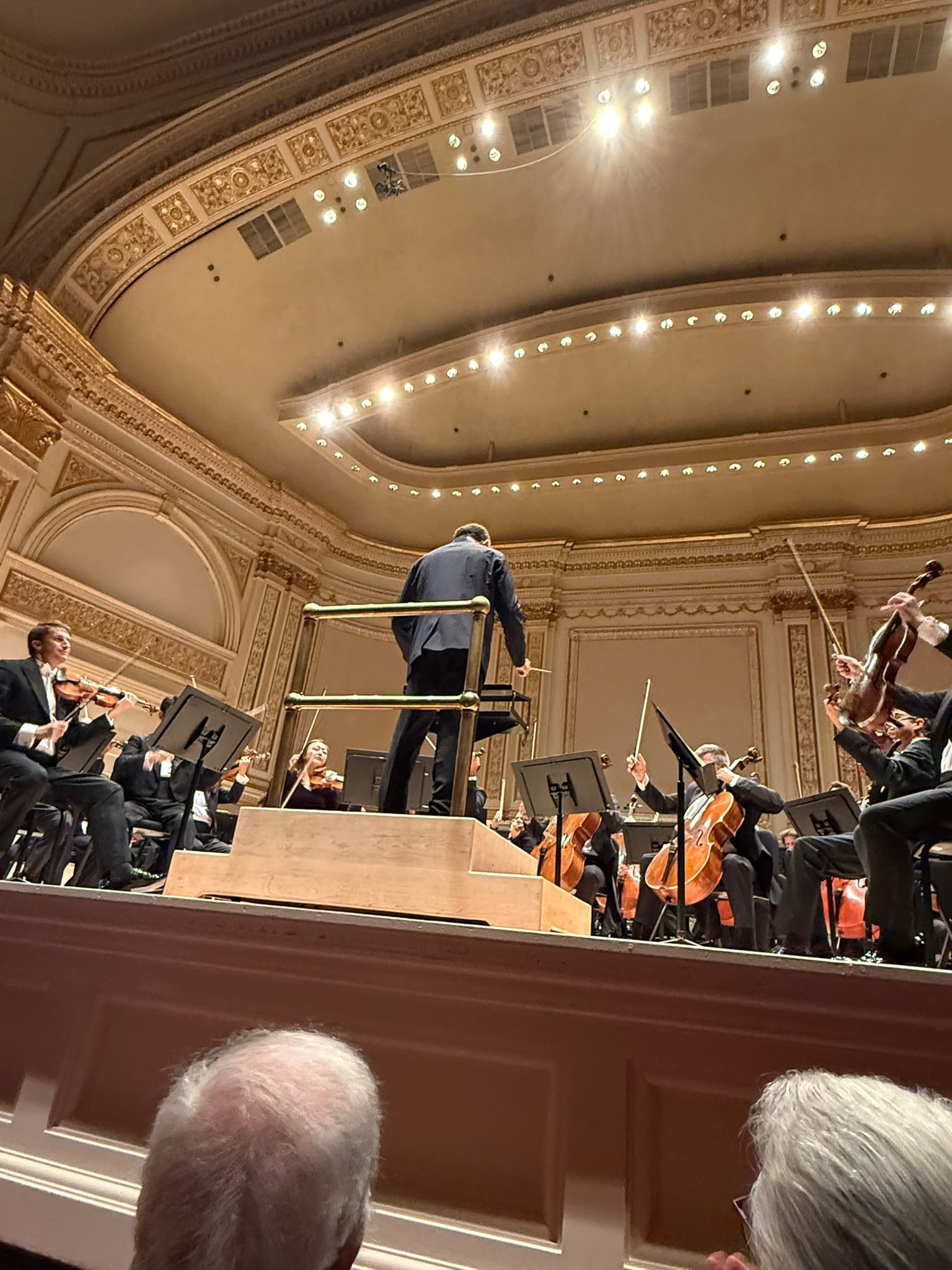
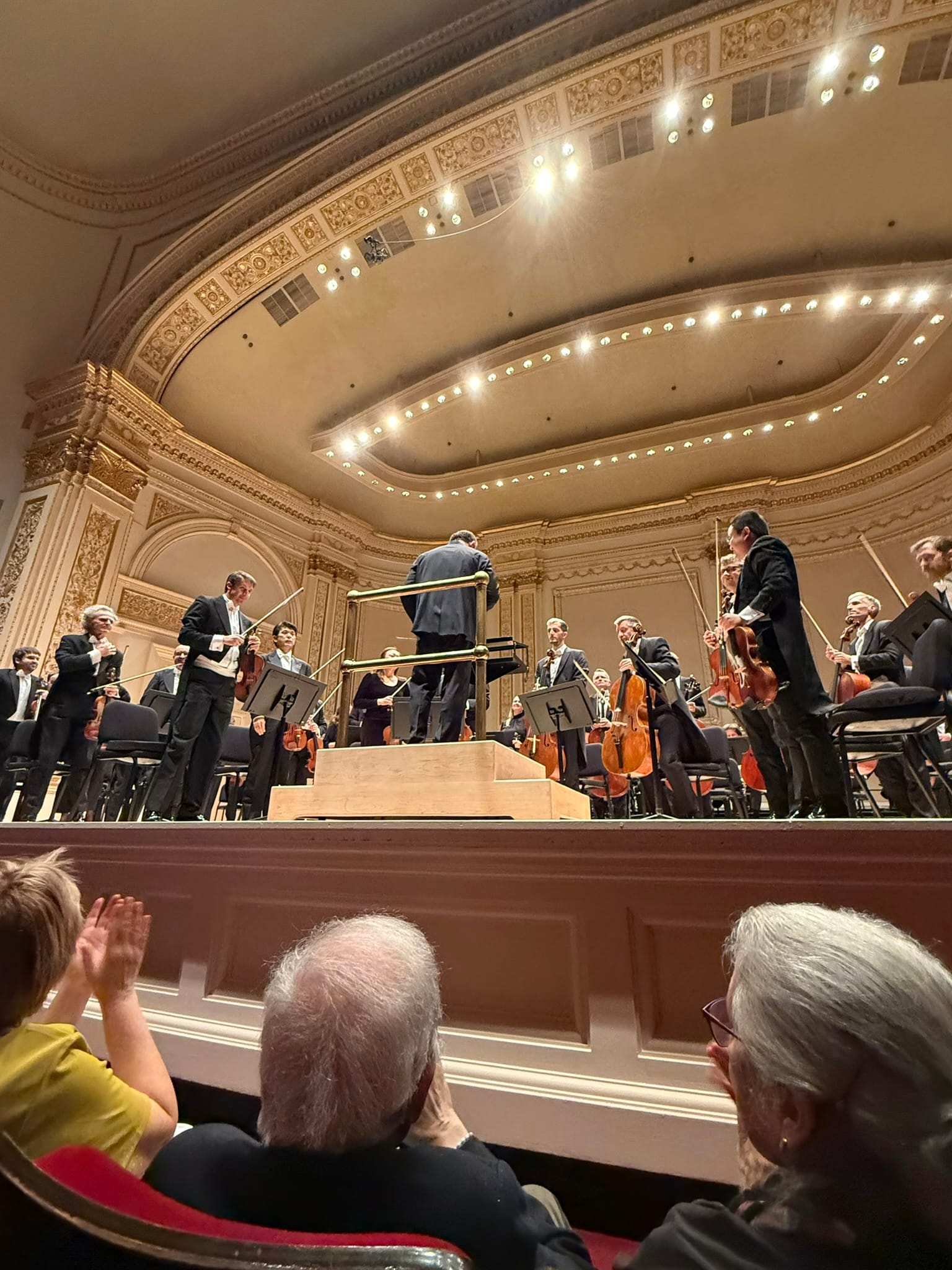
The Berlin Philharmonic’s performance is intricate and seamless, yet never overembellished. The music flows without strain. Each note is treated with care, and the impulses between sounds connect with precision. What emerges is not a reproduction of a great performance from the past. It is Tchaikovsky as brought to life, here and now, by Petrenko and the Berlin Philharmonic.
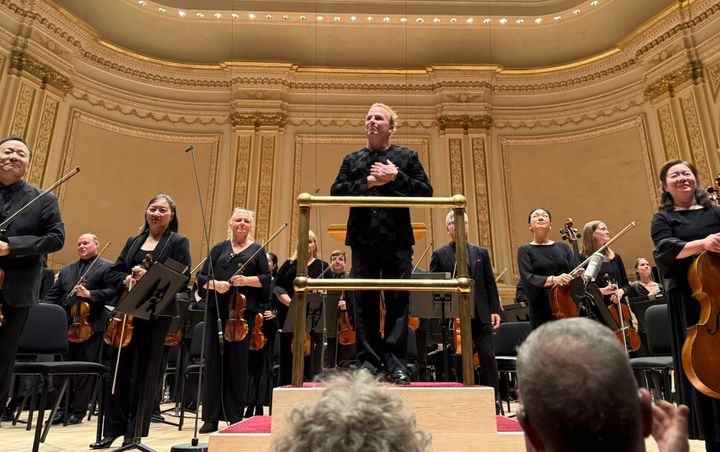
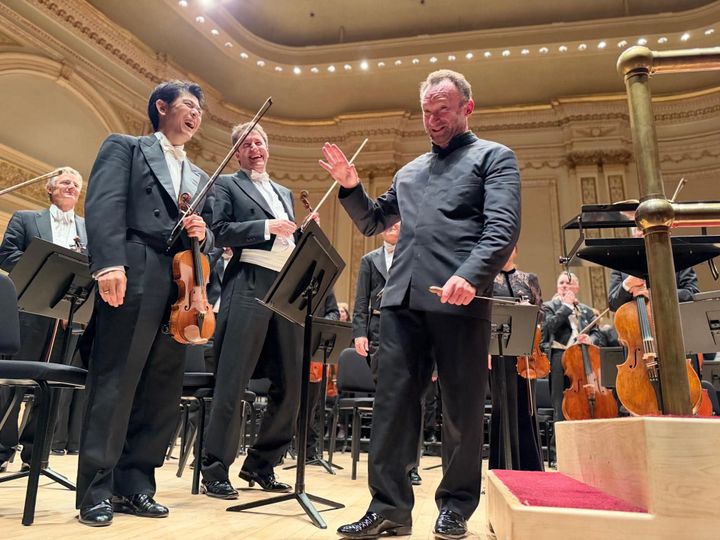
Above all, I was deeply moved by Petrenko’s extraordinary conducting and by the aura of song and music that seemed to emanate from him.
New York, 2026. This was Tchaikovsky as only the Berlin Philharmonic could bring him to life here and now.
Performers
Berliner Philharmoniker
Kirill Petrenko, Chief Conductor
Program
ELGAR Enigma Variations
TCHAIKOVSKY Symphony No. 4
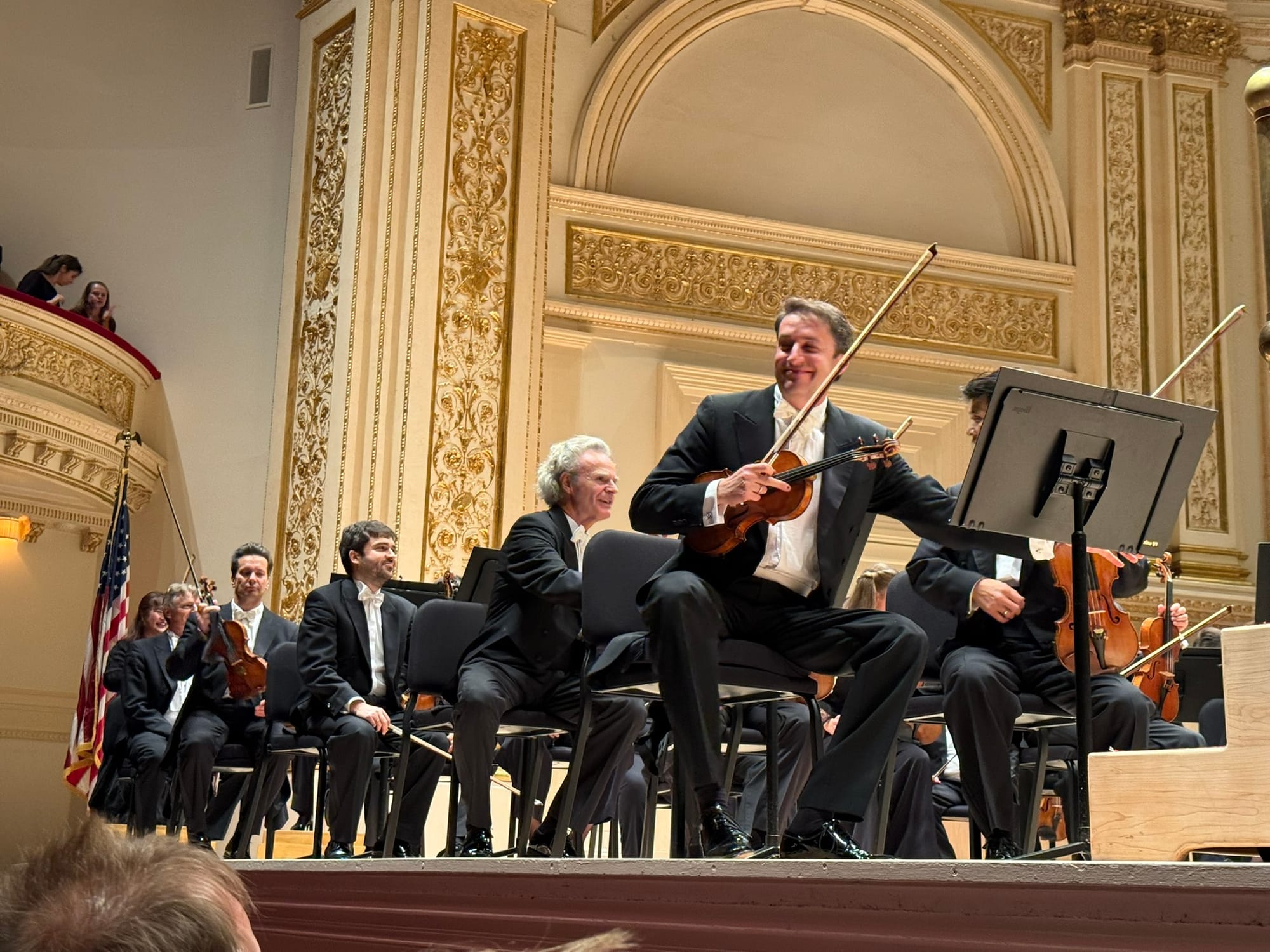
ベルリン・フィルのカーネギー公演、3日目は、イギリスの作曲家エドワード・エルガーの《エニグマ変奏曲》から始まる。1899年、エルガーが41歳のときに完成させたこの作品は、一つの主題を変奏させながら、親しい友人たちの個性や人柄を音楽で描き出している。ベルリン・フィルの演奏では、弦楽器の響きと管楽器の色彩が、変奏ごとに異なる人物の表情を描き出す。弦の重なりには深い陰影があり、木管楽器の旋律には親密な語りかけが感じられる。個々の楽器の声が浮かび上がり、それらが一つの大きな音楽へと結びついていく。新しいクラリネット奏者のKilian Heroldと、元シカゴ交響楽団首席フルート奏者のStefán Ragnar Höskuldssonの姿も見えた。
主題の《エニグマ》では、上下に動く重々しい弦楽器の響きに管楽器が寄り添う。続く妻アリスを描いた変奏では、豊かで穏やかな音楽が広がる。そして、友人のピアニストを描く変奏では、細かな音の刻みが指先を走るようにオーケストラを駆け抜けていく。
5番目の変奏では、俳優の声が高音へ跳ね上がる様子を、管楽器が描き出す。フルートやクラリネットが半音階の上昇を繰り返す。エルガーは、人の非常に個人的な癖を、親しみをもって捉え、管弦楽のなかに描き込んでいる。こうした一人ひとりの人格を細部まで捉える視点は、続くチャイコフスキーの交響曲で、一つの人格を深く掘り下げる際にも、多彩な表情をもたらすだろう。
続く変奏では、田舎の地主の偉そうな態度が、音楽からはっきりと伝わってくる。詩人の息子を描いた変奏では、真面目さとユーモアが交錯する。
どの変奏を聴いても、冒頭の《エニグマ》の主題が音楽の底に消えずに残っている。個々の人物の表情を描き分けながら、全体を一つの音楽として保つ。そこに、ペトレンコの面白さがある。
12番目の変奏は、明るく洗練された女性の友人を描いている。軽やかで気品があり、控えめなユーモアも感じられる。どの変奏でも、冒頭の主題の面影は消えない。その一方で、それぞれの人物の個性は鮮明に浮かび上がる。クラリネットやフルートの磨き抜かれた演奏からも、友人たちの性格が細やかに描き分けられていることが伝わってくる。音楽によってこれほどまでに人の個性を描き分けるエルガーの筆致と、それを鮮やかに響かせるベルリン・フィルの演奏が見事に調和していた。
13番目の《ニムロッド》は、親しい友人であるアウグスト・イェーガーを描いた変奏である。静かな弦楽器から始まり、オーケストラの響きが次第に高まっていく。波のように感情が押し寄せ、やがて静かに消えていく。この変奏の着想は、イェーガーがベートーヴェンの緩徐楽章について語った記憶に結びついている。ベルリン・フィルは、聴く人の感情を過度に煽ることなく、音色の移ろいと響きそのものが持つ力を純粋に伝えていた。音楽が高まるにつれて、感情もまた自然に深まっていく。その響きのなかに、エルガーが友人に寄せた敬愛が浮かび上がっていた。
続く変奏では、若い女性のささやきや踊りが音楽に描かれる。金管楽器が犬の吠え声のように響く場面もあり、友人たちの個性的な振る舞いが、オーケストラの音色や動きへと置き換えられていく。アマチュアのチェロ奏者を描いた変奏では、チェロやヴィオラの温かな歌が広がる。ある女性にまつわるエピソードは、クラリネットのソロによって描かれる。そして最後は、エルガー自身を表す変奏で締めくくられる。この日のプログラムで続く二つの作品は、どちらも人間を音楽にしている。《エニグマ変奏曲》では、多くの友人たちの個性が、一つひとつの変奏となってオーケストラに鳴り響く。一方、チャイコフスキーの交響曲では、一人の人間の内面が、オーケストラの響きによって深く掘り下げられていく。多くの人間の個性を描き分けることと、一人の人間の内面を描き尽くそうとすること。その二つを並べて聴くと、一人の人間のなかにも、いくつもの異なる表情や感情が存在していることが見えてくる。
チャイコフスキーの交響曲第4番は、トランペットが奏でる運命の動機で始まる。主題は弦楽器から管楽器へと受け渡され、やがてファゴットの奇妙なダンスから、幻想的なワルツへと移っていく。
主題が形を変えながら何度も繰り返されるたびに、オーケストラの波動はどんどん強くなっていく。淀みのない流れのなかで、さまざまなソロが繰り広げられる。特に第1楽章の後半、音が薄くなる場面では、管楽器のソロの断片が浮かんでは消えていく。まるで、ベルリン・フィルのソリストたちによるアートギャラリーが、音のなかに現れては消えていくようだ。
誇張のない純粋な音から、ドラマが爆発する。ペトレンコの綿密な指揮のもと、それぞれの楽器が夢のようなつながりを見せる。小さな一点に照準が合わされ、その狭い隙間を音がすり抜けていく。そうした緻密な音の運動が続いたかと思うと、次の瞬間、ブラスの強烈な連打が身体を直撃する。音楽の流れのなかで、突然、アパートのドアの前で鍵をなくしたことに気づき、絶望に襲われるような感覚が訪れる。
第2楽章は、オーボエのソロから始まる。途方に暮れたような、静かな嘆きの旋律。抑制された音色のなかに、ためらいや不安がにじむ。続いてクラリネットが加わり、オーボエの旋律に応える。木管楽器の声が重なり合うにつれて、孤独な嘆きは少しずつ表情を変えていく。
鍵がない。中に入れない。鍵を交換するにはお金がかかる。なくした自分にあきれる。そんな現実的な困惑と、自分自身に向き合う時間が、冒頭のオーボエの旋律に重なる。
クラリネットの音が加わると、音楽に新たな方向が生まれる。ほかの楽器もそれぞれの声で応え、旋律を受け渡していく。ひとりの嘆きが、オーケストラ全体の歌へと広がっていく。ペトレンコは各楽器の音色を丁寧に引き出しながら、旋律の流れを自然につなぎ、音楽を前へと進めていく。
第3楽章は、弦楽器のピッツィカートで始まる。無数の音の粒が空間を飛び交い、互いに反応しながら細かな動きを生み出していく。さざめきやざわめきのようにも聴こえる。ベルリン・フィルの弦楽器は、一つひとつの音を明瞭に響かせながら、軽やかな動きのなかに緻密なリズムを織り上げていく。
第4楽章のアレグロでは、これまでの楽章とは一転し、民謡の主題がベルリン・フィルの弦楽器を駆け抜ける。金管楽器と打楽器が加わるにつれて、音楽は勢いを増し、オーケストラ全体を巻き込む巨大な祝祭へと変わっていく。ペトレンコは各楽器の動きを緻密に組み立てながら、奔放なエネルギーをひとつの大きな流れへと導いていく。
こうしてチャイコフスキーは、人生のどん底にある苦悩を音楽に描き、それを見事な祝祭へと昇華させる。
ベルリン・フィルの演奏は、緻密で淀みがない。それでいて、飾り立てるところがなく、音楽の流れに無理がない。一つひとつの音を大切に扱い、音と音が生み出す衝動を丁寧につないでいく。その響きから立ち上がるのは、過去の名演の再現ではない。ペトレンコとベルリン・フィルが、いまこの瞬間に生み出すチャイコフスキーだ。
そして何より、ペトレンコの見事な指揮と、彼自身からあふれ出す歌や音楽のオーラに心を動かされた。
ニューヨーク、2026年。ここでしか聴けない、ベルリン・フィルのチャイコフスキーだった。
Comments ()