The Sound of Our Time
10.13.2026
Yannick Nézet-Séguin and The Philadelphia Orchestra at Carnegie Hall
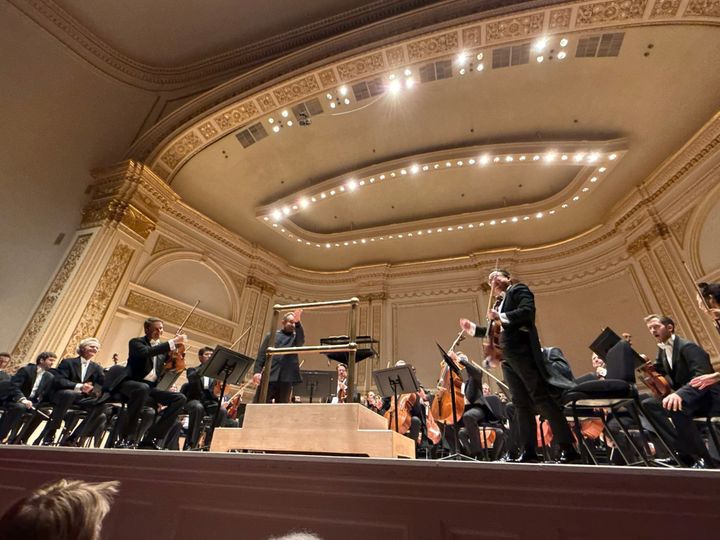
Hearing Webern and Wolfe back-to-back in this program, I encountered two sound worlds so different that it was hard to believe the same orchestra produced them. In a sense, both works are soundscapes that use music to evoke time, place, and the activities of human life. Yet their sounds could hardly be more different. When time and place change, can music—and the spirit of the people who inhabit them—change so profoundly as well? I couldn't help but feel overwhelmed by the depth of human experience embedded in these two works, each rooted in its own time and place.
The second half of the program was Mahler’s Symphony No. 5. At 51, Yannick Nézet-Séguin was beginning his Mahler cycle.
Webern composed Im Sommerwind in 1904, at age 20. Born into an aristocratic Austrian family, he wrote the work before studying with Schoenberg, deeply inspired by a poem by Bruno Wille. Through the natural world, human perception and consciousness seem to open up. The wind's movement, changes in light, the swaying of trees and grass, and silence itself become musical material. The Philadelphia Orchestra gave these elements sound, bringing to life a force that reaches beyond human reason and will. Using the rich colors and sonorities of late Romanticism, Webern traced nature's subtle movements, the wind's rising energy, and its eventual stillness. It was a vision of the divine within nature, a feeling of unity between humanity and the world.
The Philadelphia Orchestra’s performance unfolded like Disney’s Fantasia. The orchestra's sound became light and airy, and nature seemed to come alive. The sonority was overwhelmingly ecstatic. The Philadelphia Orchestra’s inherited tradition of sound was unmistakably present.
At the opening, an incredibly delicate veil of sound began to spread from the double basses on the right, fine and mistlike. The sound gradually filled the space from right to left. As though the landscape were slowly emerging from the morning fog, I began to hear the principal string players' whispers. It was my first time hearing Kimberly, the second violinist, play a solo. Her playing seemed to capture the summer breeze passing through the countryside as Webern had imagined it at twenty, along with the life breathing within the natural world.
I surrendered to the subtle changes in light and air the orchestra’s many soloists created. Through the rich colors of the orchestral writing, Webern’s perception of nature and the ecstasy of being immersed in it came vividly into view. It felt as though each musician in the Philadelphia Orchestra were personally inviting me into the program, one by one.
As the sound quietly disappeared, my head bowed almost involuntarily, and I continued to applaud softly. I felt calm. My senses seemed newly attuned to the space around me, as though I had become more fully aware of nature's landscape.
Julia Wolfe’s Liberty Bell, The Philadelphia Orchestra and Carnegie Hall commissioned Julia Wolfe's Liberty Bell
America is approaching the 250th anniversary of the signing of the Declaration of Independence. Wolfe’s music cuts through easy sentiment and invites us to think more sharply and more loudly about what America has promised in the name of freedom—and about the reality behind those promises.
In Webern’s Im Sommerwind, which we had just heard, the liberation of the human spirit within nature took the form of an ecstatic sound world. In Wolfe’s work, by contrast, her own memories and experiences of growing up in Philadelphia were deeply intertwined with the history of the Liberty Bell.
Wolfe has spoken of growing up in a small town north of Philadelphia, where the image of the cracked Liberty Bell quietly became part of her memory.
The program notes included Wolfe’s own words. The Liberty Bell is not silent. More than a hundred musicians fill the stage, making noise and playing loudly. Independent rhythmic lines collide, forming a jagged whole. Metallic chimes and pitched bell plates are struck, resonating and ringing out.
Freedom is not won through a quiet, orderly process. It is a chaotic, noisy, ongoing struggle made up of constantly entangled forces. How can music embody and communicate freedom, one of the most fundamental ideals on which a nation is founded?
The word freedom is engraved on coins, printed on stamps, proclaimed in poems and songs, and scattered throughout political speeches. Music is Wolfe’s way of joining that clamor. She cries out for patience, holds tightly to optimism, and searches for a way forward. The words inscribed on the Liberty Bell—“Proclaim Liberty Throughout All the Land Unto All the Inhabitants Thereof”—speak to everyone reaching toward the promise of freedom.
Hearing the piece live, I found it intensely raw. From the opening, the repetitions characteristic of contemporary music continued relentlessly. This was not music designed to be easy on the ear. Nor did Wolfe organize the sound into a drama like Shostakovich. The waves of sound were so mechanical and rugged that it was difficult to believe this was the same orchestra that had just performed Im Sommerwind. The sound was tumultuous, as though the voices and everyday lives of people were being absorbed into a society increasingly shaped by industrialization and commercialization.
Metallic chimes rang out from center stage. From the far left rear came a fire bell, clanging again and again. It was a warning bell.
In the second half, pop and jazz elements moved to the foreground, and the Philadelphia Orchestra’s sound burst into motion. But clusters of noise returned, with the bell sounds layered over them. Different rhythms and timbres collided. Like a struggle over freedom itself, the music kept moving with tremendous force.
Wolfe’s memories and experiences of growing up in Philadelphia seemed swallowed by humanity's history through the image of the bell. Personal memory merged with social history, becoming a vast surge of sound before me. It was an intensely visceral experience.
Hearing Wolfe’s Liberty Bell ring out through the Philadelphia Orchestra at Carnegie Hall felt significant. The question was how Carnegie Hall, classical music, orchestras, and the audiences who gather to hear them might translate the historical resonance embedded in Wolfe’s music into their own thinking and actions. How might it inform the lives we lead tomorrow, or how we invest in society's future? How do we recover the humanity that has gradually eroded over time? People who are already vulnerable are pushed into ever more precarious positions. Once we recognize this cycle, how can we raise awareness and inspire action in those around us to help change the future?
The Liberty Bell asks us to consider more than freedom as an ideal. It asks what we, the inheritors of that ideal, are thinking and doing now.
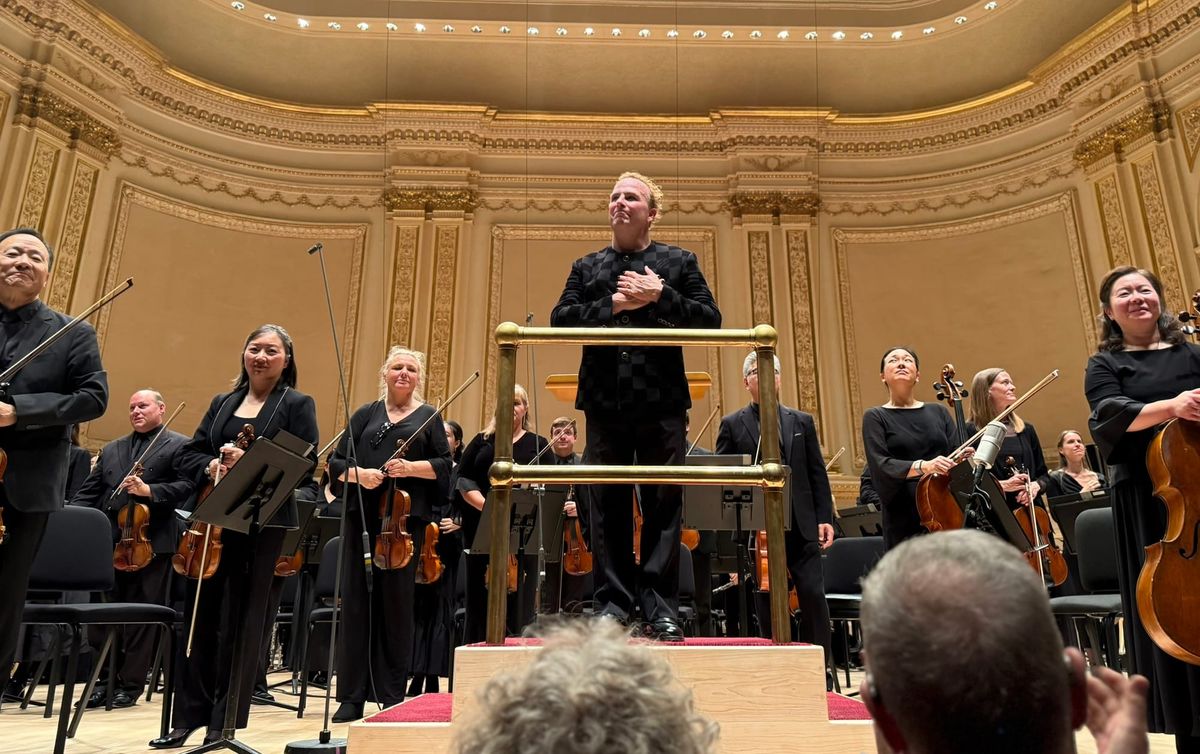
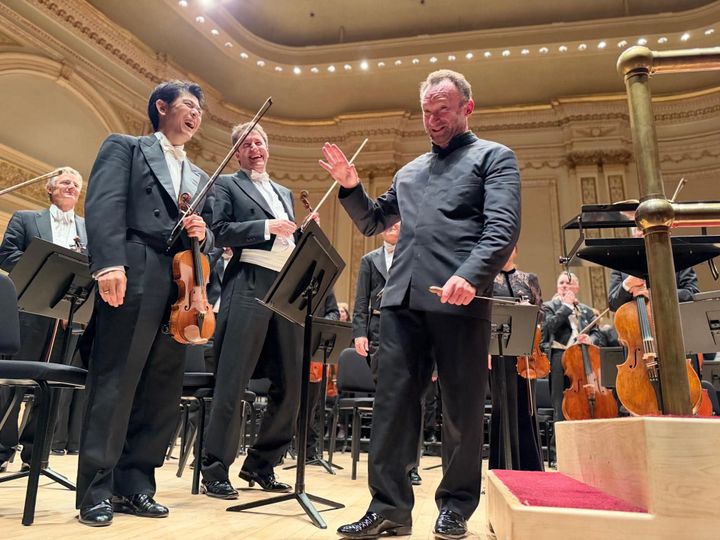
At the end of the performance, Yannick invited Wolfe onto the Carnegie Hall podium. The gesture left a deep impression on me. I felt his respect for her music and for the time she lives in. What kind of relationship should orchestras and concert halls build with contemporary composers? How should they engage with society through music? These questions came to mind, and at the same time I felt overwhelmed by a sense of celebration for the music Wolfe has created.
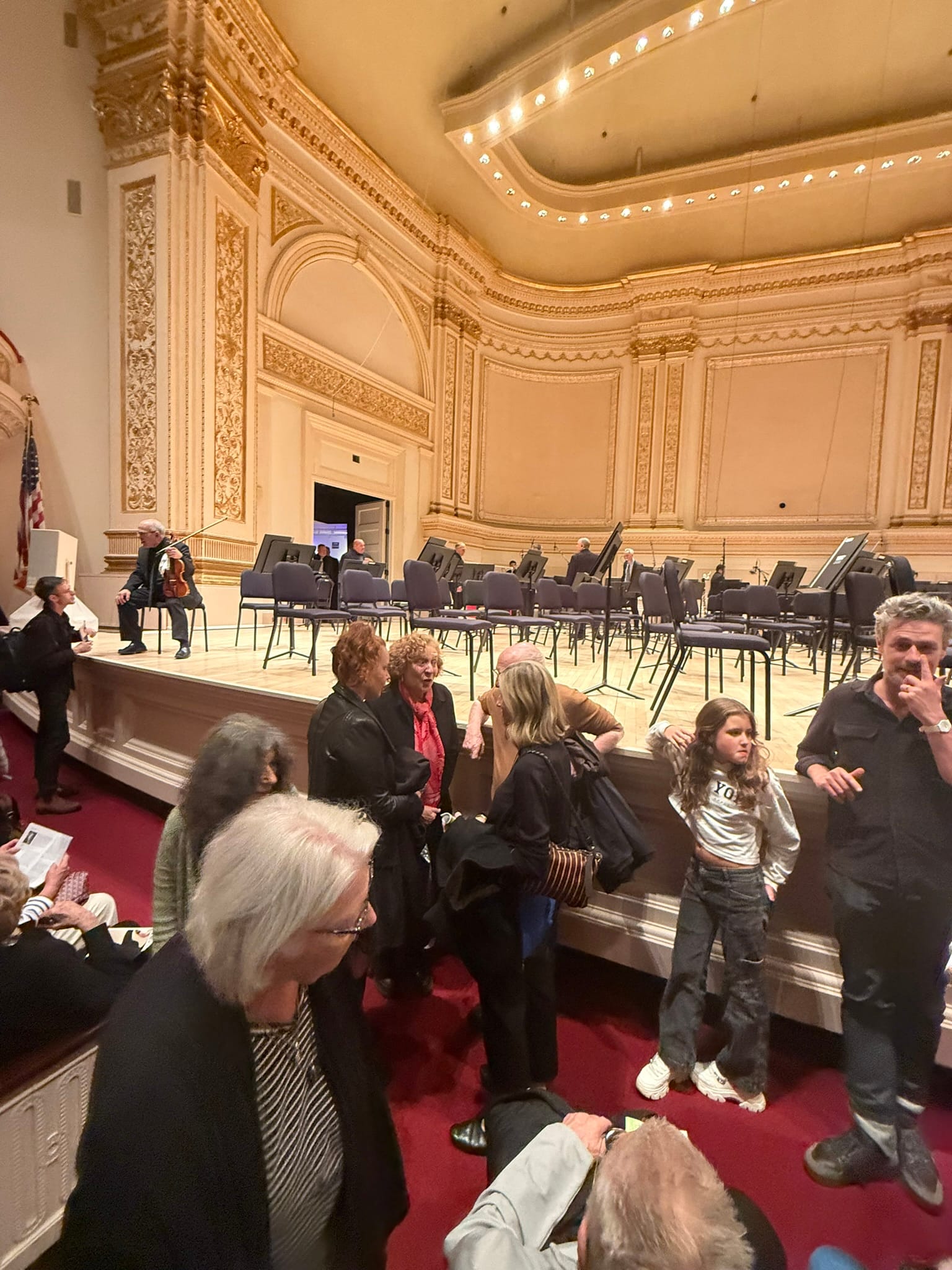
During the intermission, I asked Wolfe about the bell sound I had heard from the far left rear of the stage. I had not seen an instrument shaped like a bell there. She explained that it was a metal plate made specifically for the work. Rather than using an actual bell, she had created its resonance through a metal plate. With this timbre, Wolfe gave the Liberty Bell musical presence, a symbol whose original sound had long since fallen silent.
The second half brought Mahler’s Symphony No. 5 under Yannick. What happens when the Philadelphia Orchestra, having passed through Wolfe’s immense sound world, turns to Mahler? At times, the music was raw, its sonorities cutting into the hearts of those of us living now. At other moments, I was captivated by the pure colors and sequences of shapes that Mahler had created through sound.
The opening trumpet’s pulse of fate felt strangely immediate to modern listeners accustomed to hearing Mahler romanticized as the composer of monumental symphonies. Just as Wolfe’s bell sounded its warning, the trumpet seemed to announce something's arrival.
Mahler’s delicate writing didn't let the four-beat meter settle into a clearly defined outline. I found the interpretation idiosyncratic, with phrases handled deliberately awkwardly. The orchestra began to turn its gears, like a robot or a gigantic broken machine.
Written shortly after the beginning of the twentieth century, this music carries the spirit of its time and the world that surrounded it. How does that spirit speak to those of us living now?
The trumpet sounded with extraordinary concentration. The pulse of fate seemed to rise from within and emerge as a succession of sounds. It returned throughout the work, each appearance jolting the consciousness back to itself after moments of uncertainty and illusion. The immense turbulence of the turn of the century, the instability of the human spirit, love and longing—all these forces were layered within Mahler’s music.
The Philadelphia Orchestra's concentration, led by Yannick Nézet-Séguin, reminded me of Macbeth, which I had recently heard at the Met. The instruments sang, and every sonority seemed carefully chosen. Through the many solos, Mahler’s intricate craftsmanship came into focus at Carnegie Hall.
In the first movement, the ominous pulse of fate spread throughout the orchestra. Within it, the first violins surged forward with a deeply human voice. The melody, layered with sharps and flats, seemed to carry the voices of people wandering through Mahler’s dark world. The instruments imitated the human voice as the music swayed, surged, and pressed forward. A melody spanning more than three octaves raced across the register, spiraling upward like a tornado within the pulse of fate.
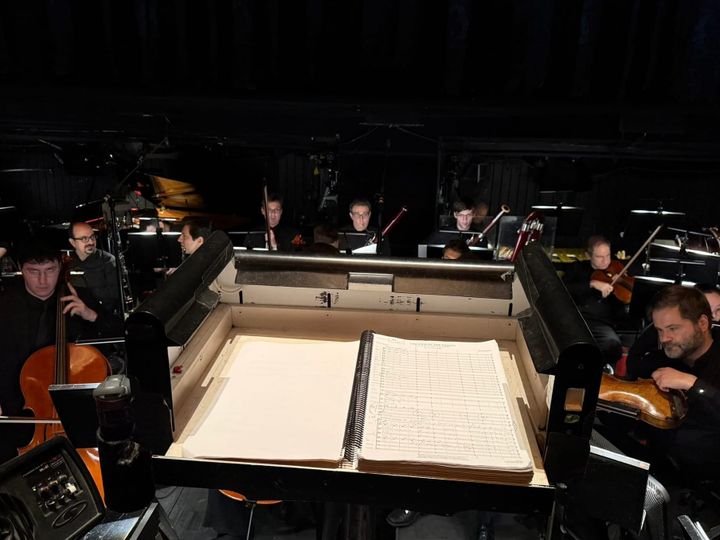
The playing had remarkable unity, supporting the solos and smaller ensembles without losing the whole's coherence. Yet when an entire section unfolded like a single soloist, the effect was different. For example, the sixteen first violins seemed to play as individual soloists. Each voice emerged, allowing me to hear the cries of individual players. It felt as though I had entered the Philadelphia Orchestra itself and was witnessing the place where its music came into being.
When the texture thinned, the principal wind and string players presented their solos one by one, like artworks appearing in a contemporary art gallery. Each timbre stood out, each instrument becoming an independent presence. But when the enormous tutti arrived, overwhelming energy swallowed these delicate lines. Individual voices rose into view, then dissolved into a vast collective sound. The contrast was striking.
After the third movement's Scherzo came the fourth's Adagietto. This was exceptional. Without trying to heighten the emotion, the orchestra brought Mahler’s craftsmanship into sharp focus. The harp traced geometric shapes in sound, while the different string sections built the music above it. Sharing the same passage of time, their timbres remained remarkably distilled and independent.
The Adagietto didn't sweep into a vortex of emotion. Instead, the Philadelphia Orchestra drew on the greatest strength of an orchestra performing a symphony: its ability to shape sound with concentration and precision. The performance brought Mahler's structure and colors into vivid relief. Not a single tear fell.
Many listeners may have heard a Mahler different from what they expected. Yet the performance also evoked the sonic craftsmanship of composers such as Mario Davidovsky and Morton Feldman, artists who posed questions through music in their own time. Music became not only an expression of emotion but an arrangement of sound itself—its shapes, timbres, and the way it unfolds through time. That sensibility was alive in this performance of Mahler.
A call from the horns led to a clarinet solo. Then the dynamic rondo finale began, with the entire orchestra breathing as one.
By this point, I was exhausted. With my head bowed, I felt the sound passing through my body. Motifs returned and developed, variations emerged, the music reached its peaks, and then it began again. At times, it sounded like the scream of an orchestra that had grown immense over the nineteenth and early twentieth centuries.
Then I heard Jeffrey, the Philadelphia Orchestra’s principal flute, with a fresh, luminous tone. It felt as though I had discovered an oasis in an immense, arid desert.
Like Wolfe, Yannick had not beautified Mahler. By this point, that had become unmistakable. Why make the orchestra draw so much from itself, to the point of exhausting the listener’s spirit? Because Yannick had found something in Mahler that we need to hear now.
Yannick and the Philadelphia Orchestra were neither reconstructing Mahler’s own time nor simply translating his music into a contemporary sound. Having listened to Webern and Wolfe first, I felt the way Mahler sounded here had become necessary after the entire program.
Jeffrey’s flute gave a fresh, vibrant sound to a heart that was nearly dead, and I came back to life. This performance let me experience Mahler’s vision of life and death in the present, in real time. In that moment, I felt I had heard the essence of Yannick’s Mahler.
As the piece ended, an enormous roar of bravos erupted. Carnegie Hall was enveloped in a tremendous American ovation. The performance had been raw from beginning to end. Every musician had given themselves completely to the work, offering us the music without reservation.
Throughout the program, I felt a concentration and energy that suggested a conductor trying to draw everything possible from his orchestra. I had felt the same thing when I heard the Chicago Symphony Orchestra.
Yannick and Philadelphia, Mäkelä and Chicago, Dudamel and the New York Philharmonic. It seems maestro—one who pushes an orchestra to the limits of what it can do.
Who, then, will the Boston Symphony Orchestra and the Cleveland Orchestra choose as their next music directors? Their choices will also become part of the constellation of orchestras appearing on Carnegie Hall’s stages throughout the season.
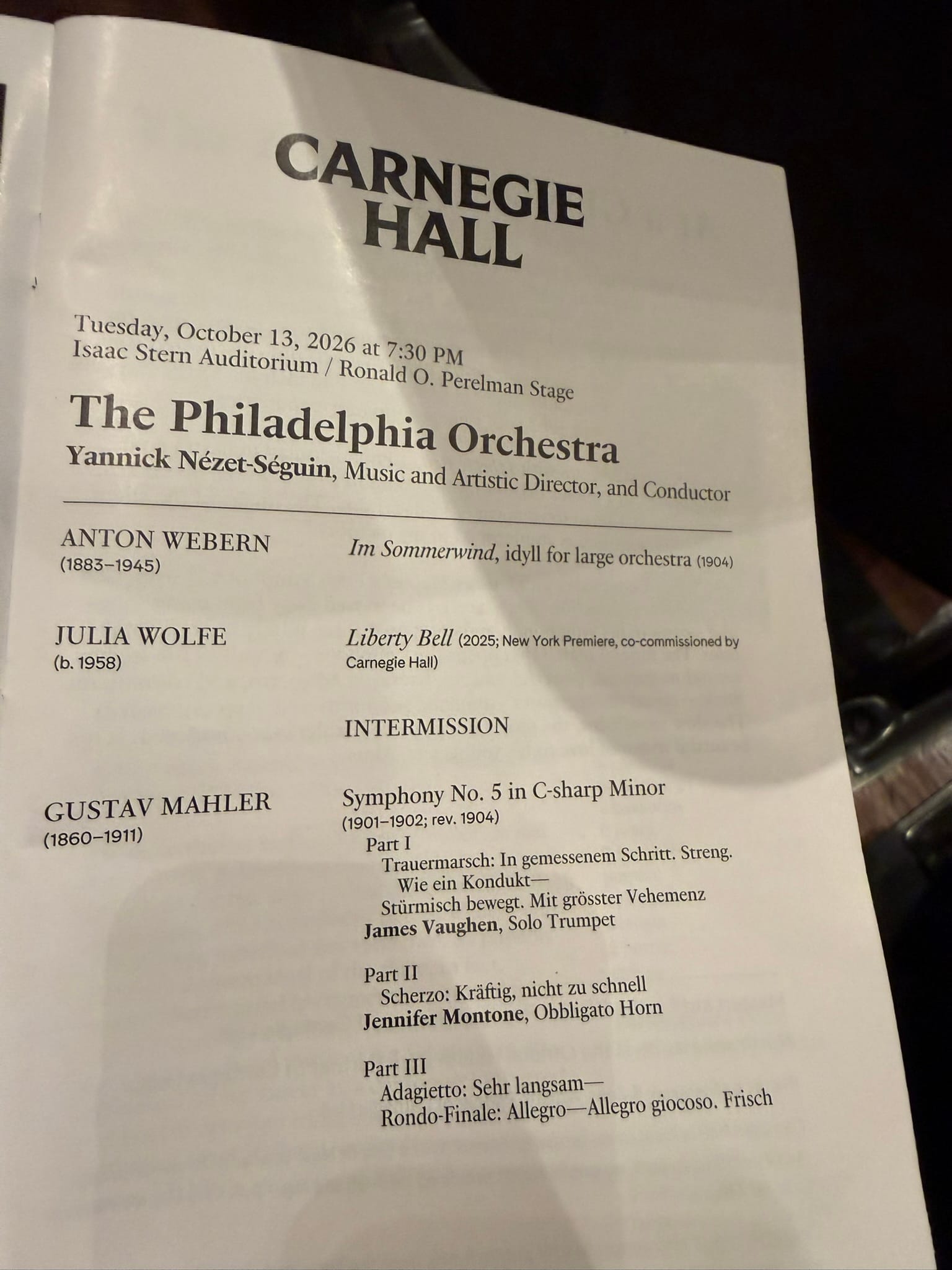
10.13.2026
The Philadelphia Orchestra
Yannick Nézet-Séguin Conductor
Webern Im Sommerwind, idyll for large orchestra
Wolfe Liberty Bell
Co-commissioned by Yannick Nézet-Séguin and The Philadelphia Orchestra
Mahler Symphony No. 5 in C-sharp minor
Part I
- Trauermarsch: In gemessenem Schritt. Streng. Wie ein Kondukt—
- Stürmisch bewegt. Mit grösster Vehemenz
James Vaughen, solo trumpet
Part II - Scherzo: Kräftig, nicht zu schnell
Jennifer Montone, obbligato horn
Part III - Adagietto: Sehr langsam—
- Rondo-Finale: Allegro—Allegro giocoso. Frisch
10.13.2026
このプログラムでウェーベルンとウルフを続けて聴くと、同じオーケストラとは思えないほど異なる音響世界が広がる。ある意味で、どちらも音によって時間と場所、人間の営みを描くサウンドスケープといえる。しかし、その響きはあまりにも違う。時間と場所が変われば、音楽も、そこに生きる人間の精神も、これほどまでに変わるのか。二つの作品を通して、それぞれの時代と場所で営まれてきた人間の現実の深さに、圧倒されずにはいられない。
そして後半は、マーラーの交響曲第5番。51歳のヤニック・ネゼ=セガンが取り組むマーラー・サイクルの始まりだ。
ウェーベルンの《夏の風の中で》は、オーストリアの名門貴族の家に生まれたウェーベルンが、1904年、20歳のときに作曲した作品である。シェーンベルクに師事する前の作品で、ブルーノ・ヴィレの詩に深く魅了され、自然のインスピレーションを通して人間の感覚と意識が解放されていく。風の動き、光の変化、草木の揺れ、そして静寂。フィリーはそれらを音にし、人間の理性や意志を超えた生命の力を響かせた。ウェーベルンは豊かな後期ロマン派の色彩と響きを用い、自然の細かな動きから風の高揚、そして静まりへと至る変化を描き出した。自然のなかに神性を見いだし、人間と世界が一体となる感覚である。
フィラデルフィア管弦楽団の演奏は、まるでディズニーの《ファンタジア》の世界が広がるようだった。オーケストラの響きが光や風となり、自然が生命を得て動き出す。圧倒的な恍惚の響きだった。フィリーが受け継いできた伝統の音が、そこにあった。
冒頭、右手のコントラバスから、ものすごく小さく繊細な、霧のように細かい音の膜が広がっていく。音は右から左へと空間を満たし、朝霧のなかから周囲の風景が少しずつ浮かび上がるように、弦楽器の首席奏者たちのささやきが聴こえてきた。セカンド・ヴァイオリンのキンバリーのソロを初めて聴いた。それは、20歳のウェーベルンが捉えた、夏の避暑地を吹き抜ける風と、自然のなかに息づく生命だった。
オーケストラのさまざまなソロが生み出す、光や空気の微細な変化に身を委ねる。豊かな管弦楽の色彩を通して、ウェーベルンが捉えた自然の美しさと、そこに身を置く人間の恍惚が鮮やかに浮かび上がった。まるで、フィラデルフィア管弦楽団の一人ひとりから、丁寧にこのプログラムへ招待されているような気分でもあった。
音が静かに消えていくと、自然に頭が垂れ、静かに拍手を続けていた。心が穏やかになり、自然のランドスケープの中で、空間をよく把握できる状態になった。
ジュリア・ウルフの《Liberty Bell》は、1958年にフィラデルフィアで生まれたウルフが、フィラデルフィア管弦楽団とカーネギーホールの委嘱によって発表した作品である。自由の鐘は1846年に大きなひびが入り、それ以来、鐘としての音を聴くことができなくなったとされる。しかし、鐘は今も自由の象徴として展示されている。ウルフは、この鳴らなくなった鐘を音楽によって再び鳴らす。
アメリカは今、独立宣言署名250周年を迎えようとしている。ウルフの音楽は、ありきたりな感情論を切り裂き、アメリカが自由の名のもとに約束してきたものと、その現実について、より鋭く、より大きな声で考えるきっかけを与えてくれた。
先ほど聴いたウェーベルンの《夏の風の中で》では、自然のなかで解放される人間の精神が、法悦の響きとなって描かれていた。一方、ウルフの作品には、フィラデルフィアで育った彼女自身の記憶と体験が、自由の鐘の歴史に深く溶け込んでいた。
ウルフは、フィラデルフィアの北にある小さな町で育ち、ひび割れた自由の鐘のイメージが静かに記憶に刻み込まれていたと語っている。
プログラムノートには、ウルフ自身の言葉が記されていた。《Liberty Bell》は沈黙していない。ステージには100人を超える音楽家がいて、騒々しく、大きな音を出している。独立したリズムの線がぶつかり合い、ぎざぎざした一つの全体を形づくる。金属のチャイムや音程を持つベル・プレートが打ち鳴らされ、響き、鳴り渡る。
自由を手に入れることは、静かで整然とした過程ではない。それは混乱し、騒々しく、今も続いている、互いに絡み合った闘いである。国の建国における最も基本的な理念である自由を、音楽はどうすれば体現し、伝えることができるのか。
自由という言葉は、硬貨に刻まれ、切手を飾り、詩や歌のなかで宣言され、演説のなかに散りばめられている。音楽は、ウルフがその喧騒に加わるための方法なのだ。彼女は忍耐を叫び、楽観を強く抱きしめ、前へ進む道を探す。自由の鐘に刻まれた「その地に住むすべての者に」という言葉は、自由という約束に手を伸ばすすべての人に語りかけている。
実際に聴いてみると、とても生々しい音楽だった。冒頭から、現代音楽特有の反復が続く。決して耳当たりのよい音楽ではない。ショスタコーヴィチのように音楽を劇として構成するわけでもない。先ほど《夏の風の中で》を演奏したのと同じオーケストラとは思えないほど、無機質で荒々しい音の波が押し寄せる。工業化や商業化の進む社会に、人々の声や生活が溶け込んでいくような、騒々しい響きだった。
ステージの中央から金属のチャイムが鳴る。左奥からは、火事を知らせる半鐘のような音が、カンカンカンカンと響き渡る。警告の鐘だ。
後半になると、ポップスやジャズの要素が前面に現れ、フィラデルフィア管弦楽団の音が勢いよく弾ける。しかし、そこにも再び喧騒のようなクラスターが押し寄せ、鐘の響きが重なる。異なるリズムや音色がぶつかり合い、自由をめぐる闘争のように、音楽は激しく動き続ける。
フィラデルフィアで育ったウルフの記憶と経験が、鐘を通して人間の歴史にのみ込まれていく。個人の記憶が社会の歴史と交わり、巨大な音のうねりとなって目の前に現れる。そんな生々しい体験だった。
ウルフの自由の鐘を、今、カーネギーホールでフィラデルフィア管弦楽団が鳴らす。そのことには大きな意味がある。問われているのは、カーネギーホールやクラシック音楽、オーケストラ、そしてそこに集まる聴衆が、ウルフの音楽に刻まれた歴史の響きを、自分たちの行動や考えにどう生かすかということだ。明日の生活や、これからの社会への投資に、どのようにつなげていくのか。時間のなかで風化してきた人間らしさを、どう取り戻すのか。弱い立場に置かれた人々が、さらに弱い立場へと追い込まれていく。その循環に気づいた人間は、どうすれば周囲の人々の意識や行動に働きかけ、未来を変えていけるのか。
自由の鐘が問いかけるのは、自由という理念の歴史だけではない。その理念を受け継ぐ私たちが、今、何を考え、どう行動するのかということでもある。
演奏が終わり、ヤニックがウルフをカーネギーホールのポディウムに招いたことが、とても印象に残った。そこには、彼女の音楽と、彼女が生きる時代への敬意が感じられた。オーケストラやコンサートホールが現代の作曲家とどのような関係を築き、音楽を通して社会とどう向き合うのか。さまざまな思いが浮かぶと同時に、ウルフが築いてきた音楽への祝福の気持ちで胸がいっぱいになった。
休憩時間に、ウルフに左奥から聞こえてきた鐘の音について質問した。鐘のような形の楽器がステージ上に見当たらなかったからだ。ウルフは、それがこの作品のために特別に作られた金属製のプレートだと教えてくれた。鐘そのものではなく、金属のプレートによって鐘の響きを生み出していたのだ。ウルフは、そうした音色を通して、鳴らなくなった自由の鐘の存在を音楽のなかに響かせていたことになる。
そして後半は、ヤニックのマーラーの交響曲第5番。ウルフの巨大な音響世界を通過したフィラデルフィア管弦楽団がマーラーを鳴らすと、どうなるのか。そこには、時に生々しく、今を生きる私たちの心をえぐる響きがあった。そして時に、マーラーが生み出した純粋な音の色彩や形の連なりに魅了された。
冒頭のトランペットが刻む運命の脈動は、マーラーを壮大な交響曲としてロマン化してきた現代の聴衆にとって、異様なほど生々しい。先ほどのウルフの鐘が警告を発したように、トランペットもまた、何かの到来を告げる。
四拍子の輪郭をはっきりと感じさせない、繊細なマーラーの筆致。フレーズをあえてぎこちなく扱う、癖の強い演奏だと感じた。オーケストラは、まるでロボットのように、壊れた巨大な機械のように、その歯車を動かし始める。
20世紀が幕を開けて間もない頃に生まれたこの音楽には、当時の人間の精神と、その周囲を取り巻く世界が刻まれている。その息吹は、今を生きる私たちにどう響くのか。
トランペットは驚くほど集中した響きを聴かせる。運命の脈動が内側から湧き起こり、音の連なりとなって現れる。この脈動は作品を通して繰り返し姿を現し、そのたびに、幻想や戸惑いのなかにいた意識が我に返る。世紀末の巨大なうごめき、人間の精神の揺らぎ、愛や憧れ。マーラーの音楽には、そうしたものが幾重にも折り重なっている。
フィラデルフィア管弦楽団とヤニック・ネゼ=セガンの集中力は、先日メットで聴いた《マクベス》にも通じるものがあった。楽器はよく歌い、響きは注意深く選び抜かれている。マーラーが緻密に組み上げた交響曲のクラフトが、数々のソロを通してカーネギーホールに浮かび上がった。
不気味な運命の脈動がオーケストラ全体へと広がる第1楽章。そのなかを、ファースト・ヴァイオリンが人間味あふれる声でうねりながら進んでいく。シャープやフラットが幾重にも重なる旋律には、マーラーのダークな世界をさまよう人間の声が聴こえる。楽器に人の声を模倣させながら、音楽は揺れ、うねり、前へと進む。三オクターブを超える広い音域を駆け巡る旋律が、運命の脈動のなかを竜巻のように巻き上がっていく。
ソロや小編成のアンサンブルを支える演奏には、オーケストラ全体の見事な統一感があった。一方、セクション全体がひとつのソロのように展開する場面では、例えば16人のファースト・ヴァイオリンが、それぞれソリストのように演奏する。一人ひとりの声が立ち上がり、個々の叫びを聴き取ることができた。まさに、今のフィラデルフィア管弦楽団の内部に入り、その音楽が生まれる現場を覗いているような気分だった。
音が薄くなる場面では、現代アートのギャラリーに作品が一つずつ姿を現すように、管楽器や弦楽器の首席奏者たちが見事なソロを披露する。個々の音色が際立ち、それぞれの楽器が独立した存在として聴こえてくる。しかし、巨大なトゥッティが始まると、それらの繊細な線は圧倒的なエネルギーにのみ込まれていく。個々の声が立ち上がり、やがて巨大な全体へと溶け込んでいく。その対比が鮮烈だった。
第3楽章のスケルツォを経て、第4楽章のアダージェットへ。ここは格別だった。感情を煽ることなく、マーラーが組み上げた音のクラフトを鮮やかに聴かせる。ハープが描く幾何学的な形と響き。その上に弦楽器の各セクションが音楽を形づくる。それぞれの音色は同じ時間を共有しながら、驚くほど絞り込まれ、独立して響いている。
アダージェットを感情の渦にのみ込ませず、交響曲を演奏するオーケストラが持つ最大の魅力を生かして、今のフィリーが絞り出す集中した響き。マーラーの音楽が持つ構造と色彩が、鮮明に立ち上がる演奏だった。涙は一粒もこぼれなかった。
多くの聴衆は、期待していたものとは違うマーラーを聴いたかもしれない。しかし、そこにはダヴィドフスキーやフェルドマンのように、時代のなかで問いを投げかけてきた作曲家たちの音のクラフトにも通じる感覚があった。音楽を感情の表現としてだけでなく、音そのものの形、響き、時間の組み立てとして聴かせる。その感覚が、このマーラーの演奏にも息づいていた。
ホルンの呼びかけからクラリネットのソロへ。そしてオーケストラ全体が息をのむ、ダイナミックなロンド・フィナーレが始まる。
ここまで聴いてきて、ヘトヘトだった。下を向いたまま、音が身体を通り過ぎていくのを感じていた。モチーフが何度も展開され、変奏が生まれ、頂点を迎え、そしてまた始まる。19世紀から20世紀にかけて巨大化していったオーケストラの悲鳴のようにも感じた。
すると、フィリーの首席フルート奏者、ジェフリーの瑞々しい音色が聴こえてきた。乾いた広大な砂漠のなかにオアシスを見つけたような気分だった。
ヤニックは、ウルフと同じように、マーラーを少しも美化していない。そのことが、ここではっきりと感じられた。なぜ、聴き手の精神をすり減らすほど、オーケストラの力を振り絞らせるのか。ヤニックがマーラーのなかに見いだした、今、私たちが聴くべき音がそこにあったのだ。
ヤニックとフィラデルフィア管弦楽団は、当時のマーラーを再現したわけでも、単に現代的な響きに置き換えたわけでもない。ウェーベルンとウルフを経て、このプログラムを聴いてきたからこそ、マーラーの音楽がこのように響く必然性が生まれていた。
そして、ジェフリーのフルートは、ほとんど死にかけていた私の心に瑞々しい音色を与え、私は息を吹き返した。これはマーラーの死生観を、まさに今、生で体験させる演奏だった。私は、この瞬間にこそヤニックのマーラーが表れているのだと強く感じた。
曲が閉じると、爆音のブラボーコールが沸き起こった。アメリカらしい巨大な歓声にカーネギーホールが包まれた。最初から最後まで生々しかった。どの楽員も全身全霊で作品に身を捧げ、私たちにありのままの姿を届けてくれた。
プログラムを通じて、指揮者が自分のオーケストラからすべてを引き出そうとするような集中とエネルギーを感じた。シカゴ交響楽団を聴いたときにも、同じことを感じた。
ヤニックとフィリー、マケラとシカゴ、デュダメルとニューヨーク・フィル。アメリカの主要オーケストラの音楽監督が、巨匠型からオーケストラの力を極限まで引き出す英雄型へと移りつつあるようにも見える。
では、ボストン交響楽団とクリーブランド管弦楽団は、次の音楽監督を誰にするのだろう。そして、その顔ぶれは、シーズンを通じてカーネギーホールのステージに登場していくことになる。
Comments ()