Where Is “the Street”? — Tribeca New Music
9.25.2026 7:30 PM - 9:15 PM
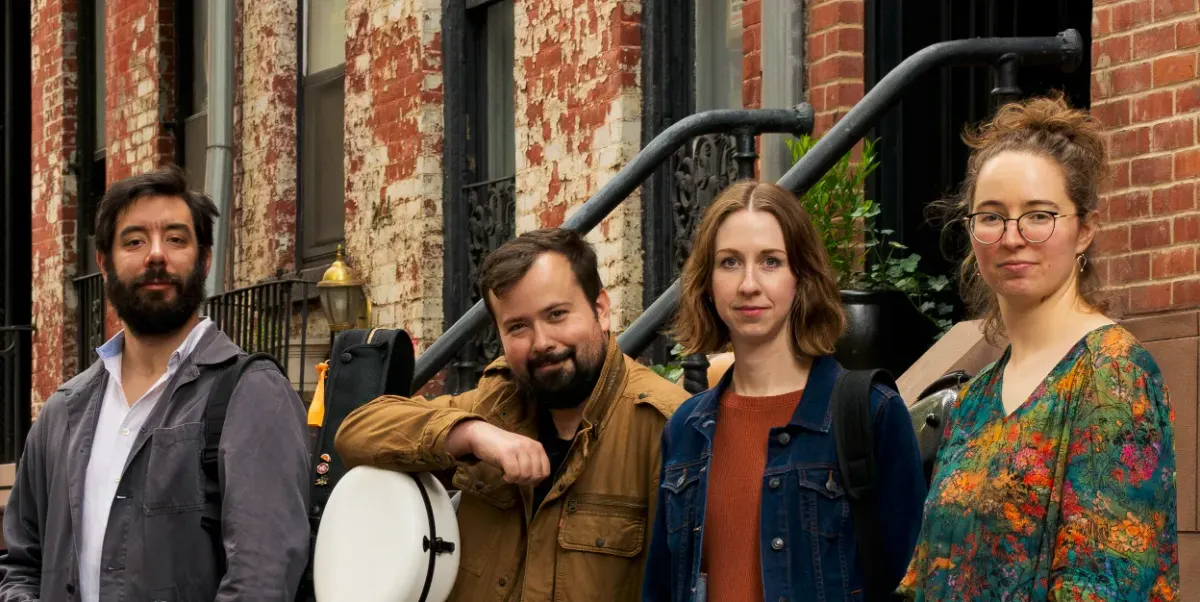
Tribeca New Music opens its season with Best in Score 2026, welcoming the Orange Road Quartet for a program centered on new works by emerging composers.
Best in Score 2026
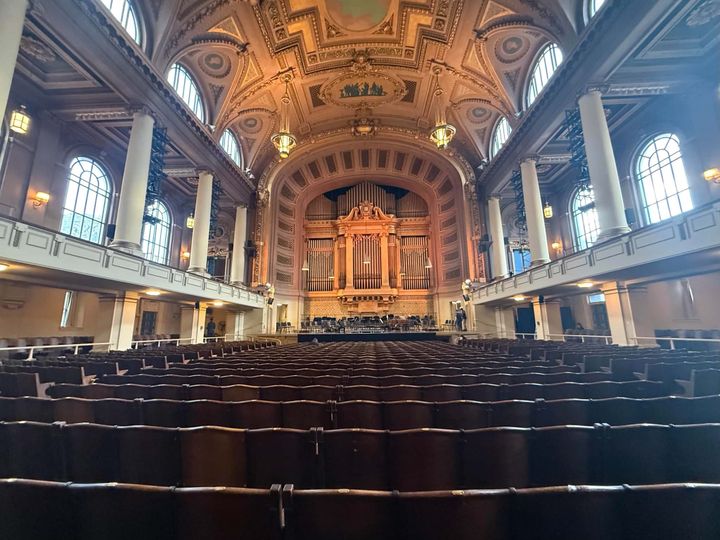
The DiMenna Center – Benzaquen Hall, 10018
Artist
Orange Road Quartet
Lauren Conroy and Miguel Calleja, violins
Dudley Raine IV, viola
Jordan Bartow, cello
Program
Christopher Cerrone — Can’t and Won’t
Written in 2017, this approximately 11-minute string quartet grew out of Cerrone’s question of how one might find repose amid confusion and the terrifyingly constant distractions of everyday life. Whenever a quiet melody seems about to emerge, it is interrupted by more violent sounds. Music searching for stillness collides with music that disturbs it, trying to find a place to settle, even if complete peace is impossible.
Christopher Cerrone is an American composer born in New York in 1984. He remains based in the New York area and teaches composition at the Mannes School of Music.
Reena Esmail — Zeher
Zeher turns the experience of a sick body gradually recovering into music. Esmail wrote the piece after suffering a severe throat infection in 2018 that made it difficult to speak and swallow. The word “Zeher” means “poison” in Hindi.
The piece uses two Indian ragas, Todi and Bhimpalasi. Todi has a dark and unstable sound, while Bhimpalasi is gentler and gradually brings greater stability to the music. A voice and breath lost through illness slowly return within the music.
Reena Esmail is a Los Angeles-based composer whose work moves between Indian classical music and Western classical music. Born in 1983, she studied composition at Juilliard and Yale.
Luca Pasquini — in a past life
2026 TNM Young Composer Competition — First Prize, Undergraduate Division
A work for two violins based on the feeling that people from the past may still exist within us. Written in 2024 and approximately eight and a half minutes long, the piece grew from Pasquini’s visit to a cathedral in Rome where the seventeenth-century composer Bernardo Pasquini once played the organ. Pasquini does not know whether he is actually descended from him, but the visit brought back the memory of his grandmother singing in church.
Music from the past, a possible ancestor, the memory of a grandmother, and the person standing here now. Those different times appear between the two violins.
Luca Pasquini is a young composer, pianist, and sound artist born in 2004. Originally from Denver, Colorado, he is currently studying composition at NYU Steinhardt.
Sandro Tsikoridze — Common Swift
World Premiere
The piece draws inspiration from the moment the common swift takes flight and the extraordinary endurance that lets it stay airborne. A bird needs tremendous force to leave the ground, but once airborne, it can fly for long periods. Tsikoridze turns that struggle to take off, and the astonishing persistence that follows, into music.
Sandro Tsikoridze is a young composer from Georgia. He studied composition at the Vano Sarajishvili Tbilisi State Conservatoire. In 2017, he won first prize in composition at the Borjomi International Competition. Around 2021, he also presented research on minimalism titled “Less is More.”
Will Stackpole — Here Without Trying
2026 TNM Young Composer Competition — First Prize, Graduate Division
A string quartet inspired by the moment during meditation when the mind wanders and then returns to stillness. Written in 2022 and approximately 14 minutes long, the piece begins with an attempt to quiet the mind, only for thoughts to keep appearing. Stackpole considers this distraction itself to be part of meditation.
The work is in three movements. It begins with quiet meditation. In the second movement, the four instruments layer different sounds and continue moving restlessly, like wandering thoughts. Finally, the music returns to stillness.
When you become distracted, notice it and return to stillness. The repetition itself becomes the music.
Will Stackpole is a New York-based American composer, guitarist, and audio engineer. He studied music and technology at Stevens Institute of Technology and completed his master’s and doctoral studies in composition at Juilliard. He currently teaches at Stevens Institute.
Peni Candra Rini — Hujan
A work about rain, depicting the moment when rain falls on dry earth, and life begins to return. Hujan means “rain” in Indonesian.
The piece is the fourth movement of Rini’s 2023 work Segara Gunung, following “Ocean-Mountain,” “Fire,” and “Drought.” After drought comes rain. The smell of rain rises from dry soil, and new life begins. Rini combines Javanese music with sounds from nature to evoke this renewal brought by rain.
Peni Candra Rini is a composer, singer, and educator from Java, Indonesia, born in 1983. She is particularly important as a performer of sindhen or pesindhen, the female vocal tradition of Javanese gamelan, while also working as a contemporary music composer.
Tribeca New Music is a nonprofit music organization based in New York. It presents new works by contemporary composers, including emerging composers, and works not only in performance but also in recording and dissemination. The organization describes its mission as opening contemporary music from “academia” to “the street.” Yet when you look at the backgrounds of the composers on this program, names such as Juilliard and Yale appear again and again.
So where, exactly, is “the street”?
“Street.” Independent. Underground. Alternative. Simply using these words can make something appear to stand outside the existing system. I believe real art comes from the street, so for now, I will listen to the music.
There are places in New York like Talea’s Tuesday concerts. They are refined and carefully curated, places where you can witness sensibilities taking shape as they emerge. Yet the people who dress well, create a lifestyle they consider beautiful, and move through the worlds of design, architecture, painting, music production, trading, management, and so on, using their own sense of taste, do not necessarily go there. They gather around things whose value has already been established. But they rarely go out on their own to listen to something whose value has not yet been guaranteed by anyone. They want to experience it with their own bodies before someone tells them, “This is great,” and to find out whether something is actually happening inside them.
How do you sharpen that sense? Arts management raises slogans like a politician: “From academia to the street.” “New music for more people.” But no one tells you what happens when you listen. So you open the door yourself and walk in. And there, an unfamiliar sensation is waiting for you. You may not be able to explain it, but it can take you somewhere you have never been before, to a landscape you have never seen.
Orange Road Quartet is a New York-based string quartet focused on collaborating with contemporary composers. It began in 2021 as “The New Sounds Quartet,” the University of South Carolina’s quartet-in-residence, and was later renamed Orange Road Quartet. The quartet is currently the Cuker and Stern Graduate String Quartet in Residence at The New School / Mannes School of Music and receives coaching from JACK Quartet.
クラシックのストリートを探せ!――トライベッカ・ニューミュージック
Tribeca New Musicが、シーズン開幕公演《Best in Score 2026》にOrange Road Quartetを迎え、新進作曲家の作品を集めた演奏会を開催する。
9.25.2026
Best in Score 2026
Location
The DiMenna Center - Benzaquen Hall, 10018
Artist
ORANGE ROAD QUARTET
Lauren Conroy and Miguel Calleja, violins
Dudley Raine IV, viola
Jordan Bartow, Cello
Program
Christopher Cerrone《Can’t and Won’t》
2017年に書かれた、約11分の弦楽四重奏曲。Cerroneはこの作品について、混乱や、恐ろしいほど絶え間なく続く気の散るものの中で、どうすれば静けさ(repose)を見つけられるのかが作品の底にあったと語っている。それは、静かな旋律が生まれようとするたびに激しい音がそれを遮る。静けさを求める音楽と、それを邪魔する音楽がぶつかりながら、完全な平穏ではなくても、一時的に落ち着ける場所を見つけようとする。Christopher Cerrone(クリストファー・セローネ)は、1984年ニューヨーク生まれのアメリカ人作曲家。ニューヨークを拠点に活動し、Mannes School of Musicで作曲を教えている。
Reena Esmail《Zeher》
病気になった身体が、少しずつ癒えていく過程を音楽にした。2018年、Esmailが重い喉の感染症にかかり、話すことも飲み込むことも苦しくなった経験から生まれた。「Zeher」はヒンディー語で「毒」を意味する。インドの二つのラーガ、TodiとBhimpalasが使われる。Todiは暗く不安定な響き、Bhimpalasはそれより穏やかで、少しずつ音楽を安定させていく。病気で失われた声と呼吸が、音楽の中で少しずつ戻ってくる。Reena Esmailは、インド古典音楽と西洋クラシックを行き来する、ロサンゼルスを拠点とする作曲家です。1983年生まれ。JuilliardとYaleで作曲を学んでいる。
Luca Pasquini《in a past life》
2026 TNM Young Composer Competition 第1位(学部部門)
過去の人間が今の自分の中にいるかもしれない、という感覚を音楽にした、2本のヴァイオリンのための作品である。2024年作、約8分半。Pasquiniは、自分が17世紀の作曲家Bernardo Pasquiniの子孫なのかは分からないが、ローマでPasquiniがオルガンを弾いていた大聖堂を訪れたとき、祖母が教会で歌っていた声を思い出したそうだ。過去の音楽と、先祖かもしれない人、祖母の記憶、そして今ここにいる自分。その時間が、2本のヴァイオリンの間に現れる。Luca Pasquini(ルカ・パスクイーニ)は、2004年生まれのニューヨーク出身の若手作曲家、ピアニスト、サウンドアーティストである。コロラド州デンバー出身で、現在はNYU Steinhardtで作曲を学んでいる。
Sandro Tsikoridze《Common Swift》
ハリオアマツバメではなく、英語でCommon Swiftと呼ばれる鳥が飛び立つ瞬間と、その飛び続ける力から発想した。鳥が地上から飛び立つまでには大きな力が必要だが、一度空中に上がると、長時間飛び続けることができる。Tsikoridzeは、その飛び立つまでの苦しさと、空中に出てからの驚異的な持続力を音楽にしている。Sandro Tsikoridze(サンドロ・ツィコリゼ)は、ジョージア出身の若手作曲家である。ジョージアのヴァノ・サラジシヴィリ・トビリシ国立音楽院で作曲を学んだ経歴がある。2017年にはBorjomi International Competitionの作曲部門で第1位を受賞し、2021年頃にはミニマリズムについて「Less is More」という研究発表も行っている。
Will Stackpole《Here Without Trying》
2026 TNM Young Composer Competition 第1位(大学院部門)
瞑想しているときの「心がそれて、また静けさに戻ってくる瞬間」を音楽にした弦楽四重奏曲である。2022年作、約14分。頭を静かにしようとしても、次々に考えが浮かんでくる。Stackpoleは、その「気が散ること」も瞑想の一部だと考えた。曲は3楽章からなり、最初は静かな瞑想から始まる。第2楽章では4人の楽器がさまざまな音色を重ねながら、落ち着かない思考のように動き続ける。そして最後に、再び静けさへ戻っていく。つまり、気が散り、気づき、また静けさに戻る。その繰り返し自体を音楽にした作品。Will Stackpole(ウィル・スタックポール)は、ニューヨークを拠点のアメリカの作曲家、ギタリスト、オーディオ・エンジニアである。Stevens Institute of Technologyで音楽とテクノロジーを学び、Juilliardで作曲の修士・博士課程を修了している。現在はStevens Instituteで講師も務めている。
Peni Candra Rini《Hujan》
「雨」をテーマに、乾いた大地に雨が降り、生命が戻ってくる瞬間を描いた作品である。《Hujan》はインドネシア語で「雨」を意味する。2023年の作品《Segara Gunung》の第4楽章で、「Ocean-Mountain(海と山)」「Fire(火)」「Drought(干ばつ)」に続いて最後に置かれている。干ばつの後に雨が降る。乾いた土に雨の匂いが立ち、そこから新しい生命が始まる。ジャワ音楽と自然の音を重ね、その雨による再生を音楽にしている。Peni Candra Rini(ペニ・チャンドラ・リニ)は、1983年生まれ、インドネシアのジャワ島出身の作曲家、歌手、教育者である。ジャワの伝統音楽であるガムランの女性歌唱、シンデン(sindhen / pesindhen)の歌手でありながら、現代音楽の作曲家として活動している。
Tribeca New Musicは、ニューヨークを拠点とする非営利の音楽団体である。新進作曲家を含む現代の作曲家による新作を紹介し、演奏だけでなく、録音や作品の発信にも取り組んでいる。団体はその使命を、現代音楽を「アカデミア」から「ストリート」へ開くことだと表現している。ところが、このプログラムに参加する作曲家たちの経歴を見てみると、JuilliardやYaleといった名前が何度も出てくる。
では、いったい「ストリート」とはどこなのか。
「ストリート」インディペンデント、アンダーグラウンド、オルタナティブ。そうした言葉を掲げれば、それだけで既存の制度の外側にいるように見える。本当の芸術はストリートから生まれると思っているから、まず音楽を聴く。
ニューヨークには、Taleaの火曜日のコンサートのような場所がある。
洗練され、丁寧にキュレーションされていく過程で、感性が生まれていく様子を目の当たりにするが、センスのいい服を着て、自分が美しいと思うライフスタイルをつくり、デザイン、建築、絵画、音楽制作、トレーディング、マネジメント。さまざまな仕事の中で、自分の「センス」を使って生きている人たちがいない。彼らは、すでに価値が認められたものに集まる。しかし、まだ誰にも価値を保証されていないものを、自分で聴きに行くことは少ない。誰かが「これは素晴らしい」と言ってくれる前に、自分の身体で感じ自分の中に何かが起きているか確かめたい。
その感覚をどうやって磨くのか。
それを、アーツ・マネジメントは政治家のようにスローガンを掲げる。「アカデミアからストリートへ」。「新しい音楽を、もっと多くの人へ」。しかし、音楽を聴いたときに何が起こるか、誰も教えてくれない。 だから自分で扉を開けて中に入ってみる。すると知らない感覚が待っていて、説明できないが、今まで見たことがない景色の場所に連れて行ってくれる。
Orange Road Quartetは、ニューヨークを拠点とする弦楽四重奏団である。現代作曲家との共同制作を中心に活動している。2021年、South Carolina大学のレジデンス・カルテットとして「The New Sounds Quartet」で始まり、その後「Orange Road Quartet」に改名した。現在はThe New School / Mannes School of MusicのCuker and Stern Graduate String Quartet in Residenceを務め、JACK Quartetから指導を受けている。
Comments ()