Bach’s St. Matthew Passion — Love and Sacrifice
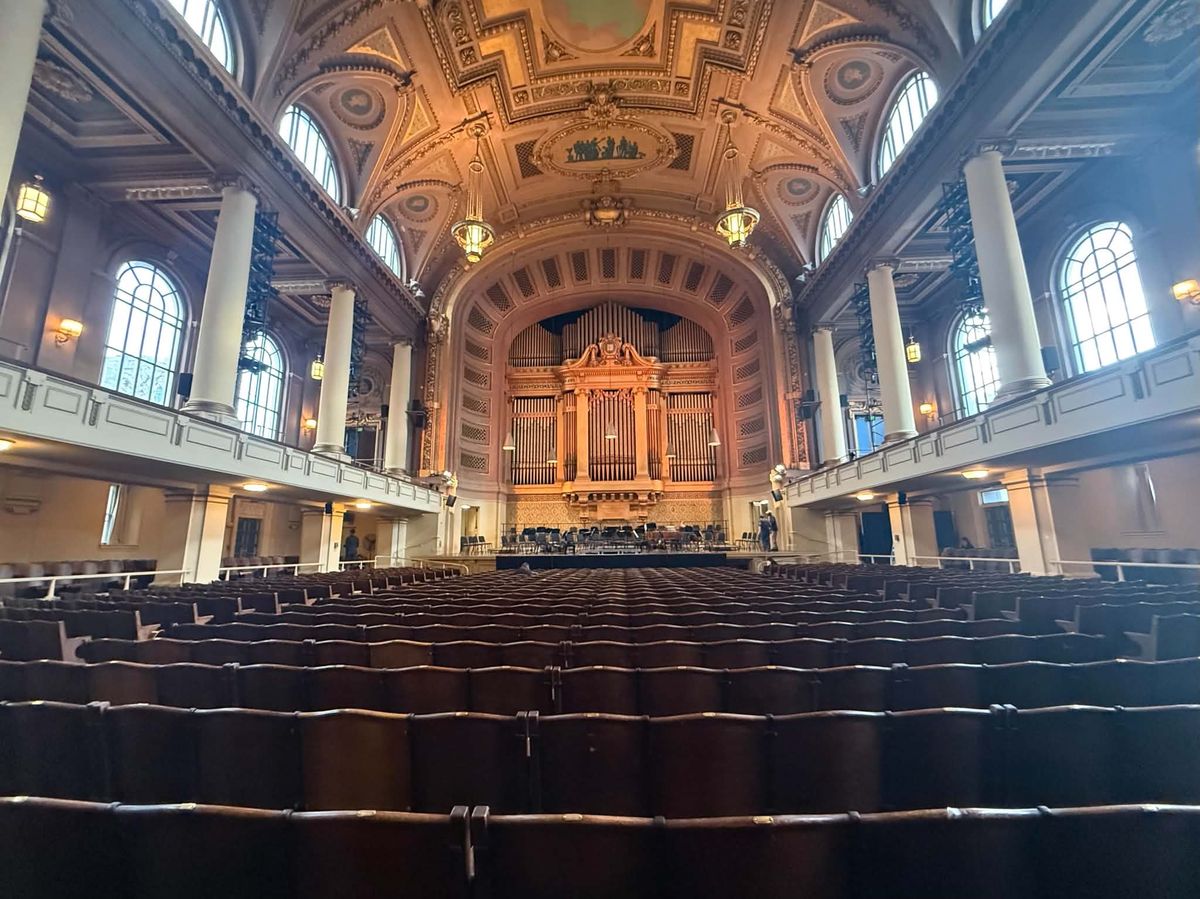
11. 1.2026 Woolsey Hall at Yale University
Juilliard415, the period-instrument ensemble of The Juilliard School, and Yale Schola Cantorum will perform Bach's St. Matthew Passion
The St. Matthew Passion is more than a retelling of Christ’s suffering and death. Through the responses of those who witness Jesus’s final days, it explores human weakness, guilt, love, and what it means to face others' suffering. Regardless of one’s religious beliefs, the work reaches deeply into the listener’s own experience.
A Story of Suffering and Faith
The St. Matthew Passion is believed to have premiered around 1727. Johann Sebastian Bach, born in 1685, was about 42.
Based primarily on the Gospel of Matthew in the New Testament, the work recounts the events leading to Jesus’s death: his betrayal by a disciple, arrest, trial, and crucifixion. The Evangelist, a tenor, narrates the story, while the words of Jesus and his disciples, the choruses representing the crowds, and the arias and chorales reflecting on human sin, sorrow, love, remorse, and forgiveness are woven together. The dialogue between two choirs and two orchestras gives the narrative a remarkable dramatic breadth.
The opening chorus, Kommt, ihr Töchter, helft mir klagen (“Come, ye daughters, share my mourning”), draws the listener into the Passion through questions and responses exchanged between the two choirs. “Whom do you see?” “What do you see?” These questions are directed not only at the characters within the story but also at the listener. Rather than observing the events from a distance, we are invited to confront them ourselves.
In this performance by Yale Schola Cantorum and Juilliard415, conducted by Grete Pedersen, I look forward to hearing the musical dialogue among the two choirs, the orchestra, and the soloists. As multiple voices intersect and recount the events from different perspectives, the Passion emerges not merely as a historical narrative but as a question that reaches into the human interior.
“Erbarme dich” — Remorse and the Hope for Forgiveness
In the alto aria Erbarme dich (“Have mercy”), which reflects Peter’s denial of Jesus and his subsequent remorse, how does the voice share its breath with the violin melody?
The soloist confronts a personal failure and pleads for mercy. The violin follows the voice, expressing emotions that words alone cannot fully convey. The melody lingers in sorrow, inviting us to consider what it might be saying. Is it the anguish of acknowledging one’s guilt, or the hope of forgiveness?
“Aus Liebe” — Love as Sacrifice
In Aus Liebe (“For love”), the solo voice, flute, and oboe da caccia come to the fore in a delicate interplay.
“For love, my Savior is willing to die.” Jesus’s death is presented as a sacrifice born of love itself. Without a basso continuo, the music draws attention to the space between sounds. The absence of a supporting bass line creates an almost weightless quality, as though the music has been released from the pull of earthly gravity. How does this stillness communicate death and love?
The Cry of Abandonment
The rich string accompaniment surrounding Jesus’s words resembles a musical halo of light. Yet when, facing death, he cries, “My God, my God, why hast thou forsaken me?” that accompaniment disappears. His words are left without their musical support, resounding as a solitary voice.
The music reveals Jesus not only as the Son of God but also as a human being experiencing suffering and loneliness. When the music suggesting his divinity vanishes, what remains may be the voice of a man confronting death alone.
“Mache dich, mein Herze, rein” — Preparing the Heart
In Mache dich, mein Herze, rein (“Make yourself clean, my heart”), sung before Jesus’s burial, the human heart becomes the place where Jesus is laid to rest.
The text calls on the heart to purify itself and prepare a place to receive and bury Jesus. Burial here signifies more than the narrative's end. It also becomes an act of taking the events of the Passion into one’s own inner life.
What does it mean to welcome Jesus into one’s heart and bury him there? Through listening to music, how far can we take another person's suffering into ourselves?
“Wir setzen uns mit Tränen nieder” — A Farewell in Tears
After Jesus’s death, the final chorus, Wir setzen uns mit Tränen nieder (“We sit down in tears”), offers a profound expression of mourning and a quiet farewell.
The narrative ends, but the sorrow, remorse, love, and longing for forgiveness expressed throughout the music remain with the listener.
When we listen to the St. Matthew Passion, we confront not only Jesus's suffering but also our own hearts. To love, to receive another person’s suffering, to regret our own mistakes, and to forgive others: what does this work leave in the hearts of those of us living today?
Performers and Ensembles
Grete Pedersen — Conductor
Grete Pedersen is a Norwegian conductor who has earned international recognition for her choral performances and recordings. She served as artistic director of the Norwegian Soloists’ Choir for 35 years, through 2025.
She has taught conducting at the Norwegian Academy of Music for more than three decades and works across a broad repertoire, from early music to contemporary compositions. With a deep understanding of historically informed performance practice, she has also commissioned and recorded contemporary works. In 2026, she became principal conductor of Yale Schola Cantorum.
Juilliard415 — Period-Instrument Ensemble
Founded in 2009, Juilliard415 is the period-instrument ensemble of The Juilliard School. Its name refers to A = 415 Hz, a pitch commonly used in Baroque performance.
The ensemble has performed with leading figures in the early-music world, including Harry Bicket, William Christie, Ton Koopman, and Jordi Savall. Its repertoire ranges from major works of the early-music tradition to rarely heard pieces.
Juilliard415 also performs opera and oratorio, commissions new works for period instruments, and appears at music festivals and concert venues around the world.
Yale Schola Cantorum — Chamber Choir
Yale Schola Cantorum is a chamber choir supported by Yale University’s Institute of Sacred Music. Founded in 2003 by Simon Carrington, the ensemble performs sacred music from the sixteenth century to the present.
Under Grete Pedersen's direction, the choir places particular emphasis on historically informed performance. Its members are selected by audition from among Yale University students, and the ensemble frequently collaborates with the instrumentalists of Juilliard415.
In addition to regular performances in New Haven and New York, Yale Schola Cantorum undertakes international tours and recording projects. Its repertoire includes sacred music by composers such as Palestrina, Schütz, Bach, and Brahms, alongside works from a wide range of other periods.
Eden Bartholomew — Soprano
Eden Bartholomew is a soprano with a strong interest in poetry and music, including art song interpretation. After studying literature and music at Vassar College, she pursued vocal studies and earned a Master of Music degree from the Peabody Institute in 2025.
As a vocal fellow at the Tanglewood Music Center, she gained experience as a soloist in contemporary chamber music, art song, and Bach’s music. She is currently studying at the Yale School of Music and the Institute of Sacred Music, while performing with Yale Schola Cantorum and the vocal ensemble Voxtet.
David Norman Bone — Tenor
David Norman Bone is an Iowa tenor who studied voice at Yale University’s Institute of Sacred Music and School of Music. He sings with both Yale Schola Cantorum and the vocal ensemble Voxtet.
Before attending Yale, he worked professionally with several ensembles in the Dallas–Fort Worth area, including the Dallas Bach Society and Verdigris Ensemble. He holds a Bachelor of Music degree from Iowa State University.
Gwen DeLaney — Mezzo-Soprano
Born in Boise, Idaho, Gwen DeLaney is a mezzo-soprano based in New Haven, Connecticut. She studies early music, chamber music, and oratorio at Yale University’s Institute of Sacred Music and School of Music, and is a member of Voxtet.
In 2025, she made her Lincoln Center debut as Hamor in Handel’s Jephtha, conducted by Nicholas McGegan and performed with Juilliard415. She has also appeared with Yale Schola Cantorum under Grete Pedersen in Carissimi’s Job and Buxtehude’s Membra Jesu nostri.
An active contemporary music performer, she has also appeared in opera as Hänsel in Hänsel und Gretel and Cherubino in The Marriage of Figaro.
Emily Krasinski — Soprano
Emily Krasinski comes from the Genesee Valley in western New York State. She studied voice and business at the Eastman School of Music, developing an approach to expression through both singing and language. In 2023, she founded her own chamber music concert series.
In 2026, she placed second in the Friends of Eastman Opera Competition and was named a finalist in the Jesse Kneisel German Lied Competition in both 2025 and 2026. She is currently studying early music, chamber music, and oratorio at Yale University’s Institute of Sacred Music and School of Music, and is a member of Voxtet.
Rozime Lindsey — Baritone
Rozime Lindsey is a baritone from Philadelphia whose work focuses on sacred music and opera. After studying voice at Boston University, he pursued graduate studies in early-music voice at Yale University.
He has appeared as a soloist with ensembles and festivals including Boston Baroque, the Arcadia Players, and the Charlotte Bach Festival. His solo repertoire includes Handel’s Messiah, Mozart’s Requiem, Bach’s St. Matthew Passion, and Schütz’s The Seven Last Words of Jesus Christ.
During the 2026–27 season, he is scheduled to perform in this production with Yale Schola Cantorum and Juilliard415, as well as in several other sacred-music programs.
John Richardson — Tenor
John Richardson comes from Huntington Beach, California, and is currently pursuing a master’s degree in voice at Yale University. He began studying classical voice while majoring in history at Brigham Young University, where he sang with the university’s choir, BYU Singers.
He later studied history at the University of Oxford in the United Kingdom, held a choral scholarship at The Queen’s College, Oxford, and spent two years performing with the choir of Clare College, Cambridge. He has appeared as a soloist on BBC Radio 3 and with Sinfonia Smith Square, and has toured throughout Europe and the United States.
After returning to the United States, he performed with ensembles based in Washington, D.C., including those of Washington National Cathedral and the Basilica of the National Shrine of the Immaculate Conception.
Abby Sherman — Mezzo-Soprano
Abby Sherman is a mezzo-soprano and music educator based in New Haven, Connecticut. She is a member of Voxtet at Yale University’s Institute of Sacred Music, where she is pursuing a Master of Musical Arts degree.
Active in both opera and concert performance, she has recently appeared as a soloist in Bach’s St. Matthew Passion. Her operatic roles include Sesto in Mozart’s La clemenza di Tito and the Child in Ravel’s L’Enfant et les sortilèges.
She also works in early-childhood music education and is committed to advancing equity in music education. She holds a master’s degree from the Peabody Institute and a bachelor’s degree from Muhlenberg College.
Lucas Zuehl — Bass-Baritone
Lucas Zuehl earned a Bachelor of Music degree in voice from Brigham Young University, with a minor in creative writing. He is currently studying early music, oratorio, and art song at Yale University’s Institute of Sacred Music.
During the 2023–24 season, he was selected as a U.S. Scholar for VOCES8 and participated in the ensemble’s performances, recordings, and educational outreach. As a vocal fellow at the Tanglewood Music Center, he studied with Dawn Upshaw and Randall Scarlata and also appeared at Spoleto Festival USA.
He is particularly interested in German art song and received an honorable mention in the 2024 Gerda Lissner Song and Lieder Competition.
バッハ《マタイ受難曲》——愛と犠牲
バッハの《マタイ受難曲》は、イエスの受難と死を描くと同時に、人間の罪、悔恨、愛、そして赦しを問いかける作品である。
冒頭の大合唱「Kommt, ihr Töchter, helft mir klagen」では、二つの合唱が問いと応答を交わしながら、聴き手を受難の物語へと導いていく。「誰を見るのか」「何を見るのか」。この呼びかけは、物語の登場人物だけでなく、聴き手自身にも向けられている。物語を外側から眺めるのではなく、自らもその出来事に向き合うよう促されるのである。
Grete Pedersenの指揮のもと、Yale Schola CantorumとJuilliard415が演奏する今回の《マタイ受難曲》では、二つの合唱とオーケストラ、独唱者たちが織りなす音楽の対話に耳を傾けたい。複数の声が交差し、それぞれの視点から物語を語ることで、受難は単なる歴史的な出来事ではなく、人間の内面に関わる問いとして立ち現れる。
アルトのアリア「Erbarme dich」では、悔恨と赦しを求める声がヴァイオリンの旋律とどのように呼吸を共有するのか。ペテロがイエスを否認した後の悲しみを背景に、独唱は自らの過ちを見つめ、憐れみを求める。ヴァイオリンは歌声に寄り添いながら、言葉だけでは表しきれない感情を紡いでいく。悲しみの中に長くとどまる旋律は、何を語るのだろうか。そこにあるのは、罪を認める苦しみなのか、それとも赦しへの希望なのか。
「Aus Liebe」では、独唱とフルート、オーボエ・ダ・カッチャの繊細な響きが中心となる。「愛ゆえに、私の救い主は死のうとされる」。イエスの死が、権力や暴力への抵抗としてではなく、愛そのものによる犠牲として歌われる。通奏低音を欠いた音楽の中で、音と音のあいだに広がる空間が際立つ。支えとなる低音がないことで、音楽は地上の重力から離れたような響きを生み出す。その静けさは、死と愛をどのように伝えるのだろうか。
イエスの言葉を包む豊かな弦楽器の響きは、音楽的な「光の輪」のようでもある。福音書の物語において、イエスは神の子として描かれ、その言葉は特別な響きに包まれる。しかし、死を目前にして「わが神、なぜ私を見捨てられたのですか」と叫ぶとき、その響きは消える。イエスの言葉は、伴奏を失い、孤独な声として響く。音楽は、神の子であると同時に、苦しみと孤独を抱える人間としてのイエスを浮かび上がらせる。神聖さを示す音楽が消える瞬間、そこに現れるのは、死を前にした一人の人間の声なのかもしれない。
そして「Mache dich, mein Herze, rein」。イエスの埋葬に先立って歌われるこのアリアでは、人間の心をイエスの埋葬の場所とするという思想が示される。歌詞は、イエスを自らの心の中に葬るために、心を清め、場所を整えるよう呼びかける。ここで埋葬は、物語の終わりを意味するだけではない。受難の出来事を自分自身の内面に引き受ける行為でもある。受難の物語は、遠い過去の出来事にとどまらず、聴く者自身の内面へと移っていく。イエスを自分の心に迎え、埋葬するとは何を意味するのか。音楽を聴くことによって、私たちは他者の苦しみをどこまで自分のものとして受け止められるのだろうか。
《マタイ受難曲》は、死と苦難の物語であると同時に、愛と犠牲の物語でもある。バッハは、福音書の言葉を音楽にすることで、物語を伝えるだけでなく、そこに描かれた感情や問いを聴き手の経験へと結びつけていく。悲しみ、悔恨、孤独、そして赦しへの願い。それらは宗教的な物語の中だけに存在する感情ではない。
この作品を聴くとき、私たちはイエスの受難を見つめながら、同時に自分自身の心にも向き合うことになる。愛すること、誰かの苦しみを受け止めること、過ちを悔いること、そして他者を赦すこと。《マタイ受難曲》は、いまを生きる私たちの心に何を残すのだろうか。
出演者・団体紹介
Grete Pedersen(グレーテ・ペデルセン)|指揮
ノルウェー出身の指揮者。2025年まで35年間にわたりノルウェー・ソリスト合唱団の芸術監督を務め、合唱音楽の演奏と録音を通じて国際的な評価を築いてきた。ノルウェー音楽アカデミーで30年以上にわたり指揮法を教え、古楽から現代音楽まで幅広いレパートリーに取り組んでいる。歴史的な演奏様式への深い理解を持ち、現代作品の委嘱や録音にも携わってきた。2026年よりYale Schola Cantorumの首席指揮者を務める。
Juilliard415|古楽器アンサンブル
Juilliard415は、2009年に創設されたジュリアード音楽院の古楽器アンサンブルである。名称の「415」は、バロック音楽の演奏で一般的に用いられる音高、A=415Hzに由来する。
17・18世紀の音楽を中心に、ハリー・ビケット、ウィリアム・クリスティ、トン・コープマン、ジョルディ・サヴァールら古楽界を代表する音楽家と共演し、主要なレパートリーから演奏機会の少ない作品まで幅広く取り上げてきた。オペラやオラトリオの上演、古楽器のための新作委嘱にも取り組み、世界各地の音楽祭や演奏会に出演している。
Yale Schola Cantorum|室内合唱団
Yale Schola Cantorumは、イェール大学宗教音楽研究所の支援を受け、16世紀から現代までの宗教音楽を演奏する室内合唱団である。2003年にサイモン・キャリントンによって創設され、グレーテ・ペデルセンの指揮のもと、歴史的な演奏様式を重視した活動を行っている。
イェール大学の学生からオーディションで選ばれた団員によって構成され、Juilliard415の器楽奏者ともしばしば共演する。ニュー・ヘイブンとニューヨークでの定期公演に加え、世界各地でのツアーや録音にも取り組み、パレストリーナ、シュッツ、バッハ、ブラームスなど、幅広い時代の宗教音楽を紹介してきた。
Eden Bartholomew(エデン・バーソロミュー)|ソプラノ
詩と音楽への情熱を持ち、歌曲の解釈にも力を注ぐソプラノ歌手。ヴァッサー大学で文学と音楽を学んだ後、声楽の道へ進み、2025年にピーボディ音楽院で音楽修士号を取得した。タングルウッド音楽センターの声楽フェローとして、現代室内楽や歌曲、バッハ作品のソリストを経験。現在はイェール大学音楽院および宗教音楽研究所で学びながら、Yale Schola Cantorumと声楽アンサンブルVoxtetで活動している。
David Norman Bone(デイヴィッド・ノーマン・ボーン)|テノール
アイオワ州出身のテノール歌手。イェール大学宗教音楽研究所および音楽院で声楽を学び、Yale Schola Cantorumと声楽アンサンブルVoxtetの両方で歌っている。イェール大学に進学する前は、ダラス・バッハ協会やヴェルディグリス・アンサンブルなど、ダラス・フォートワース地域の複数の団体でプロとして活動してきた。アイオワ州立大学で音楽の学士号を取得。
Gwen DeLaney(グウェン・デラニー)|メゾソプラノ
アイダホ州ボイシ出身、コネチカット州ニュー・ヘイブンを拠点に活動するメゾソプラノ歌手。イェール大学宗教音楽研究所および音楽院で、古楽、室内楽、オラトリオを学び、Voxtetに所属している。
2025年には、ニコラス・マギーガン指揮、Juilliard415とのヘンデル《イェフタ》でハモル役を歌い、リンカーン・センターにデビュー。Grete Pedersen指揮のYale Schola Cantorumとは、カリッシミ《ヨブ》やブクステフーデ《我がイエスの四肢》でも共演している。現代音楽にも積極的に取り組み、オペラでは《ヘンゼルとグレーテル》のヘンゼル役、《フィガロの結婚》のケルビーノ役などを演じてきた。
Emily Krasinski(エミリー・クラシンスキー)|ソプラノ
ニューヨーク州西部のジェネシー・ヴァレー出身。イーストマン音楽学校で声楽と経営学を学び、歌とことばを通じた表現に取り組んできた。2023年には、自ら企画する室内楽コンサート・シリーズを立ち上げた。
2026年にはFriends of Eastman Opera Competitionで第2位を獲得し、Jesse Kneisel German Lied Competitionでは2025年と2026年にファイナリストに選ばれた。現在はイェール大学宗教音楽研究所および音楽院で古楽、室内楽、オラトリオを学び、Voxtetに所属している。
Rozime Lindsey(ロザイム・リンジー)|バリトン
フィラデルフィア出身。宗教音楽とオペラを中心に活動するバリトン歌手。ボストン大学で声楽を学んだ後、イェール大学で古楽声楽の大学院課程に進んだ。
これまでにボストン・バロック、アルカディア・プレイヤーズ、シャーロット・バッハ音楽祭などでソリストを務めてきた。独唱レパートリーには、ヘンデル《メサイア》、モーツァルト《レクイエム》、バッハ《マタイ受難曲》、シュッツ《キリストの最後の七つの言葉》などが含まれる。2026–27年シーズンには、Yale Schola CantorumとJuilliard415による本公演のほか、複数の宗教音楽作品に出演する予定である。
John Richardson(ジョン・リチャードソン)|テノール
カリフォルニア州ハンティントンビーチ出身。現在はイェール大学で声楽の修士課程に在籍している。ブリガム・ヤング大学で歴史学を学ぶなかでクラシック声楽を始め、同大学の合唱団BYU Singersに所属した。
英国ではオックスフォード大学で歴史学を学び、クイーンズ・カレッジ合唱団の奨学生を経て、ケンブリッジ大学クレア・カレッジ合唱団で2年間活動した。BBC Radio 3やSinfonia Smith Squareでソリストを務め、欧州や米国へのツアーにも参加した。帰国後はワシントンD.C.を拠点に、ワシントン国立大聖堂や無原罪の御宿りの国立聖堂などで歌ってきた。
Abby Sherman(アビー・シャーマン)|メゾソプラノ
コネチカット州ニュー・ヘイブンを拠点に活動するメゾソプラノ歌手、音楽教育者。イェール大学宗教音楽研究所のVoxtetに所属し、音楽芸術修士号の取得を目指している。
オペラとコンサートの両分野で活動し、近年はバッハ《マタイ受難曲》の独唱のほか、モーツァルト《皇帝ティートの慈悲》のセスト役、ラヴェル《子どもと魔法》の子ども役などを演じてきた。幼児向け音楽教育にも携わり、音楽教育の公平性を重視している。ピーボディ音楽院で修士号、ミューレンバーグ大学で学士号を取得した。
Lucas Zuehl(ルーカス・ツール)|バス・バリトン
ブリガム・ヤング大学で声楽を専攻し、創作ライティングを副専攻として音楽学士号を取得した。現在はイェール大学宗教音楽研究所で、古楽、オラトリオ、歌曲を専門に学んでいる。
2023–24年シーズンにはVOCES8の米国奨学生に選ばれ、同アンサンブルの公演、録音、教育普及活動に参加した。タングルウッド音楽センターでは声楽フェローとしてドーン・アップショウとランドール・スカルラタに師事し、スポレート・フェスティバルUSAにも出演。ドイツ歌曲にも力を入れ、2024年のGerda Lissner Song and Lieder Competitionで奨励賞を受賞している。

Comments ()