Yannick’s Mahler Cycle

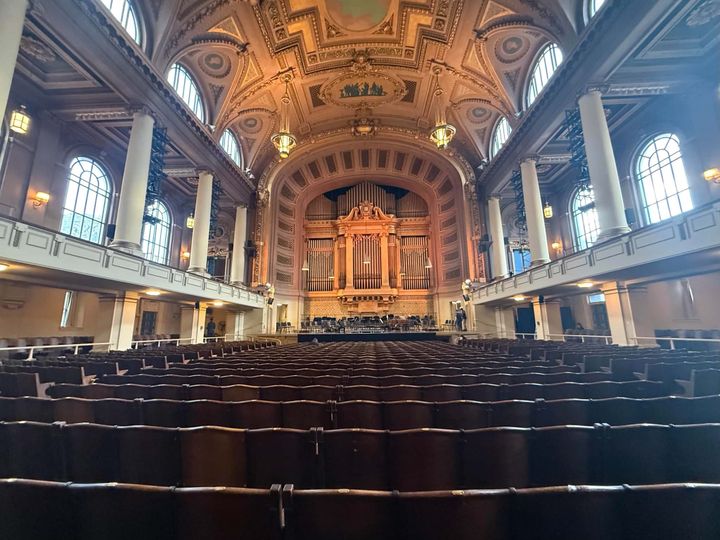
The Journey Begins at Carnegie Hall
Canadian conductor Yannick Nézet-Séguin will conduct Mahler’s Symphonies Nos. 1 through 9 with three orchestras—the Philadelphia Orchestra, the Metropolitan Opera Orchestra, and the Vienna Philharmonic—through the 2026–27 season and into spring 2027. At Carnegie Hall in October, he conducts the Philadelphia Orchestra in Mahler’s Symphony No. 5. The program also includes Anton Webern’s Im Sommerwind and Julia Wolfe’s Liberty Bell. The musical perspective moves from nature to society and then into the human interior.
In Webern, wind and light move through the music. In Wolfe, a silent bell carries the sound of history. In Mahler, death, love, solitude, and an affirmation of life emerge. Yannick connects these three worlds. He creates a space where music comes alive with the orchestra, leading the audience toward the sounds of nature, history, and the human interior.
Written in 1904, Webern’s Im Sommerwind is filled with the dense sonority of late Romanticism. The wind moves, the forest trembles, and the light changes. The music places us inside nature.
In Julia Wolfe’s Liberty Bell, we hear human history and the noise of society. Philadelphia’s iconic Liberty Bell cracked in 1846 and has never rung since. Wolfe gives the silent bell a voice through an enormous orchestra of more than 100 musicians. Metallic sounds, bells, and chimes collide, creating a complex sonic image of freedom and the society that surrounds it.
Mahler’s Symphony No. 5 begins with a sharp trumpet fanfare and a funeral march, drawing the listener into death and chaos. In the second movement, the music swells into a vast wave, while the Scherzo opens the world even further. Then comes the Adagietto, a quiet passage for strings and harp alone. Love and death overlap, and in the final Rondo, the music regains its vitality.
The Fifth marks a new stage in Mahler’s music. Through pure instrumental music, freed from voice and narrative, it moves from death toward life, from chaos toward affirmation. Beneath it all remains the sound of the songs that had sustained Mahler’s music up to this point. A vanished voice continues to resonate quietly from within the instrumental music.
10.13.2026
The Philadelphia Orchestra
Yannick Nézet-Séguin Conductor
Webern Im Sommerwind, idyll for large orchestra
Wolfe Liberty Bell
Co-commissioned by Yannick Nézet-Séguin and The Philadelphia Orchestra
Mahler Symphony No. 5 in C-sharp minor
Part I
- Trauermarsch: In gemessenem Schritt. Streng. Wie ein Kondukt—
- Stürmisch bewegt. Mit grösster Vehemenz
James Vaughen, solo trumpet
Part II - Scherzo: Kräftig, nicht zu schnell
Jennifer Montone, obbligato horn
Part III - Adagietto: Sehr langsam—
- Rondo-Finale: Allegro—Allegro giocoso. Frisch
ヤニックのマーラーサイクル始動
カナダ人指揮者ヤニック・ネゼ=セガンは、2026年から2027年春にかけて、フィラデルフィア管弦楽団、メトロポリタン歌劇場オーケストラ、ウィーン・フィルの3つのオーケストラとマーラーの交響曲第1番から第9番までをシーズンを通して指揮する。10月のカーネギー・ホールではフィラデルフィア管弦楽団とマーラーの交響曲第5番を演奏する。プログラムにはアントン・ウェーベルンの《Im Sommerwind》、ジュリア・ウルフの《Liberty Bell》も並ぶ。自然、社会、人間の内面へと、音楽の視点が移っていく。
ウェーベルンでは風と光が動き、ウルフでは沈黙した鐘が歴史を響かせる。マーラーでは死、愛、孤独、そして生への肯定が現れる。この三つの世界をつなぐのがヤニックだ。オーケストラとともに音楽が生まれる場を作り、自然の音、歴史の音、人間の内側から生まれる音へと聴衆を導いていく。
1904年に書かれたウェーベルンの《Im Sommerwind》には、濃密な後期ロマン派の響きが漂っている。風が動き、森が揺れ、光が変わる。自然の中に身を置くような音楽だ。
ジュリア・ウルフの《Liberty Bell》では、人間の歴史と社会のざわめきを聴く。フィラデルフィアの象徴である自由の鐘は1846年にひびが入り、それ以来、鳴ることがなくなった。ウルフはその沈黙した鐘に、100人を超える巨大なオーケストラで声を与える。金属の響き、ベルやチャイムがぶつかり合い、自由をめぐる社会の複雑な響きが立ち上がる。
マーラーの交響曲第5番は、鋭いトランペットのファンファーレと葬送行進曲で始まり、聴き手を死と混沌の中へ引き込む。第2楽章では音楽が巨大なうねりへと膨らみ、スケルツォでは世界がさらに大きく広がる。アダージェットでは、弦楽器とハープだけによる静かな時間が訪れる。愛と死が重なり、最後のロンドでは音楽が生命を取り戻す。
第5番は、マーラーの音楽が新しい段階へ入った作品である。声や物語から離れた純粋な器楽によって、死から生へ、混沌から肯定へと進んでいく。その奥には、それまでのマーラーを支えてきた歌曲の響きが残っている。姿を消した声が、器楽の中から静かに響いている。

Comments ()