The Met’s New Macbeth
9.29.2026
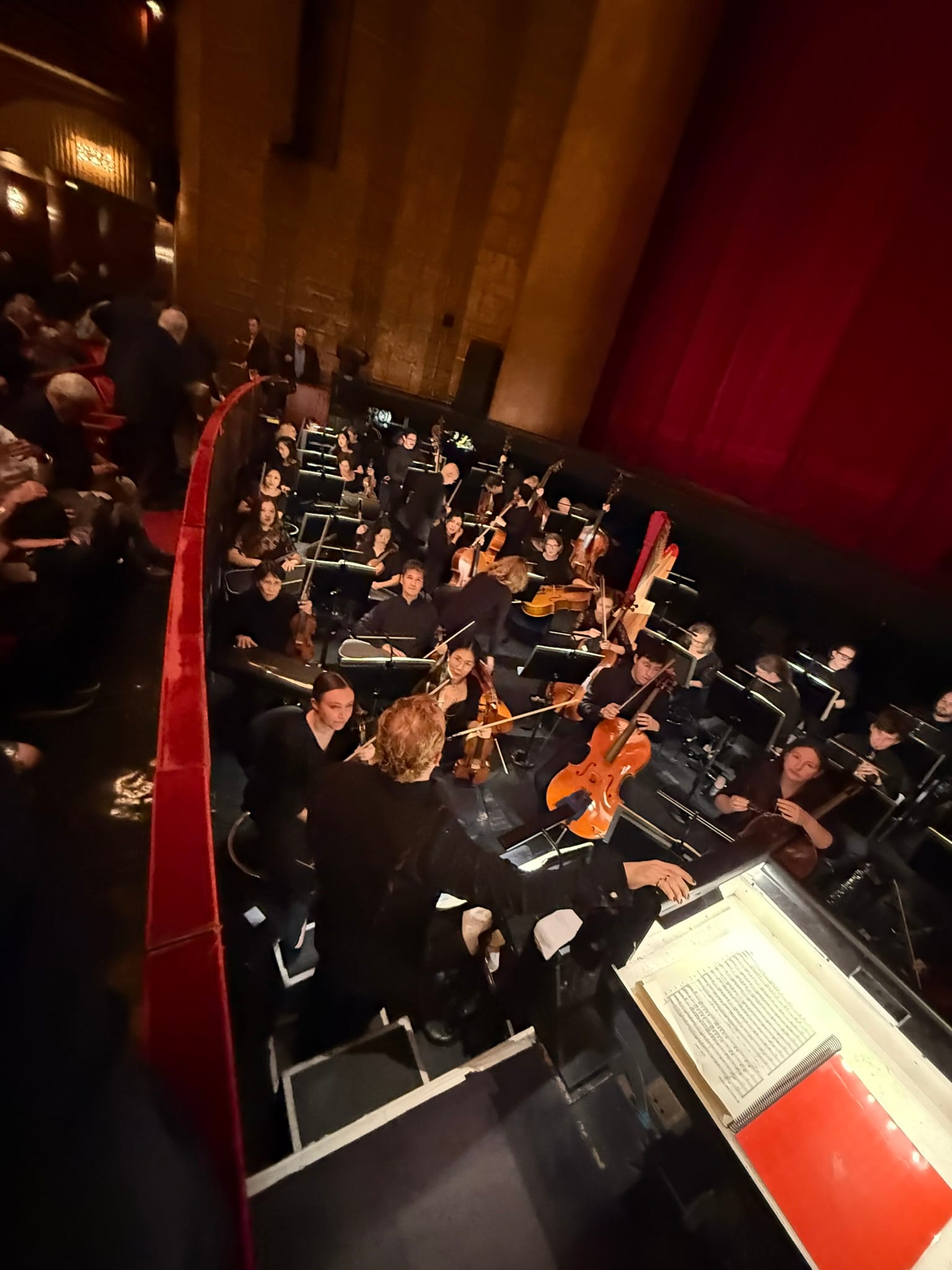
A New Macbeth had opened at the Metropolitan Opera, so I went to see it for the third time. I entered from downstairs, came in from the side of the orchestra seats, and walked toward the pit. I saw some musicians I had never seen before. A woman I had never seen before was sitting in the concertmaster’s chair. A young cellist was in the principal chair. Denson, the trombone, began arpeggios slowly and gently, with a tone as soft as butter. The sound floated softly through the vast space of the Met. I tocok my seat. It was the first time since Rosa Feola’s La Traviata in May. The same seat. Just as in Chicago the other day. When the time came, the atmosphere in the hall changed, and the tuning began. That woman I did not know stepped onto the podium and began tuning.
Soon Yannick Nézet-Séguin appeared, and Macbeth began. In the overture, a sad melody repeats, pleadingly. As if something had already been lost, something that could never be recovered. The ascending sounds of the flutes and piccolo are interrupted, sharp but without any sense of brightness. When the curtain rises, knights are fighting with swords. They wear authentic armor that evokes the Middle Ages, and their swords clink sharply. The action is convincing, almost real. The piccolo and flutes race upward, and their high sounds merge with the metallic clashing of swords. It feels incredibly real.
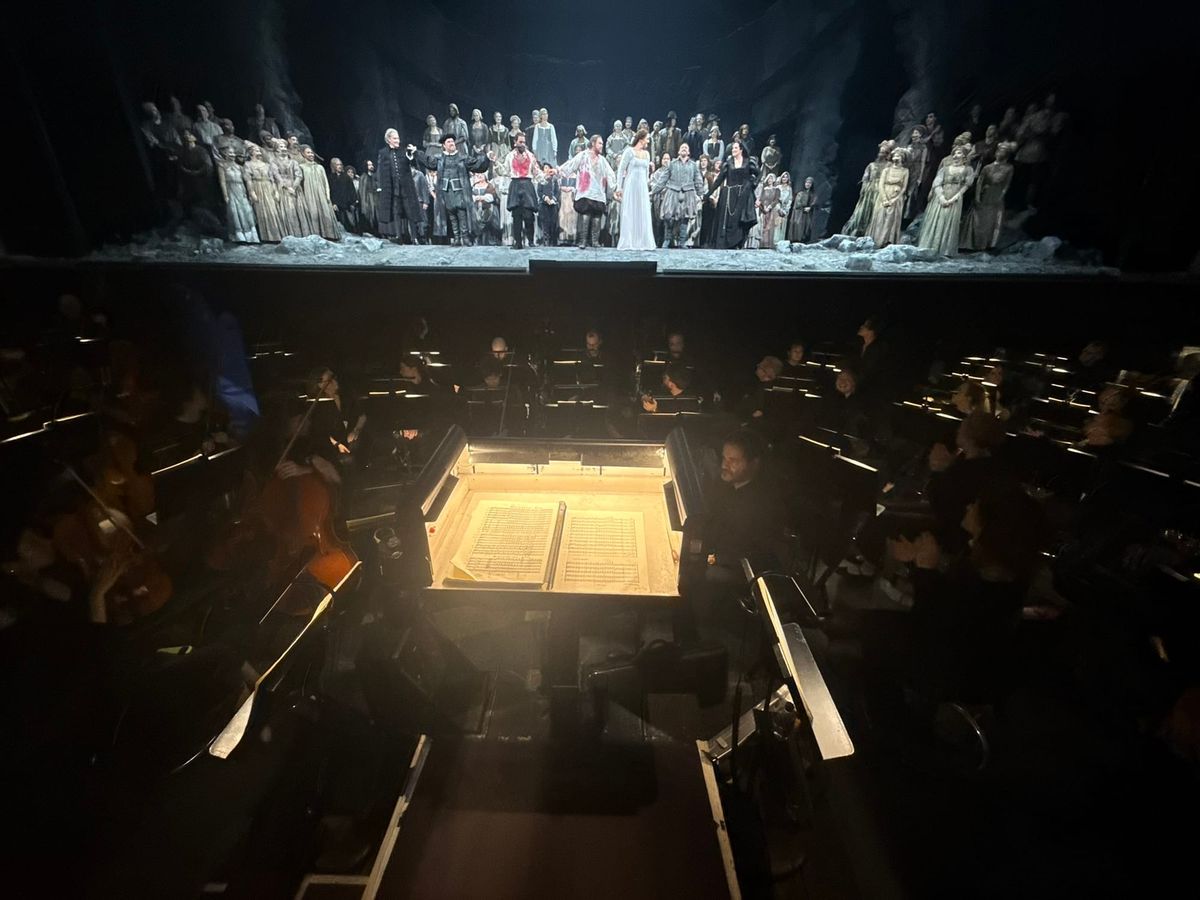
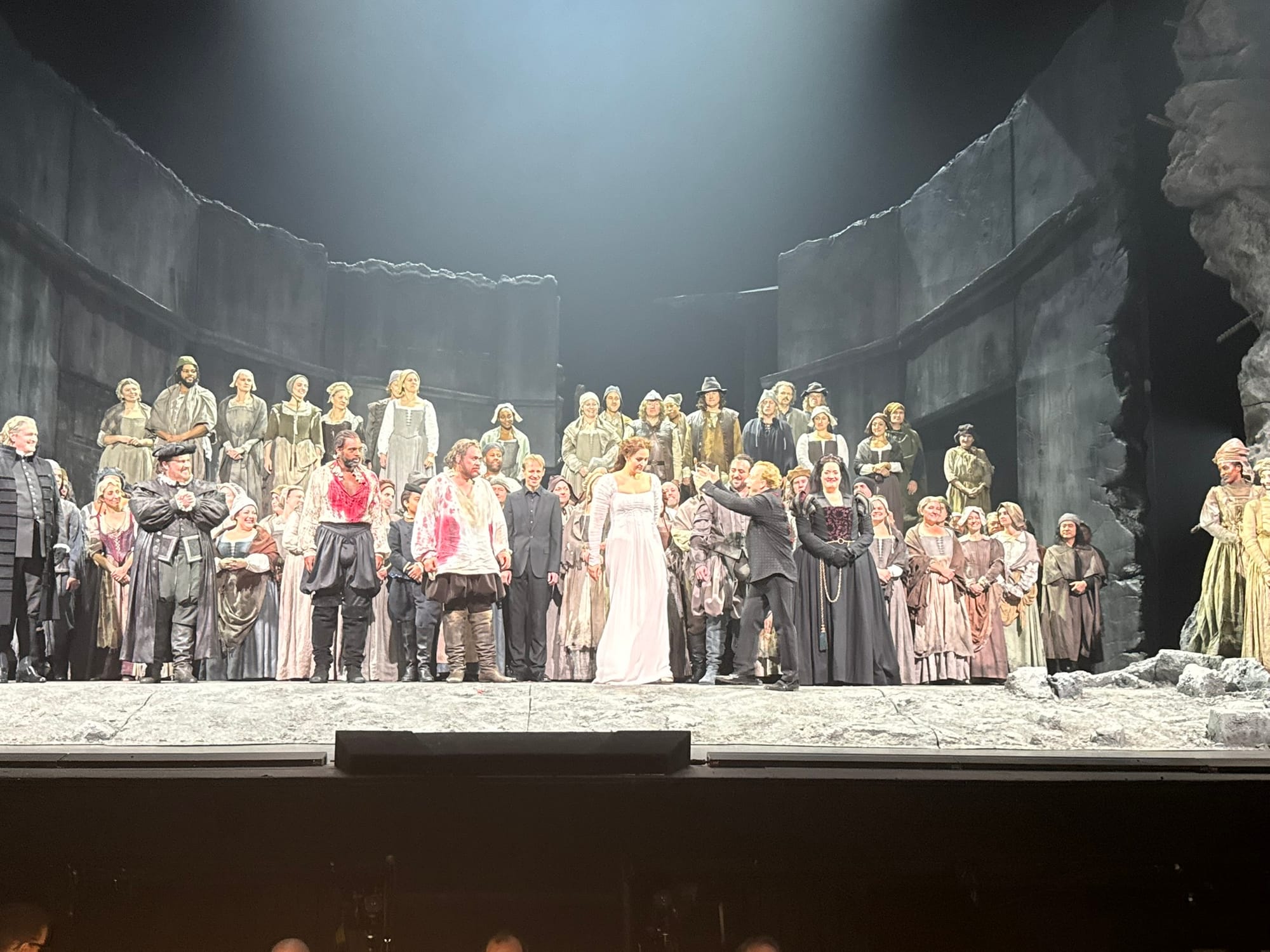
From the premiere of Verdi’s Macbeth in 1847 through 1848, northern Italy, including Milan, seems to have been living a kind of Macbeth every day under Austrian rule, filled with violence, assassinations, and rebellion. Shakespeare put into words the terror of a world becoming divided, where violence was slipping beyond control. When Verdi turned it into an opera, Macbeth—with its struggle for power, killing and being killed, and spreading fear—may have been turning the world directly in front of him into sound. Louisa Proske’s production combines Elizabethan imagery with a contemporary landscape devastated by war. The stage has become an enormous hole of destruction. Beyond that hole, the interior of Macbeth’s castle is visible at the same time, so the old world of kingship and the destroyed world of the present overlap on the same stage. Lady Macbeth gradually moves Macbeth, and the murders continue one after another. In the first act, her voice carries extraordinary energy as she tries to change the future. By the end, it leaves spaces between words and becomes almost like a monologue. This small sound was terrifying.
The sets, costumes, and movements created a world in which the singers seemed to live rather than simply perform. Their voices and actions followed the logic of Proske’s world, and the violence gradually became something physical and real. Proske created a world breaking apart through violence over power—and the singers made it feel alive.
The witches feed on Macbeth and his wife's corruption and greed, like maggots swarming over a corpse. Their desire to gain power eventually corrupts the world itself. That moral corruption even spreads to the ruined stage. The wandering sisters sing of moving through the air, across the waves, enveloping land and sea, moving quickly and forcefully in circles. Moving as a strange collective, their faces seem possessed, always hunting for something. Their expressions and movements are unforgettable. Each one freely creates the presence, gestures, and singing of a witch. It is fresh and distinctive. The stage looks, on the surface, like a conventional historical set, but what is inside is contemporary.
Then the music changes into something broad and spacious, centered on the lower strings, and Macbeth and Banquo encounter the witches. The witches deliver their prophecies. I lose my sense of time. I hear a trumpet unison that seems like a dim light in the distance. Macbeth and Banquo stand stunned on the stage, as if moving back and forth between the witches’ world and the human mind. The orchestra is fragile and blurred. A few notes in the strings support their psychology. The witches tell Macbeth that he will become Thane of Cawdor and King of Scotland. To Banquo, they say that he himself will not be king, but that his descendants will be kings. Suddenly, a future that does not yet exist appears before Macbeth. The witches say only this and disappear as if nothing had happened.
Then a messenger appears and announces Macbeth’s promotion. The witches’ words have become reality, and Quinn Kelsey as Macbeth and Speedgreen as Banquo sound as if they are speaking softly. What they were just told has come true, and they still seem to float, unable to grasp what has happened. Banquo’s lower, harder voice, watching Macbeth, speaks his inner thoughts. Beneath it, the calm, gentle pulse of the strings and the steady “pon, pon, pon” of the contrabass and oboe suspend time. Over this, long passages from the oboe and other winds enter and disappear, reflecting the confusion of their minds in their singing. Kelsey and Speedgreen’s voices portray unstable minds, while the orchestra’s flexible, supple colors intertwine with their singing, neither clinging to it nor leaving it, bringing out the folds of the mind written into their voices. Feeling lives even in the movement of a bow, a breath, a single stroke. The singing ends. The stage settles, and the sound gradually recedes from the pit. Eventually, the pit's vibration stops. The sound ends, and a natural murmur of applause rises from the audience. After Macbeth and Banquo leave, the witches sing that all they have to do is wait for Macbeth, having heard their prophecy, to rot. The witches sway, move their arms, and dart quickly between one another. The strings' pulse fills their movement with vitality.
Lady Macbeth, Lise Davidsen. She hints to Macbeth that he must kill Duncan, singing, “Let not that sun shine,” with breath, hesitation, wavering, and a sense of time. It is unlike any role Lise has sung before. The dotted rhythms move forward regularly and proudly. Lise’s pride, her dignity. Around it, a supple obbligato of blended strings and winds intertwines with her, and the sound's delicacy and the warmth of the live instruments reveal the woman's warmth and reflect the Lady Macbeth Lise creates. She controls Macbeth as if pulling the future toward herself. Gradually, music like a merry-go-round approaches. They have just been planning a murder, yet from somewhere behind them comes music like a circus approaching. Onstage, a man wearing a crown stands at the center. Macbeth is caught in a place where time and hallucination have become one. A cello solo drags itself slowly around Kelsey’s voice. The earthy quality of a human being who has sold his soul to the devil. Macbeth’s mind lives in his voice, while the orchestra's heavy colors reflect his psychology back to the listener. The orchestra becomes the shadow of Macbeth’s mind, echoing and magnifying it many times over.
Macbeth kills Duncan and appears to Lady Macbeth. Fine violins, intertwined off the beat, and another violin in unison with them reflect Macbeth’s unstable mind, in which some conscience still remains. The imposing Lady Macbeth cuts him off with “Foolish thing,” pushing aside the remorse in her husband’s mind, and tells him that it will disappear by morning. It all passes as if in an instant, while the orchestral accompaniment marks the passage of time and carries their exchange forward. As their conversation continues, the orchestral sound becomes extremely thin, and the feelings and words deep inside them emerge. Each sings their own state of mind, while the orchestra follows the voices, sometimes layering complex lines over them. Their psychology rises from the orchestra's connected lines. The pulses and the unisons that expand their words reflect the movement of their minds. A knock at the door. Its resonance becomes the strings' arco and lingers in the listener’s mind, continuing to appear in the shadow of their conversation. The fine-grained tutti, with its supple legato, supports Lise’s extremely exaggerated inflections as she tries to manipulate Macbeth’s frightened mind. Their sounds are clear, and even within the complex ensemble, I can hear each individual color. Delicate and free, always close to something, connected without ever completely touching. Natural breathing without exaggeration. An orchestra that responds spontaneously to Yannick’s cues, even as it gathers around the singers' intentions and the production. This entire drama sounds as if it is connected without interruption. Lady Macbeth sings that the light has faded and the heavenly lamp is disappearing, and from the orchestra's night mist she calls for another crime. The trumpet pierces like a strong light, while Lise’s voice cuts through like black light.
At Macbeth’s banquet, the flute shines with rhythmic music, as if the heart were suddenly lifted. But something about it feels cold. The strings that follow blend with the flute, conveying something that rises and glows, yet they are cold and hard. Macbeth nervously announces the feast. Lady Macbeth sings the drinking song with strange inflections, as if saying that alcohol will wash away all the trauma of the past. Like the witches’ glittering faces, always searching for the corruption they love, Lise sings it in a distorted, strange way. The orchestra brilliantly illuminates this mad Lady Macbeth's confidence, and the chorus pours oil onto the fire. Years later, Verdi seems to have written this section in the same structure as the drinking song in La Traviata. But the colors and blend of the sounds bring out, within the rhythm of the banquet, the distorted, crazed human figure. I can feel Verdi's sharp craftsmanship in his thirties. By the aesthetic standards of the time, it must have been far outside the norm.
In the twentieth century, Shostakovich reflected his contemporary society like a mirror in his opera Lady Macbeth of Mtsensk. It thrilled Russian audiences, tired of music trapped in old conventions, and eventually drew the attention of the Soviet authorities. Because he portrayed contemporary society so realistically, with sound at the center, people saw themselves in it. In a sense, he took their inner voices out and made them sound. Lise sang Verdi’s music, strangely woven into music that creates the ordinary mood of a banquet, in an extremely exaggerated way, as if reflecting the distorted minds of people today. It was extraordinary. It made me realize how a person fascinated by crime and power might behave. She has sung roles such as Meistersinger, The Queen of Spades, Fidelio, and Isolde, but this was none of those roles. It felt like an entirely new expression: a voice and stage presence at the core of this new Met Macbeth, bewildered, fascinated, strange, awakened.
After the intermission, Act III. The Met Orchestra's colors become thicker and broader, gaining more physical substance. The orchestra becomes like a single instrument. Here the witches gather and become a collective voice. They throw human bodies, death, heresy, ethnicity, color, and spirits into a cauldron and stir them together. The dance and orchestra continue. It feels like entering the devil's world from the human world. The tremolo of the double basses, like an earthquake, and the low brass on the opposite side of the pit vibrate the Met. Unlike bass from speakers, it is less the volume than a vibrating sensation, as if the earth itself has split open and the crack's vibration is traveling through the ground. Then the witches’ prophecies begin again, telling Macbeth his fate.
The sound of the banda. The sound of the bagpipes. These sounds transition into the sound directly in front of the pit, and the ghostly world Kelsey sees, created by his guilt, feels incredibly real. The sound's vibration changes the place and the time. People can be misled by such illusions and behave as if they are real. Kelsey’s singing reveals the person's weakness with remarkable simplicity. He does not decorate it as a singer or force it into a vocal style. He keeps it very simple, as if placing ambition, desire, and guilt directly into the listener’s heart. His singing is not about the voice or the melody. Instead, he places the fragile, vulnerable, terrified human being inside the words in the listener’s heart through his voice, creating an intimate sense of closeness. Macbeth, once frightened, now sounds as though his crimes with Lady Macbeth have become a joint undertaking.
In Act IV, Parker’s repeated timpani strokes lead into a black fanfare that rings out brilliantly, as if announcing the fate of destruction. This sharp, dull-shining quality sounds to me like the Met's new sound. This set sounds completely different from the set through June. As I become absorbed in the strange colors of the orchestra that seem to move slowly through time, the chorus begins, “Patria oppressa!” — “Oppressed homeland!” A quiet, heavy mass of voices fills the air like something weightless. The exhausted voices seem to disappear into darkness. The lament for the love and lives lost to desire and hatred. Their cries swell and rise. Throughout it, Parker’s timpani tremolo remains intertwined with them. No light enters until the end. Only the collective lament remains.
Then Freddie De Tommaso, singing Macduff, sings “Ah, la paterna mano” — “Ah, the paternal hand.” Macduff has lost his entire family to Macbeth, and he grieves and longs for revenge. Yet in his voice, carried by the clarinet arpeggios, there is not only the grief of losing his family, but also the regret of not having been able to save them, his gentleness, and his courage. A wide vibrato accompanies the voice of grief. “Del tuo perdono aprir” — “To open your forgiveness.” To free himself from resentment and hatred. The spirit in De Tommaso’s voice spreads through the space. A world there, released from the desire and hatred that had ruled Macbeth, Lady Macbeth, and the witches. His voice, his inflection, his presence seem to hold us together as human beings.
Then come marches with energetic drums, cymbals, and other percussion. I don’t know how many different marches there are, but the strangeness and oddness of the first act have disappeared, replaced by a sound filled with the conviction of people who believe in themselves, like what I hear in Bellini’s I Puritani. “N. 14 - Sonnambulismo di Lady Macbeth.” This too has the sound of the final act of La Traviata, as if Violetta’s life were coming to an end. The sound simply exists. It clings to human voices and human presence. The orchestra rises strangely in chromatic steps, while the English horn slowly descends. Everything seems reversed, leaving me with nothing but hesitation and confusion. Lady Macbeth is seeing a hallucination. The blood on her hands will not come off. She is delirious. There are many spaces between the words. Lise speaks as if swallowing her words, swallowing them again after she has already spoken them. It is less like singing than remembering past trauma, as if she is deeply wounded inside. “Search all of Arabia, and you will find no more balm to cleanse these little hands.” She has returned to the time and place where she committed the murder. In the first act, Lise’s voice gave off extraordinary energy as she tried to change the future. Here, it floats, wavering on the edge of breaking. A small human weakness hides inside it. Lise's singing has a deliberately unstable vibrato. Beneath her voice lies the fragile interior of someone who hardened the outside to live through bravado. Her dynamics, the complexity of her throat and body, the breadth of her expression—all of it brings out the fragility of the human being inside the voice.
Next comes Kelsey’s Macbeth singing “Perfidi! All’anglo contro me v’unite!” Macbeth clings to the prophecy, but nothing remains in his voice. The strings have no strength either, and he sounds as if his consciousness is drifting away. Kelsey wanders around in a low register. The heart of a man who, trembling with fear, nevertheless stained his hands with murder in order to gain power over his wife. Macbeth sang the human voice. He feels loved by no one. That voice was the most human part of this scene. And then Macbeth’s final song.
“vil corona!” — “Cursed crown!” Kelsey spits out the words as if he is finally throwing up the crown he had clung to until the very end. The Met Orchestra then unfolds into a symphony, and Macduff and the others emerge victorious.
In this Proske production, the stage and the pit move toward a single expression. Both breathe freely between precision and ambiguity. Everything is careful and intimate, and the dance and action are impeccable. The music in the pit sincerely intertwines with it all, suddenly making me aware of the drama's psychology. It evokes Macbeth's historical presence while bringing its truth into view simply and symbolically. A performance that is carefully crafted yet natural, never swallowed by a vortex of sound. Intimate, fresh, without exaggeration. Music runs through every element—the stage, singers, dancers, direction, and orchestra—and makes the whole thing sophisticated yet approachable.
Suddenly, I remembered something Karajan once said.
Not too fast.
Not too slow.
Not too strong.
Not too weak.
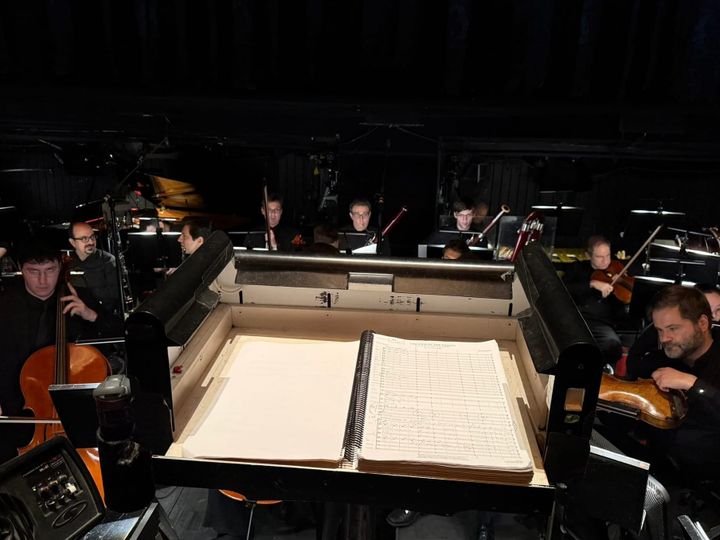
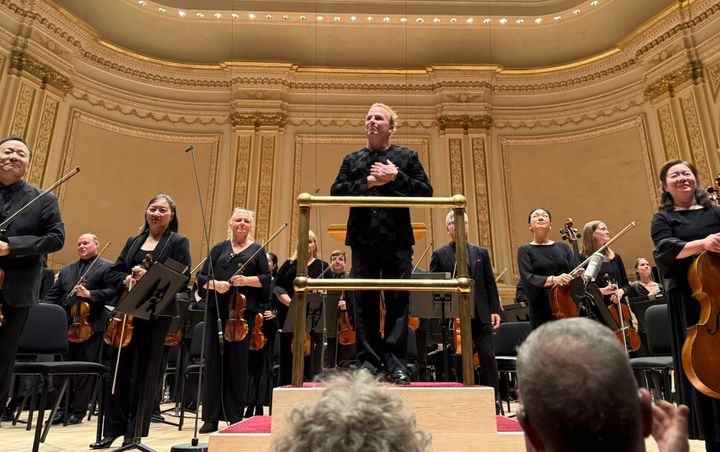
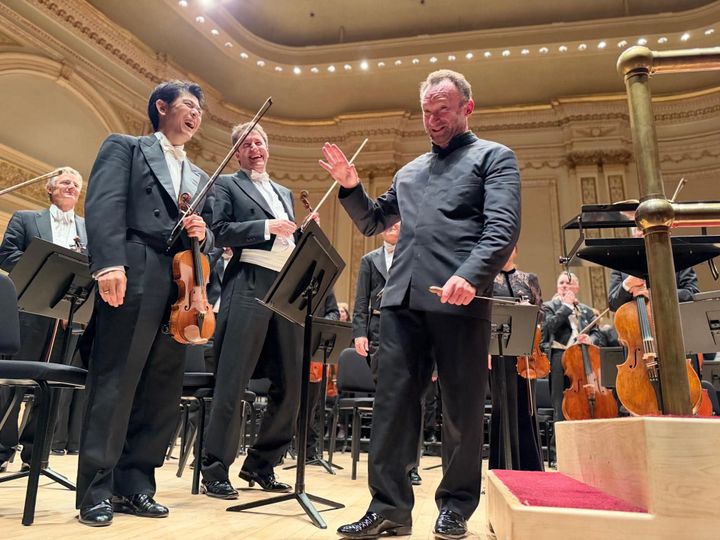
The singers received cheers from the audience, and Yannick came onstage. On the last page of the score in front of me, words had been written in pencil: “2026.” Yannick’s 2026 score of Verdi.
After the performance, I met that concertmaster at the stage door. Her name was Claire Bourg. She is appearing this season as the concertmaster of the Met Orchestra in Macbeth, Così fan tutte, and La bohème.
Claire Bourg on new Macbeth at Met
メットの新マクベス
9.29.2026
メトロポリタン歌劇場でマクベスの新作が公開になったので、3回目を見に行った。いつものように地下から入り、オーケストラ席の横から中に入ってピットに近づいたら、見たことのない人たちが何人かいた。コンサートマスターの席には知らない女の人が座っていた。チェロの席にも若い男性が座っていた。トロンボーンのデンソンがゆっくりゆったり、バターのような音色で分散和音の練習を始めた。メットの大きな空間に柔らかく漂う。席に着いた。5月のロサ・フェオラのトラヴィアータ初日以来だ。同じ席だった。先日のシカゴ同様。時間になると会場の気が変わり、チューニングが始まる。あの知らない女性がポディウムに立ち、チューニングを始めた。
ほどなくして、ヤニックが現れ、マクベスが始まった。序曲では、悲しいメロディが、切々と繰り返される。もう取り返しがつかない、何かをすでに失ってしまったような。駆け上がるフルートやピッコロの音が途切れていて、鋭いが輝きを感じない。幕が上がると、騎士たちが剣を交えて戦っている。甲冑を着た中世を思わせる本格的な衣装で、剣が当たるとカチ、パチと音がなる。迫真のアクション、ピッコロやフルートが駆け上がり、高音が剣がぶつかる金属音と合わさってとてもリアル。
ヴェルディがマクベスを初演した1847年から、その翌年の1848年にかけて、ミラノを含む北イタリアは毎日がマクベスのような、オーストリアから支配され、暴力や暗殺、反乱が溢れていたようだ。シェイクスピアは、分断され、暴力が制御不能になっていく世界の恐怖を言葉にし、ヴェルディがそれをオペラにしたとき、権力を奪い、殺し、殺され、恐怖が広がっていく《マクベス》は自分の目の前にある世界を音にしていたのかもしれない。今回のルイーザ・プロスケによる演出は、エリザベス朝の様式と、戦争によって荒廃した現代の風景を組み合わせたものだった。舞台が巨大な破壊の穴になっている。その穴の向こうにはマクベスの城の内部が同時に見え、古い王権の世界と、破壊された現代の世界が、同じ舞台の上に重なっていた。マクベス夫人はじわじわとマクベスを動かし、次々と殺人を繰り返す。一幕では未来を変えようと異様なエネルギーを放っていた声が、最後には言葉と言葉の間に空白を残し、ほとんど独り言のようだ。この小さな音が恐怖だった。Proskeは、その権力をめぐる暴力で、世界が壊れていく様子を描いている。
魔女たちは、死体に群がる蛆虫のように、マクベス夫妻の腐敗と貪欲を餌にする。権力を手に入れようとする二人の欲望が、やがて世界そのものを腐敗させていく。その道徳的な腐敗が、崩れた舞台そのものにまで広がっている。さまよう姉妹たちは、空を行き、波の上を行き、大地と海を包み込む、と円を描くように素早く、勢いよく歌う。異様な群れとなって動く彼女たちの表情は、何かに取り憑かれ、いつも何かを狙っているような、一度見ると忘れられない独特の表情と動き。それぞれが自由に魔女の気配や身振り、と歌。とても新鮮で、独特で、ステージは見た目には歴史を踏襲したオーソドックスなセットだが、その中身はコンテンポラリーだ。
そして、低弦を中心に幅の広い、ゆったりした音楽に変わると、マクベスとバンクォーは魔女たちに出会う。魔女たちは予言を伝える。時間の感覚を忘れる。遠くで薄暗い光が見えるような、トランペットのユニゾンが聴こえる。呆然とステージに立つマクベスとバンクォーは、魔女たちの世界と、彼ら人間の精神の世界を行ったり来たりしているようだ。オーケストラも壊れやすく、ぼんやりしている。弦楽器が数個の音で、彼らの心理を支えている。魔女たちはマクベスに、「コーダーの領主」、そして「スコットランド王」になると予言する。バンクォーには、彼自身は王にはならないが、その子孫が王になると告げる。マクベスの前に突然、まだ存在しない未来が姿を現す。魔女たちはそれだけを告げると、何事もなかったかのように消えていく。
そして、使者が現れ、マクベスの出世を知らせる。魔女たちの言葉が現実になり、マクベスを歌うケルジーとバンクォーのスピードグリーンは、そっと語っているように聴こえる。先ほど告げられたことが実際にその通りになり、まだ何が起こったのか、フワフワしているような感じだ。マクベスの様子を見たバンクォーの、より低く硬い声が心の声を語っている。そこに、弦楽器のしっとり落ち着いた刻みと、コントラバスとオーボエのポン、ポン、ポンという一定のテンポが時間をサスペンドさせる。その上に、長いパッセージをオーボエやさまざまな音色の管楽器が出入りし、心の混乱を彼らの歌に映し出している。ケルジーやスピードグリーンの歌唱は不安定な心を描き、オーケストラの柔軟でしなやかな音色が歌につかず離れず絡みつき、彼らの歌で綴られる心のひだを浮き彫りにしている。弓の運び、一息、一つのストロークにまで心が籠っている。歌が終わり、舞台が落ち着き、ピットから音が少しずつ引いていく。やがて、ピットの振動が止まる。音が止み、聴衆から自然にさざめきのような拍手が起こる。マクベスたちが去ったあと、魔女たちは、予言を聞いたマクベスが腐敗していくのを待つだけだと歌う。身体を揺らし、腕を振り、互いの間を縫うように素早く動く魔女たち。その躍動に、弦の刻みが生命力を漲らせている。
マクベス夫人のLise Davidsen。夫人は「その太陽を輝かせてはならない」とマクベスに殺人をほのめかす、息、ためらい、揺れ、時間の長さ。それは、リーズがこれまで歌って来たどんな役ともちがう。付点の刻みが、規則正しく凛々しく進む。リーズの誇り、気高さ。そこに、弦楽器と管楽器がブレンドされた、しなやかなオブリガートが絡みつき、その音色の繊細さや、生の楽器の温かさは、夫人の温かさを示し、リーズが演じる夫人をよく映しだしている。夫人は、未来を引き寄せるように、マクベスをコントロールしている。徐々に、遊園地のメリーゴーランドのような音楽が近づいてくる。たった今、2人は殺人の計画をたてているのに、奥から近づいてくるサーカスのような音楽。ステージは、王冠をかぶった男性が中央に立っている。そこで、時間と幻覚が一つになってしまうマクベス。チェロのソロがのろのろと、ケルジーの声に絡みつく。悪魔に魂を売った人間の泥臭さ。マクベスの心が声で、オケの重い音色が彼の心理を聴き手に映しだしている。オケはマクベスの心の影のように、反響して何倍にも映しだしている。
マクベスがダンカンを殺して、夫人の前に姿を現す。オフビートで絡まるような細かなバイオリンと、マクベスのまだ良心が残っている不安定な心を、別のバイオリンがユニゾンする。大きなリーズの夫人は、「ばかげたことを」と、夫の呵責を遮るように、罪を感じる夫の心を押し切るように、「朝になれば消え去る」と言う。あっという間の出来事のように、オケの伴奏が時間の流れを示し、2人のやり取りが過ぎていく時間の中で進んでいく。2人が会話を進めるにつれて、オケの音は極端に薄くなり、2人の心の奥にある気持ちや言葉が現れる。それぞれの心情を歌で語り、オーケストラは声に寄り添いながら、ときに複雑な線を重ねていく。2人の心理は、つながったオーケストラの線の中に浮かび上がる。刻みや、セリフを膨らませるユニゾンが、彼らの心の動きを映し出す。ドアを叩く音。その響きが弦楽器のアルコとなって聴き手の心に残り、2人の会話の影に現れ続ける。夫人が恐怖に怯えるマクベスの心を巧みに操作しようとする、そのリーズの極端に誇張された抑揚を、しなやかなレガートで支えるトゥッティのきめ細かさ。彼らの音色は澄んでいて、複雑なアンサンブルの中にも、それぞれの異なる音色を聴き取ることができる。繊細で自由で、常に何かに寄り添いながら、つかず離れず繋がっていく。誇張のない自然な呼吸。歌手やプロダクションの意図に集約されながらも、ヤニックから受け取るキューに自発的に応えるオーケストラ。これら一連のドラマが、途切れることなくずっと繋がって聴こえる。夫人は光は色あせ、天の灯台は消えてゆくとオケの夜霧の中から、新たな犯罪が必要だと、トランペットが強い光の様に、リーズの声が黒い光のように突き刺さる。
マクベスの祝宴では、フルートが輝き、心が弾むようなリズムの効いた音楽。でも、どこか冷たい。続く弦楽器の音色もフルートと溶け合い、輝きながら浮き立つような様子を伝えるが、冷たくて硬い。おどおどした様子でマクベスは祭りの案内をする。夫人は乾杯の歌を、酒で今までのトラウマを洗い流しましょうというように、奇妙な抑揚で歌う。まるで、あの大好物の腐敗を狙う魔女たちの、ぎらついた顔のように、とてもいびつで、奇妙にリーゼは歌い上げる。その狂った夫人の自信をオーケストラは見事に輝かせ、合唱が油を注ぐ。数年たって、ヴェルディは《トラヴィアータ》の乾杯の歌と同じ構成で、この部分を書いているように思う。だが、その音色と音のブレンドは、宴のリズムの中に、いびつな人間の狂った姿を浮かび上がらせる。30代のヴェルディの尖ったクラフトシップを感じる。当時の美学からしたら、かなり外れていたはずだ。
20世紀にショスタコーヴィチは、オペラ《ムツェンスク郡のマクベス夫人》で、当時の社会をオペラに鏡のように映し出した。古い感覚に囚われた音楽に飽きていた当時のロシアの聴衆を熱狂させ、やがてソ連から目をつけられてしまう。それだけリアルに当時の社会を音を中心に描いたからこそ、人々はそこに自分たちの姿を見てしまったのだ。いってみれば、自分たちの心の声を取り出して、鳴らしている。リーゼは、ありふれた宴のムードを鳴らす音楽の中に奇妙に織り込まれたヴェルディの歌を、今の人々の歪んだ心を映すように、極端に大げさに歌い上げていた。見事だった。犯罪に魅了された権力者は、こういう風に振る舞うのかと思い知らされた。彼女はマイスタージンガーや《スペードの女王》、《フィデリオ》、《イゾルデ》などを歌ってきたが、どの役でもない。このメットの新しい《マクベス》に最もふさわしい、戸惑い、魅了され、奇妙で、目覚めてしまった、核心のある声とステージの存在感。彼女の全く新しい表現に出会っているようだった。
休憩をはさんで、3幕。オーケストラの音色が厚く、太くなり、響きの実体が増している。オーケストラが一つの楽器のようになっている。ここでは魔女たちが集まり、集団の声になる。鍋に人間の身体、死、異端、民族、色、霊を放り込み、混ぜている。ダンスと管弦楽が続く。人間の世界から悪魔の世界へ侵入していくような時間。地響きのようなコントラバスのトレモロと、反対側の低音のブラスがバリバリとメットを振動させる。スピーカーで出す低音と違って、音の大きさよりも、地上が割れて、その裂け目の振動が伝わってくるようなビリビリした響きだ。また、魔女の予言が始まり、マクベスに運命を告げる。
バンダの音。バグパイプの音。これがピットの目の前の音へトランジションして、ケルジーが見ている、罪の意識が見せている亡霊のような世界がとてもリアルだった。音の震えが、その場所と時間を変えてしまう。人はそういう錯覚に惑わされて、まるでそれが本当のように振る舞ってしまう。ケルジーの歌は、その人の弱さをとても素直に、歌手として飾らず、歌として型に当てはめず、それをとてもシンプルに、まるで聴き手の心に、その野心や欲望や罪の意識を宿して見せる。彼の歌は、声やメロディではなく、言葉やそこに宿る人の繊細で脆弱で、恐怖におののく姿を、声で聴き手の心に置いていくような親近感がある。おびえていたマクベスが夫人と、犯罪はもう2人の共同作業となって聴こえる。
4幕では、パーカーのティンパニの連打から、破滅の運命を宣告するような黒いファンファーレが燦然と鳴り響く。このバリっとした、鈍く輝くような感覚が、新しいメットの鳴り方に聴こえる。このセットは、6月までのセットとは音がまったく違って聴こえる。続くオーケストラの、ゆっくりと時間が移動していくような不思議な音色に気を捕らわれていると、「Patria oppressa!」――虐げられた祖国よ!と合唱が始まる。静かで重たい声の塊が空気のように満ちていく。疲れ切った声は、すべて暗闇に消えていくようだ。欲望と憎しみによって失われていった愛や命の嘆き。彼らの叫びがどんどん膨らみ、昇っていく。その中に、パーカーのティンパニのトレモロがずっと絡みついている。最後まで光の差し込む場所はなく、ただ集団の嘆きだけが残る。涙がこぼれた。
そして、マクダフを歌うFreddie De Tommaso(フレディ・デ・トマーゾ)の「Ah, la paterna mano」――ああ、父の手よ。家族をマクベスに皆殺しにされ、嘆き、復讐を望むマクダフ。けれど、クラリネットのアルペジオに乗って歌われる彼の声には、家族を亡くした悲しみだけでなく、助けられなかった後悔、彼のやさしさ、そして勇気が織り込まれている。悲しみの声には、幅広いビブラートが寄り添う。「Del tuo perdono aprir」――あなた自身の許しを解き放つために。恨みや憎しみから、自分自身を解き放つ。De Tommasoの声に宿る精神が、空間に広がっていく。そこには、マクベスと夫人、そして魔女たちを支配していた欲望や憎しみから、解放された世界があった。声、抑揚、そして彼の存在が、人である私たちをつなぎとめてくれているような歌だった。
続いて、勢いあるドラム、シンバルなどのマーチ。何種類のマーチが出てくるかわからないが、1幕の頃のあの異様さ、奇妙さがとれて、ベッリーニのイピュリターニで聴くような、自分たちの信念に溢れたサウンド。「N. 14 - Sonnambulismo di Lady Macbeth」。これも《トラヴィアータ》の終幕、ヴィオレッタの命が終わろうとしているような音色だ。音がただそこにある。人の声や気配に絡みつく。半音階で奇妙に上昇するオーケストラと、逆にゆったり下降するイングリッシュホルン。何もかもが逆に見えてしまうような、迷いと混乱しか感じない。夫人は幻を見ている。手についた血が取れない。錯乱している。言葉と言葉の間には、たくさんの空白がある。リーゼは言葉を飲み込むように、言った言葉をもう一度飲み込むように話す。歌というより、過去のトラウマを思い出し、かなり心が傷んでいる。「アラビア中を探しても、この小さな手を清める香油は、もう見つからない」自分が殺人を犯した時間と場所に戻っている。一幕では、未来を変えようと異様なエネルギーを放っていたリーゼの声が、ここではフワフワと、途切れそうになるかならないかのところを揺れている。そこに、少しだけ人間らしい弱さが隠れている。リーゼの歌唱には、あえて不安定さを残したビブラートがある。虚勢で生きるために外側を固めていた、もろい人間の内側が、その声の奥に潜んでいる。彼女のダイナミクスと、喉や身体が持つ複雑さ、表現の幅の広さ。そのすべてが、声の奥にある人間のもろさを浮かび上がらせている。
続く、ケルジーのマクベスが歌う「Perfidi! All'anglo contro me v'unite!」マクベスは予言にしがみついているが、彼の声にはもう何も残っていない。弦楽器の弓にも力がこもっておらず、どこか意識が飛んでいるように聴こえる。低い音程でうろうろと彷徨うケルジー。恐怖に震えながらも、夫人と権力を手にするために殺人に手を染めた人間の心。マクベスが、人の声を歌った。自分が誰にも愛されていない。その声が、この部分で一番人間臭かった。そして、マクベスの最後の歌。
「vil corona!」――呪われた王冠!ケルジーは最後までしがみついていた王冠を吐き出すようにそう叫ぶ。最後はメット・オーケストラのシンフォニーが展開し、マクダフたちが勝利し終わる。
このプロスケのプロダクションでは、ステージもピットも、一つの表現に向かっているような雰囲気を感じた。どちらも、正確さと曖昧さの間で自由に呼吸している。丁寧で親密で、ダンスやアクションも申し分ない。ピットの音楽も、それらに真摯に絡みながら、ドラマの心理をふと気づかせる。マクベスが持つ歴史の気配を感じさせながら、真理をシンプルに、象徴的に浮かび上がらせる。音の渦に飲み込まれない、よく練られているのに自然な演奏。親密で、新鮮で、誇張がない。舞台、歌手、ダンサー、演出、オーケストラ、そのすべての要素に音楽が絡んで、洗練されているのに親しみやすい。
ふと、カラヤンの言葉を思い出した。
早すぎない。
遅すぎない。
強すぎない。
弱すぎない。
歌手たちが聴衆から声援を受け、ヤニックがステージに現れた。目の前のスコアの最後のページには、鉛筆で言葉が書かれていて、「2026」とあった。ヤニックのヴェルディの2026年のスコアだ。
公演が終わって、ステージドアで、あのコンサートマスターに会った。彼女の名前はClaire Bourg(クレア・ボーグ)。このシーズンからメット・オーケストラのコンサートマスターとして、《マクベス》、《コジ・ファン・トゥッテ》、《ラ・ボエーム》に出演しているという。
Comments ()