Born Now: Matthew Schultheis
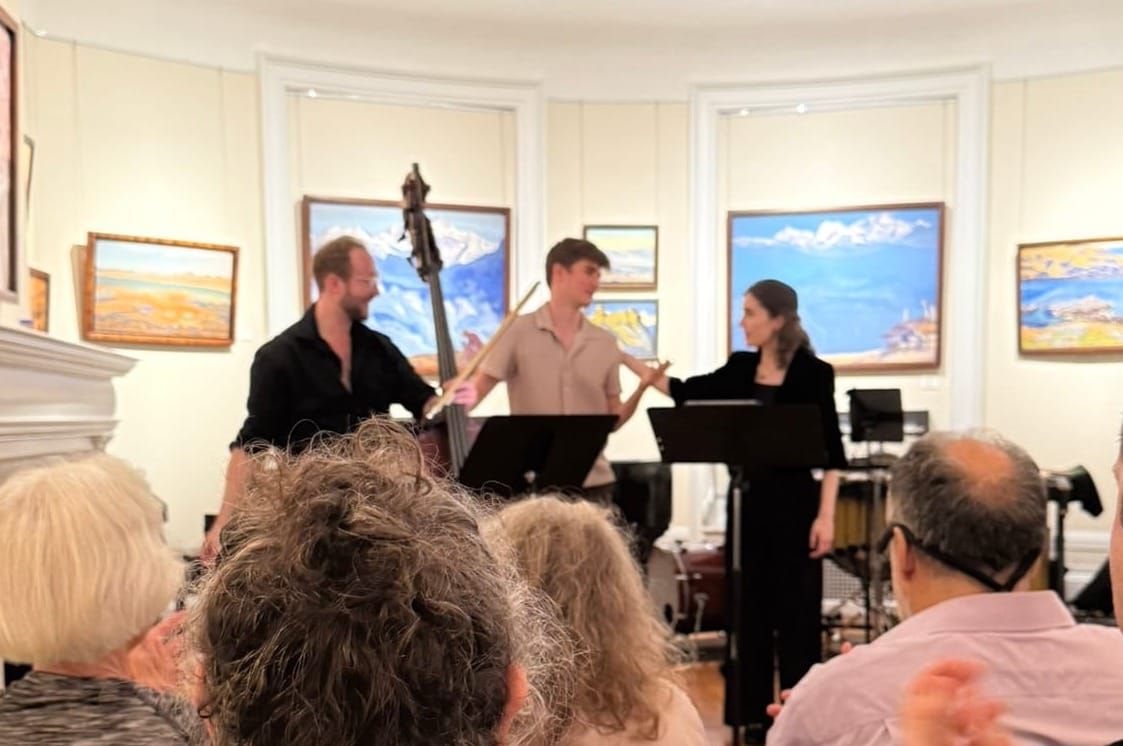
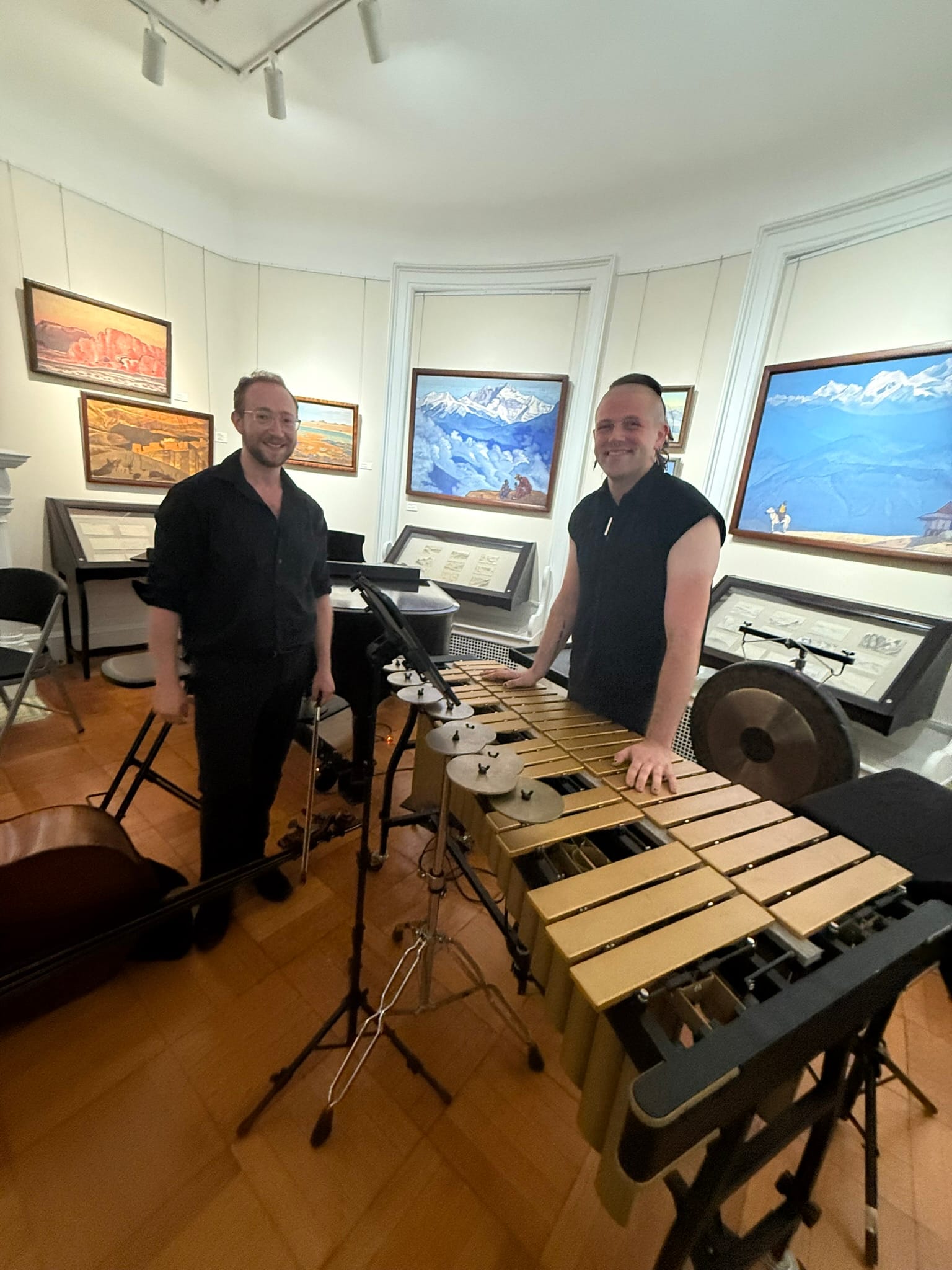
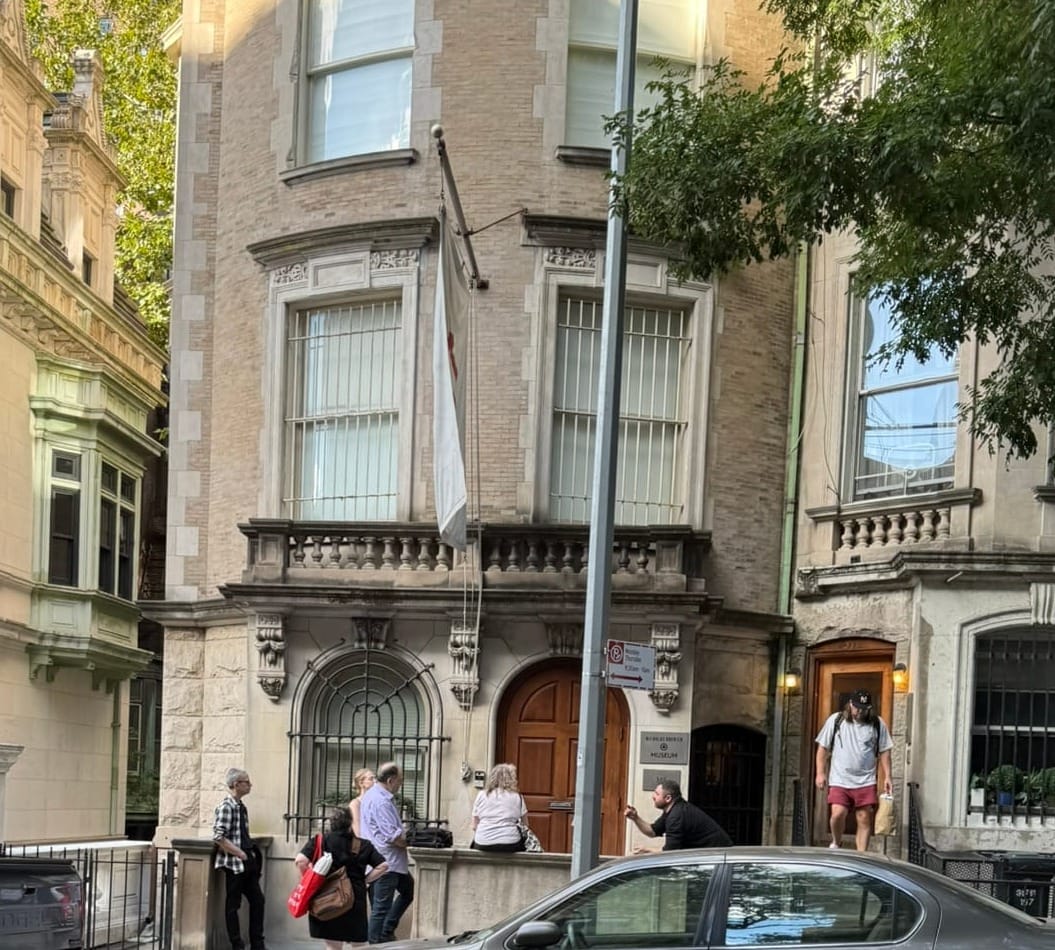
The third concert of Graphic Content: Feldman & Brown at 100, a festival celebrating the 100th anniversary of the birth of Morton Feldman, one of the central composers of the New York School, curated by Steve Long, took place at the Roerich Museum, housed in a townhouse on New York’s Upper West Side. Surrounded by paintings by the Russian-born artist and thinker Nicholas Roerich, depicting the mountains of the Himalayas and spiritual worlds, the space became an intimate place where painting, music, and spirituality intersected.
Friday, September 18
Music at 6 PM
Free and Open to the Public
BlackBox Ensemble & confluss performs works by Feldman and Kurtág
Roerich Museum, New York, NY
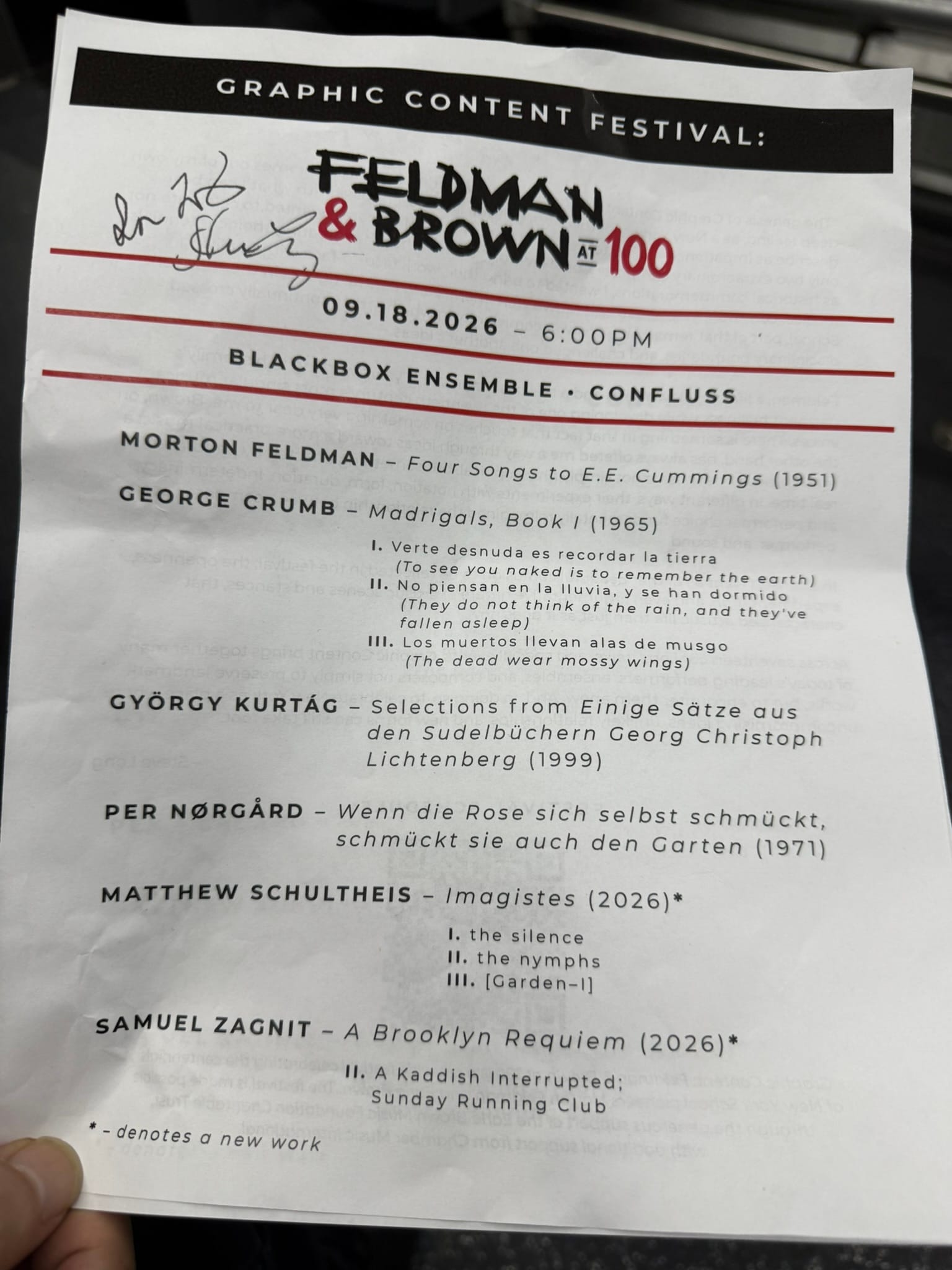
MORTON FELDMAN — Four Songs to E.E. Cummings (1951)
Amber Evans — soprano
Jordan Bartow — cello
Yifei Xu — piano
GEORGE CRUMB — Madrigals, Book 1 (1965)
Verte desnuda
es recordar la tierra
(あなたの裸を見ることは大地を思い出すこと)
No piensan en la lluvia, y se han dormido
(彼らは雨のことを考えず、眠ってしまった)
Los muertos llevan alas de musgo
(死者たちは苔の翼をつけている)
Amber Evans — soprano
Sam Zagnit — double bass
J Clancy — vibraphone
GYÖRGY KURTÁG — Selections from Einige Sätze aus
den Sudelbüchern Georg Christoph
Lichtenberg (1999)
Amber Evans — soprano
Sam Zagnit — double bass
PER NØRGÅRD — Wenn die Rose sich selbst schmückt,
schmückt sie auch den Garten (1971)
Amber Evans — soprano
Sam Zagnit — double bass
J Clancy — percussion
Annie Nikunen — flute
MATTHEW SCHULTHEIS — Imagistes (2026)*
I. the silence
II. the nymphs
III. [Garden-I]
Amber Evans — soprano
Sam Zagnit — double bass
SAMUEL ZAGNIT — A Brooklyn Requiem (2026)*
I. A Kaddish Interrupted
II. Sunday Running Club
BlackBox Ensemble
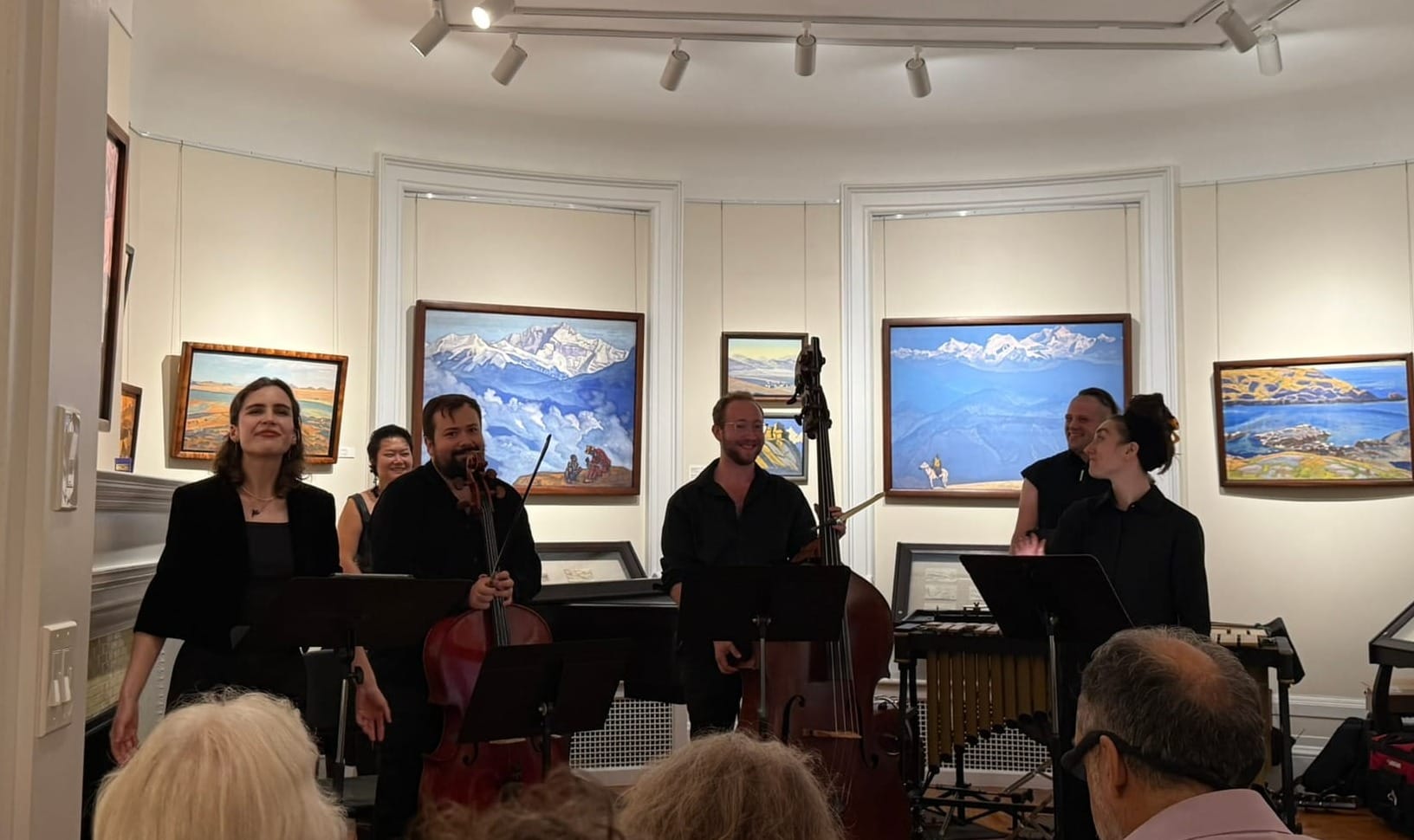
Even before the doors opened, familiar friends were outside talking with Steve, the festival organizer. Soon the doors opened, and after a brief introduction from a woman at the museum, we went upstairs. Several galleries lined the hall, and in the back room, the rehearsal was still underway. Sam on double bass and Amber on vocals were rehearsing Kurtág. There were about seventy seats. The long, narrow second-floor space was almost completely full. In the audience was composer Matthew Schultheis, whom I had also met at BIOMES the day before.
Matthew played an eighty-minute Feldman work on piano with a string quartet at Church. A few timbres had altered the way I sensed human time and place. I could hear the piano's overtones within the strings' layers. It was a strange stretch of time.
The two perform under the name confluss. The German word Fluss means “river” or “flow.” Combined with con-, it can also be read as “flowing together.” Soprano Amber Evans and double bassist Sam Zagnit formed the duo in 2018. With the unusual combination of voice and double bass, they have continued commissioning and performing new works.
Matthew’s piece begins after Kurtág. It is written for double bass and voice. Slow, quiet, murmuring, shifting, then suddenly moving through extremely large gestures. It was condensed and balanced. Sam drew many different sounds from the double bass that could not be heard through the methods normally used in an orchestra. Amber’s voice was drawn toward Sam’s timbres, or pushed against them. Sam’s bowing gestures were natural and refined. I found myself bowing my head to them.
By the time the concert began, the room was full. Some people were sitting on the stairs. I felt as though I had arrived at a Schubert salon. Matthew, looking like a mischievous boy, and the two performers wandered into places they were probably not supposed to enter and were yelled at by a woman from the museum. It felt as though we had come over to a neighbor’s house to play. The music, contemporary sensibility, and art outside music itself felt similar to buying candy at the neighborhood store or talking with friends about how funny a manga was.
Feldman’s Four Songs to E.E. Cummings was written in 1951, around the time Feldman met Cage. Feldman transforms the distinctive spaces between Cummings’s letters, their placement on the page, parentheses, capitalization and lowercase letters, and blank spaces into sound, placing delicate instrumental timbres around the voice. The music moves away from song. It sounds less like singing and more like a human voice taking shape inside a space. The text is broken apart, and sound itself appears in the space. There are large leaps, but they lack momentum. The voice follows the instruments, and the instruments follow the voice. Amber’s voice felt like looking at time through Feldman’s sound. Notes were placed in a straight line. Whether fast or slow, each pitch was carefully placed, at exactly that intensity.
Crumb’s Madrigals, Book I was written in 1965 and consists of three songs based on poems by Federico García Lorca: the naked body and the earth, rain and sleep, and the dead with mossy wings. In a few short words, the human body, nature, and death are connected. Crumb turns the physical sensation of the body speaking into sound through whispers and cries, changes in vocal production, and unusual instrumental sounds. Images of nature and death become raw resonance. It felt different from Feldman. There was an energy expanding outward. Amber’s voice was lighter, brighter, and more articulate. The resonance, movement, and weight of the voice passed into the vibraphone and double bass. At one moment, a nasal humming “mm” was covered by J Clancy’s vibraphone and transformed. The voice, instruments, and space did not seem to exist independently. They dissolved into a single sonic nature. Perhaps the place's atmosphere also mattered. I was surrounded by Roerich’s paintings of the Himalayas, with Tibetan Buddhist statues beside my seat. The extreme intonation of the words collided with Sam’s plucking of the strings, while another instrument shook or emphasized the voice, and patterns began to emerge. If the Renaissance madrigal transformed human joy, anger, sorrow, and other emotions into words and sound, Crumb was bringing the madrigal back to life in its contemporary form in New York.
Next came György Kurtág (1926–2019) and his 1999 work Einige Sätze aus den Sudelbüchern Georg Christoph Lichtenberg. With extremely short sounds, silences, and music that resembles gestures, it creates a vast drama in an instant. The work selects short phrases from Lichtenberg’s notebooks, compressing one word, one sound, and one silence. Meaning, emotion, and physical gesture are compressed into them. Six pieces were performed here. After the performance, Sam told me about the six pieces. When I listened to them again later, I understood Kurtág’s fascination much more clearly.'
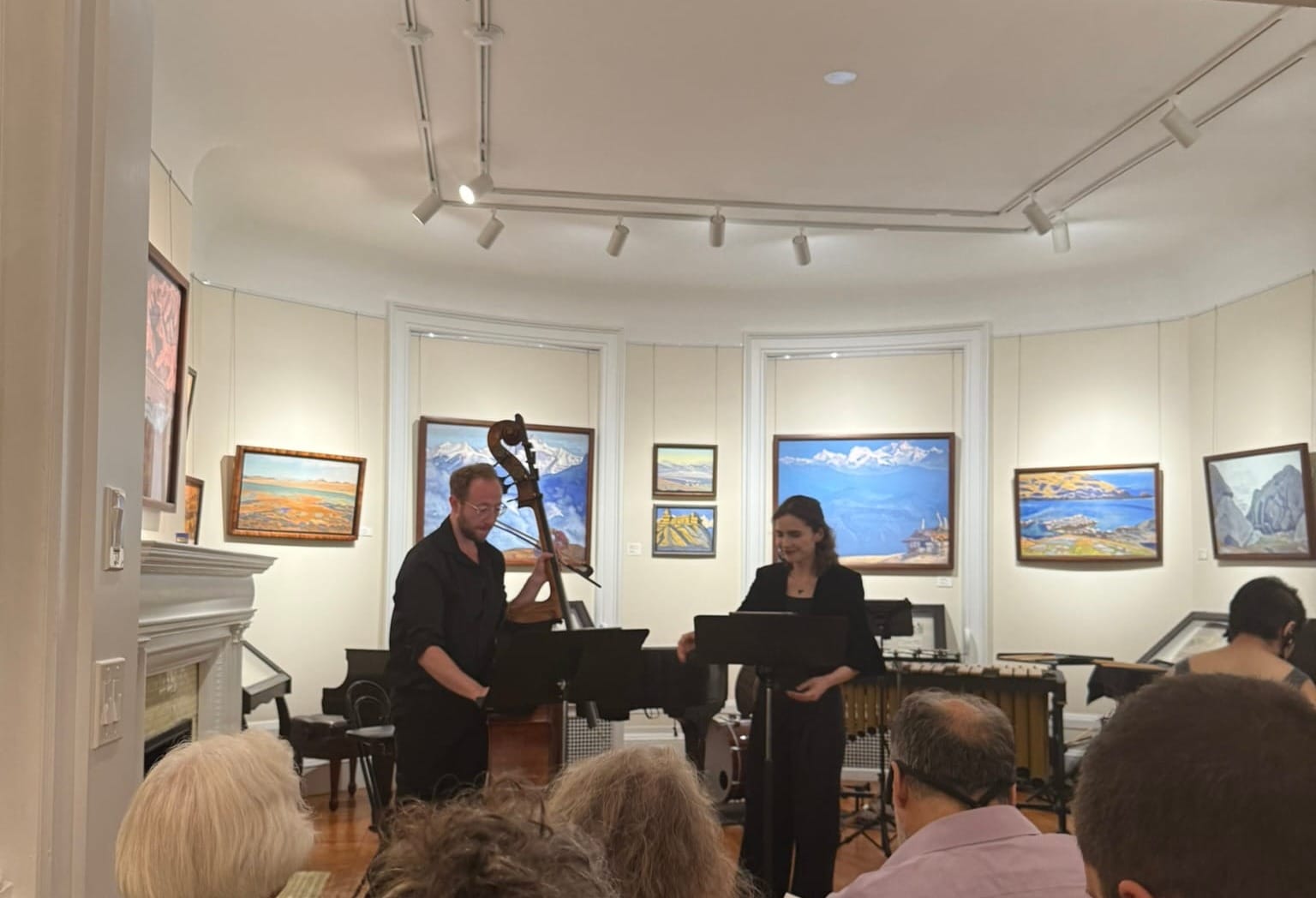
The first was Koan. “Order leads to all virtues! Then what leads to order?” The piece has a unique world, like a large arch that goes and returns. Amber’s voice moves forward, while Sam’s bow remains with her in a chaotic key, shifting the space through which the voice moves. Words and sound do not seem separate. Amber speaks, and Sam moves around the word. Sam’s sound changes the way Amber’s voice is perceived. Neither accompanies the other. They seem to listen and decide what the next sound should be. Conventional melody and harmony cut natural human sensations and emotions into extreme forms. Human activity is more ambiguous. Perhaps people cover vague feelings, distortions between people, and invisible discomfort with so-called music—melody and harmony—to make them invisible.
Gebet means “prayer.” Sam plucks the double bass strings with his fingers, making them strike sharply against the instrument's body. Amber sings with force, “Beloved God.” “Please hear a thousand prayers to God.” It ends instantly. The pluck and the force of the voice make the prayer end at the moment it begins.
In …an die aufgehende Sonne…, “…to the rising sun…,” the words say: “However wonderful the sunrise may be, what use is it if we do not get up?” The grandeur of the sun and the contradiction, or irony, of human action emerge from confluss’s carefully crafted words and sounds. Like Kurtág’s mischief, I could almost imagine Lichtenberg tilting his head as the words descended. Amber placed the words, and Sam touched them from a slightly different angle. The irony rose through their exchange.
Ein Mädchen ist sehr klein. A girl, perhaps only twelve years old. That is all. Through a few words and a few sounds, she becomes visible. There is no explanation. Tiny movements of voice and sound simply make her exist.
Die Kuh appears early in the set. “The cow that had died at our place, when she was still alive…” This is not the sound of a cow, but the moment itself. A woman in Göttingen once said these words. The dry, tired resonance of the double bass somehow made the picture live beside her—a woman, or perhaps an old cow. It was vividly Kurtág. Sam’s sound, Amber receives. Amber ends, and Sam takes the remaining space. There is almost no time between them, yet there is time to listen to each other.
They were fresh, without hesitation. Their playfulness made me forget time and drew me into the work. An intense interest in music seemed to spill out of every moment.
The final piece of the Kurtág set, …ein Kirchstuhl…, “…a church seat…,” depicts “a church seat that makes you want to fall asleep.” It is the seat people have sat in during long masses and sermons, gradually drifting toward sleep. For an instant, the seat itself seemed to become sound.
After learning the six phrases later and thinking back on them, I realized that Kurtág was not so much turning words into music as turning the human gestures hidden inside the words into sound. Sam and Amber created each moment by listening to each other. Voice and double bass, two bodies moving closer and farther apart, brought humor, irony, prayer, fatigue, and silence into the space for an instant.
Next came the Danish composer Per Nørgård’s 1971 work Wenn die Rose sich selbst schmückt, schmückt sie auch den Garten (“When the rose adorns itself, it adorns the garden as well”). Instruments imitate instruments, while the voice and instruments imitate each other’s timbre, tone, and form. Feldman’s words, time, and space; Crumb’s shapes and arrangement of space; Kurtág’s instant drama—all of these resonated and became more vivid. With flute and percussion added, the reality and power of sound, and the expressive force of the instant, suddenly became richer. The musical world opened wide.
Then came Matthew Schultheis’s Imagistes (2026). Having concentrated so closely on Sam and Amber’s playing throughout the evening, our ears as listeners had also become part of the space. When Matthew’s sensibility entered that space, I could hear more clearly than before the particular qualities of Amber and Sam’s playing and singing—their abilities as performers. This was the most interesting piece in the program for me.
With Feldman and Kurtág, I was fascinated by studying the works from different angles and refining them over time, reading deeply and entering their interiors through performance. Matthew, on the other hand, had the instantaneous force of something happening right here, right now, and unfolding in front of you. It connected with Katherine’s free session the day before.
Sam and Amber were performing Matthew’s music as an extension of the sensibility they had built together over many years. Their ears and bodies, having passed through Feldman and Kurtág, gave birth to Matthew’s sense of something being created here and now.
The final work was a piece by Sam about events in his own neighborhood and the feelings he experienced there. Amber sang while conducting, and everyone joined together for the ensemble performance that closed the concert.
I had also lived in Brooklyn for many years, so I could easily recognize what was happening, which made it interesting. But the excessive kindness, the pressure to share feelings, the peculiarities of human relationships everywhere, the awkwardness, and the moments that make you want to laugh despite yourself—all of that felt universal.
In this program, a very private place filled with the long-standing interests of BlackBox and confluss became, in turn, a time that filled us as listeners.
The human voice may carry more emotion. But instruments, too, can receive something from Amber’s voice, imitate it, or express something completely different, until they begin to sound as though the instruments themselves have acquired emotion.
From Feldman to Crumb, Kurtág, and Nørgård, then to Matthew and finally Sam. Throughout the music, voice and instruments listened to each other, received something from one another, and changed. It felt as though I had been listening to that entire process. That was the strange sensation I felt while listening to the music of this night.
Matthew Schultheis (b. 1997) is an American composer and pianist. Born in the Washington, D.C., area and now based in New York City, he is a doctoral student at The Juilliard School, where he has studied with Matthias Pintscher since 2020. He studied composition and piano at Indiana University.
His music is shaped by an interest in visual art and literature, dramatic and richly textured sound, and the connections between past musical idioms and contemporary music. He has received three consecutive BMI Student Composer Awards and has worked with ensembles and musicians including Ensemble intercontemporain, the Tokyo Symphony, the Juilliard Orchestra, the Attacca Quartet, the Mivos Quartet, and the JACK Quartet.
The work performed that day, Imagistes (2026), is his own composition.
今、生まれる――マシュー・シュルトハイス
ニューヨークのアートムーブメント、ニューヨーク・スクールの中心にいた作曲家、モートン・フェルドマン生誕100年祭、Graphic Content: Feldman & Brown at 100 (スティーブ・ロングのキュレーション) 3回目は、ニューヨークのアッパーイーストにあるタウンハウスを利用したRoerich Museumで行われた。ロシア生まれの画家・思想家Nicholas Roerichのヒマラヤの山々や精神世界を描いた絵に囲まれながら、絵画と音楽、精神性が交差する親密な時間となった。
ドアが開く前から、外ではおなじみの友人たちが、このお祭りの主催者、スティーブと話していた。ほどなくしてドアが開き、美術館の女性から簡単な説明を受けて2階に上がる。いくつかのギャラリーがあり、奥の部屋ではリハーサルが続いていた。コントラバスのサムとボーカルのアンバーがクルタークを演奏していた。70席ほど椅子が並んでいて、縦長の2階空間をほぼすべて使っている。客席には、前日のBIOMESでも会った作曲家のMatthew Schultheis(マシュー・シュルタイス)がいた。渡された紙のプログラムを見ると、彼の名前と曲が載っている。今日演奏するのかと聞くと、彼はそうだと答えた。マシューは、前日のフェルドマンの公演で80分の曲を弦楽四重奏とピアノで演奏した。数個の音色が、人の時間や場所を感じる感覚を変えてしまう。弦楽器の音の層の中にピアノの倍音が聴こえた。不思議な時間だった。
しばらくサムとアンバーのリハーサルが続く。2人は、confluss(コンフルス)という名前で活動している。ドイツ語のFlussは「川」や「流れ」を意味する。con-と合わせれば、「ともに流れる」とも読める。ソプラノのAmber EvansとコントラバスのSam Zagnitによるデュオとして2018年に結成され、声とコントラバスという組み合わせで、新しい作品の委嘱と演奏を続けてきた。
クルタークが終わると、マシューの曲が始まった。コントラバスと声のための曲である。遅い。静か。ざわめき。ゆらぎ。極端に大きな動き。凝縮されていて、バランスが取れている。サムのコントラバスからは、通常のオーケストラで使われる方法では聴くことのできない、いろいろな音が引き出されていた。マシューの新作を奏でるアンバーの声も、サムの音色に惹かれたり、対向したりしながら、曲を進めていく。サムの弓の所作が自然で洗練されていて、頭が下がった。公演が始まる頃になると、会場は満員になった。階段に座って聴いている人たちもいる。シューベルトのサロンにやってきたような気分だった。いたずら坊主のようなマシューと2人は入ってはいけない場所に入っていって、美術館の女性に怒鳴られていた。まるで、近所の家に遊びにきたような感じだ。音楽や現代の感性、そして音楽以外の芸術が、近所でお菓子を買ったり、漫画の面白さを友人たちと話したりする感覚に似ている。
フェルドマンの《E.E. Cummingsの4つの歌》をBlackBox Ensembleのメンバー3人が演奏した。1951年。フェルドマンがケージと知り合った時期である。カミングズ独特の文字の間や文字の配置、括弧、大文字・小文字、空白を音に変換し、声の周囲に繊細な楽器の音色を置いていく。
歌から離れていく。歌っているというより、人の声が空間の中に形作られている。カミングズのテキストは砕かれ、言葉というより、音そのものが空間にある。大きな跳躍。歌が楽器を追ったり、楽器が歌を追ったりする。アンバーの声は、跳躍には勢いを感じないフェルドマンの音で時間を見つめる感覚だった。音を直線に置いていく。早くても遅くても、丁寧に、その高さの音を、その強さで置いていく。
2曲目のクラムの《Madrigals, Book I》(1965)は、スペインの詩人フェデリコ・ガルシア・ロルカの詩をもとにした3曲からなる。「あなたの裸を見ることは大地を思い出すこと」「彼らは雨のことを考えず、眠ってしまった」「死者たちは苔の翼をつけている」。裸の身体、大地、雨、眠り、死者、苔、翼。人間の身体と自然、そして死が、短い言葉の中でつながっている。
クラムは詩の言葉を、囁きや叫び、発声の変化、楽器の特殊な音色によって、言葉を発する身体の感触まで音にする。ロルカの詩にある自然と死のイメージが、声と楽器の生々しい響きへと変換されていく。
フェルドマンとは違い、外へ広がっていくエネルギーを感じた。アンバーの声質もまったく違って聴こえた。声はもっと軽く、明るく、滑舌がよい。その声の響きや動き、重さが、ビブラフォンやコントラバスへと伝わっていく。例えば、アンバーが鼻で「んー」とハミングのような音を出すと、JCのビブラフォンがその音色を覆い、別の音へと変形させる。
声も楽器も空間も、それぞれが独立しているのではなく、一つの音の自然の中へ溶け込んでいく。この場所の気も関係しているのかもしれない。エベレストの山々を歩き、描き続けたロシア人の作品に囲まれ、私の席の横にはチベット仏教の仏像がいくつか置かれている。
極端な言葉のイントネーションに、サムが弦をバチンと弾く音がぶつかる。別の楽器が声を揺さぶり、強調する。そうした音の模様が次々と生まれていく。
ルネサンスのマドリガルが、人間の喜怒哀楽を言葉と音にしたものだとすれば、クラムはそのマドリガルを現代の姿でニューヨークに蘇らせている。
続いて、György Kurtág(1926–2019)の1999年の曲。極端に短い音や沈黙、身振りのような音楽で、一瞬の中に壮大なドラマを描く。《Einige Sätze aus den Sudelbüchern Georg Christoph Lichtenberg》は、18世紀ドイツの物理学者・風刺家Georg Christoph Lichtenbergの「Sudelbücher(雑記帳)」から短い言葉を選んで、一つの言葉、一つの音、一つの沈黙を凝縮し、言葉の意味や感情、身体的な身振りまで圧縮している。ここでは6つが演奏された。
演奏が終わったあと、サムにその曲6つを教えてもらったので、後で良く聴きなおすと、クルタークの面白さがよく理解できた。
Koan
公案
「秩序はすべての徳へと導く!
では、何が秩序へと導くのか?」
独特の世界だ。大きなアーチを通り過ぎて帰ってくるような。アンバーの声が前へ進んでいく。サムの弓は、その声が進む空間をずらすような、混沌としたキーで寄り添う。
2人を見ていると、言葉と音が別々に存在しているようには思えない。アンバーが言葉を発すると、サムがその言葉の周囲を動かす。サムの音が現れると、アンバーの声の意味も少し変わって聴こえる。どちらかが伴奏するのではなく、互いの音を聴きながら、次の一音を決めているように見える。
世間のメロディやハーモニーが、自然な人間の感覚や感情を極端に切り取って形作っているのが、彼らを見ているとよくわかる。自然な人々の営みは、もっとよくわからない。人はそういったもやもやした気持ちや、人間同士の歪み、目に見えない居心地の悪い感情に、いわゆる音楽というメロディや和声で蓋をして、見えないようにしているのかもしれない。
Gebet
祈り
サムが指でコントラバスの弦をバチバチとはじきだす。弾かれた弦が楽器にぶつかり、バチンと激しく鳴る。アンバーが勢いをつけて「愛する神よ」と歌う。
「どうか千もの『神様のお願い』を聞き入れてください。」
一瞬で終わる。サムの弦をはじく動作も、アンバーの声の勢いも、祈りを始めた瞬間に、その祈りが終わってしまう。
…an die aufgehende Sonne…
……昇る太陽に……
「日の出がどれほど素晴らしくても、
私たちが起きなければ何の役に立つだろう。」
壮大な太陽と、人の行動の矛盾や皮肉。コンフルスの2人の練られた言葉と音から、それが浮かび上がる。頭をかしげながら言葉が下りてきたリヒテンベルクに気がつくような、クルタークのいたずらのような曲だ。アンバーが言葉を置く。その言葉にサムが少し違った角度から触れる。2人のやりとりによって、短い文章の中にある皮肉が立ち上がる。
Ein Mädchen
短い。わずか十二歳ほどの少女。
ただそれだけ。そのものを、ただその言葉といくつかの音で人に見せてしまう。
ここでも、アンバーの声とサムのコントラバスが説明をしない。少女について何かを語るのではなく、声と音のほんの小さな動きだけで、そこに存在させる。
Die Kuh
牝牛
「うちの亡くなった牝牛がまだ生きていたころね」
と、ゲッティンゲンのある女性があるとき言った。
これはこの組曲のはじめの方で出てくる。牛の鳴き声というよりは、その時そのものだ。女性は牝牛について、そのように言った。そして、コントラバスの少し疲れたような、枯れたような響きも、その女性なのか、老いた牛なのか、とにかく隣にその絵がライブで存在する。聴き手は、そういった錯覚を覚える。生々しいクルタークだ。サムの音が鳴ると、アンバーがそれを受ける。アンバーの声が終わると、サムが残った空間を引き継ぐ。その間にほとんど時間がない。それでも2人の間には、互いの音を聴いている時間がある。
彼らの表現は新鮮でありながら、迷いがない。遊びに満ちていて、一瞬で時間を忘れさせ、その作品の世界に招待してくれる。音楽への熱心な興味が、どの時間からも溢れている。
…ein Kirchstuhl…
……教会の座席……
「眠ってしまいそうな教会の座席。」
最後は、その教会の座席を音で描いている。長いミサや話でうとうとしている人たちが、ずっと座ってきた座席。その座席そのものが音になっているようだ。
6つの言葉を後から知って、もう一度思い返すと、クルタークが言葉を音楽にしたというより、言葉の奥にある人間の身振りを音にしていたことがわかる。そして、その一瞬をサムとアンバーが互いに聴きながら作っていた。声とコントラバス。その二つの身体が近づいたり離れたりしながら、言葉の中にある人間の可笑しさ、皮肉、祈り、疲れ、沈黙を、一瞬だけ空間に出現させていた。
デンマークの作曲家ペア・ノアゴー(2025年没)の1971年の作品「薔薇が自らを飾れば、それは庭も飾る」。
タイトルの通り、楽器が楽器の、また声や楽器が互いの音色やトーン、形を模倣し合う。フェルドマンの言葉と時間と空間、クランブの空間の形や配置、クルタークの一瞬のドラマが、ここでは互いに響き合いながら、より鮮やかに動き出す。フルートとパーカッションが加わると、そのリアリティや音の力、一瞬の表現の力が突然豊かになり、音楽の世界が大きく開いていった。
そして、マシュー・シュルタイスの2026年の作品を聴いた。
ここまでサムとアンバーの演奏に集中して耳を澄ませてきたことで、私たち聴き手の耳も、その空間の一部になっていた。そこへマシューの感覚が浸透すると、私の耳には、アンバーとサムが本来持っている演奏や歌の特徴、そのうまさが、これまで以上にはっきりと伝わってきた。このプログラムで一番面白いと感じた。
フェルドマンやクルタークには、さまざまな角度から作品を研究し、時間をかけて練り上げていった面白さがあった。深く読み込み、演奏を通してその内部へ入っていく感覚がある。
一方、マシューには、たった今ここで何かが起こり、展開していく瞬発力があった。前日のキャサリンのフリーセッションにも通じるものだった。
サムとアンバーがこれまで積み重ねてきた感覚の延長線上で、マシューの音楽を演奏していた。フェルドマンやクルタークを通ってきた彼らの耳と身体が、マシューの「今ここで生まれていく感覚」を生み出していた。
最後は、サムが自分の近所で起こった出来事やそこで感じた気持ちを音楽にした曲。アンバーが指揮をしながら歌い、全員で合奏をしてコンサートを閉じた。
私も長くブルックリンに住んでいたので、その様子がよく伝わってきて面白かった。しかし、そこにあった、過剰な親切や、気持ちの共有の押し付けといった、人々の関係にどこにでもあるクセ、ぎくしゃくした、思わず苦笑いしたくなるような感覚は、世界共通なのだと思った。
このプログラムでは、とても私的な場所が、ブラックボックスとコンフルスの長年の興味で満たされ、こちらも満たされた時間となった。
人の声は、より多くの感情を伝えるのだと思う。けれど、楽器もまた、アンバーの声から何かを引き継ぎ、模倣し、あるいはまったく別の何かを表現することで、楽器そのものが感情を得たかのように響く。
フェルドマンからクランブ、クルターク、ノアゴーを通り、マシュー、そしてサムへ。音楽の中で声と楽器が互いの音を聴き、受け取り、変化させていく。その過程をずっと聴いていたような夜だった。
それが、この夜の音楽を聴いていて感じた不思議な感覚だった。
Matthew Schultheis(マシュー・シュルタイス)は、1997年生まれのアメリカの作曲家・ピアニスト。ワシントンD.C.周辺に生まれ、現在はニューヨークを拠点に活動している。ジュリアード音楽院の博士課程に在籍し、2020年からMatthias Pintscherに師事している。インディアナ大学では作曲とピアノを学んだ。
美術や文学への関心を持ち、劇的で豊かな音響と、過去の音楽語法と現在の音楽とのつながりに関心を寄せている。BMI Student Composer Awardを3年連続で受賞し、Ensemble intercontemporain、Tokyo Symphony、Juilliard Orchestra、Attacca Quartet、Mivos Quartet、JACK Quartetなどと活動している。
Comments ()