Daniel Shakes Time in Harlem
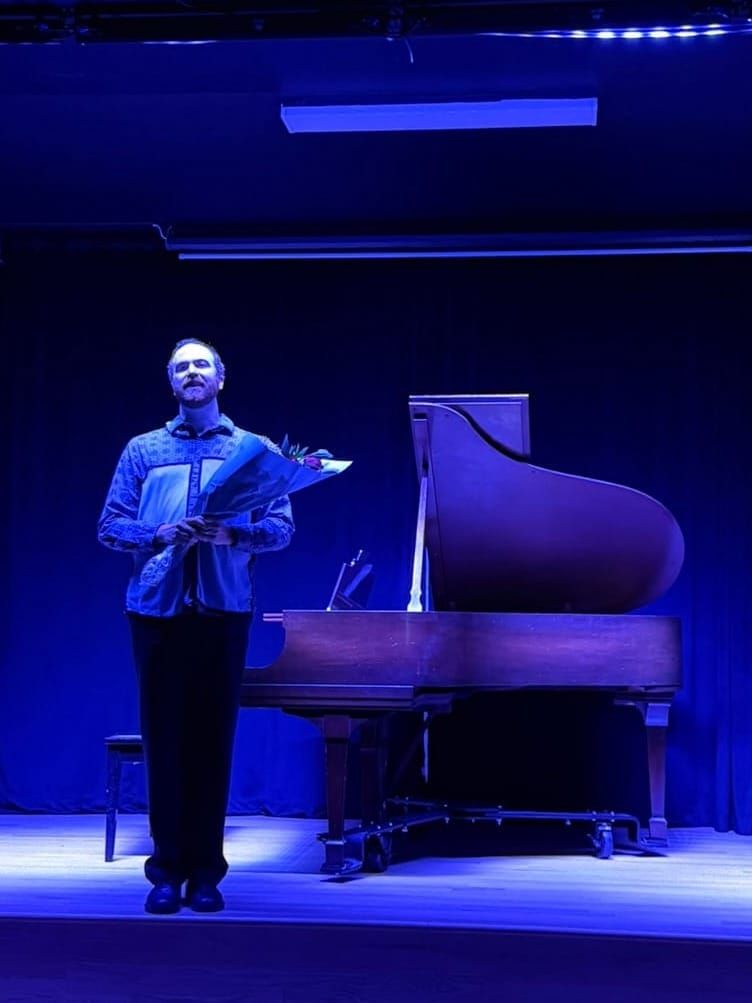
“I feel that I am losing my sense of time,” pianist Daniel Schreiner told me.
Daniel does not transcend time. He manipulates the piano's vibration, resonance, body, and space, revealing the present state of a work. As works from different eras pass through Daniel’s body and mind, they illuminate one another, multiplying the force each one carries.
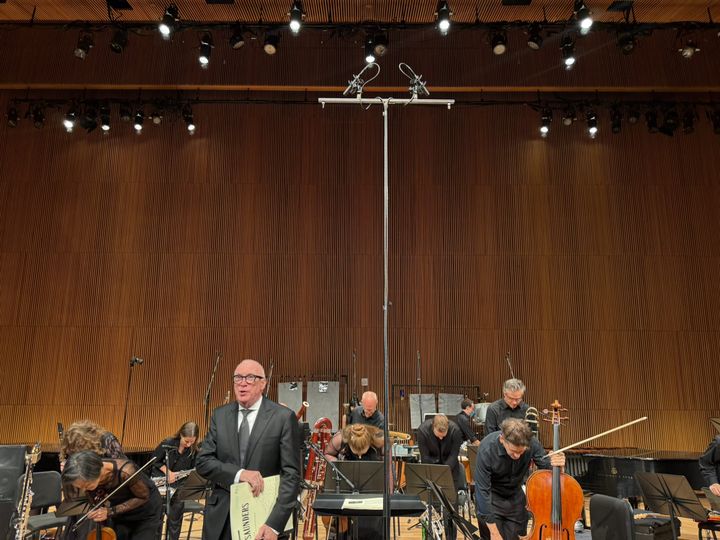
On September 12, Daniel Schreiner’s Unmoored release party was held at MISE-EN_PLACE in Harlem, New York.
Daniel Schreiner Unmoored Release Party
7–9 PM
Daniel Schreiner, piano
MISE-EN_PLACE
45 Saint Nicholas Avenue
New York, NY 10026
PROGRAM
Jamshid Jam — Opening Set
Piano Recital Set #1
- Luciano Berio (1925–2003): Brin from Six Encores (1990)
- Maurice Ravel (1875–1937): Noctuelles from Miroirs (1905)
- Berio: Leaf from Six Encores (1990)
- Nina Shekhar (b. 1995): Vocalise (2021)*
Intermission
Q&A with Ramin Roshandel
Piano Recital Set #2
- Ramin Roshandel (b. 1987): Three Short Dreams (2021)*
- Berio: Wasserklavier from Six Encores (1965)
- Ravel: Une barque sur l’océan from Miroirs (1905)
- Berio: Erdenklavier from Six Encores (1969)
- Sato Matsui (b. 1991): Oiseau solaire (2020)*
From Ravel in 1905 to Berio from the 1960s onward, and then to composers working today. At first, they seem to belong to different eras, different cultures, different kinds of music. But through Daniel’s piano, they begin to respond to one another within a single span of time.
The album’s title, Unmoored, refers to releasing a boat from its mooring and leaving the place where it has been fixed. It means moving away from what has held you in place and entering a state of being fixed nowhere. In the post-pandemic world, where is the boundary between freedom and constraint? How does one express an individual voice amid censorship and oppression? In uncertain, unpredictable circumstances, what can one rely on to stay grounded? On this album, the boundaries of genre, form, our sense of time, the instrument itself, and even identity begin to loosen. Resonating with the piano's sound, time and form are shaken, and sound is released from the frameworks that have contained it.
I had already heard something similar at the recent memorial festival for Sofia Gubaidulina. In an ensemble with different instruments, in free sessions, and in a solo Chaconne written for the winner of the Tchaikovsky Competition at the time, there were moments when the power of Daniel’s attack met extraordinary delicacy of expression, when unpredictable, almost accidental developments appeared, and when romantic melodic figures were treated through contemporary timbres. And sometimes the reverse. Yet his instantaneous decisions always carried conviction, and so did what remained after the music ended. He commits himself to the time of the work, enters into it, and delivers that time, that moment, directly to us.
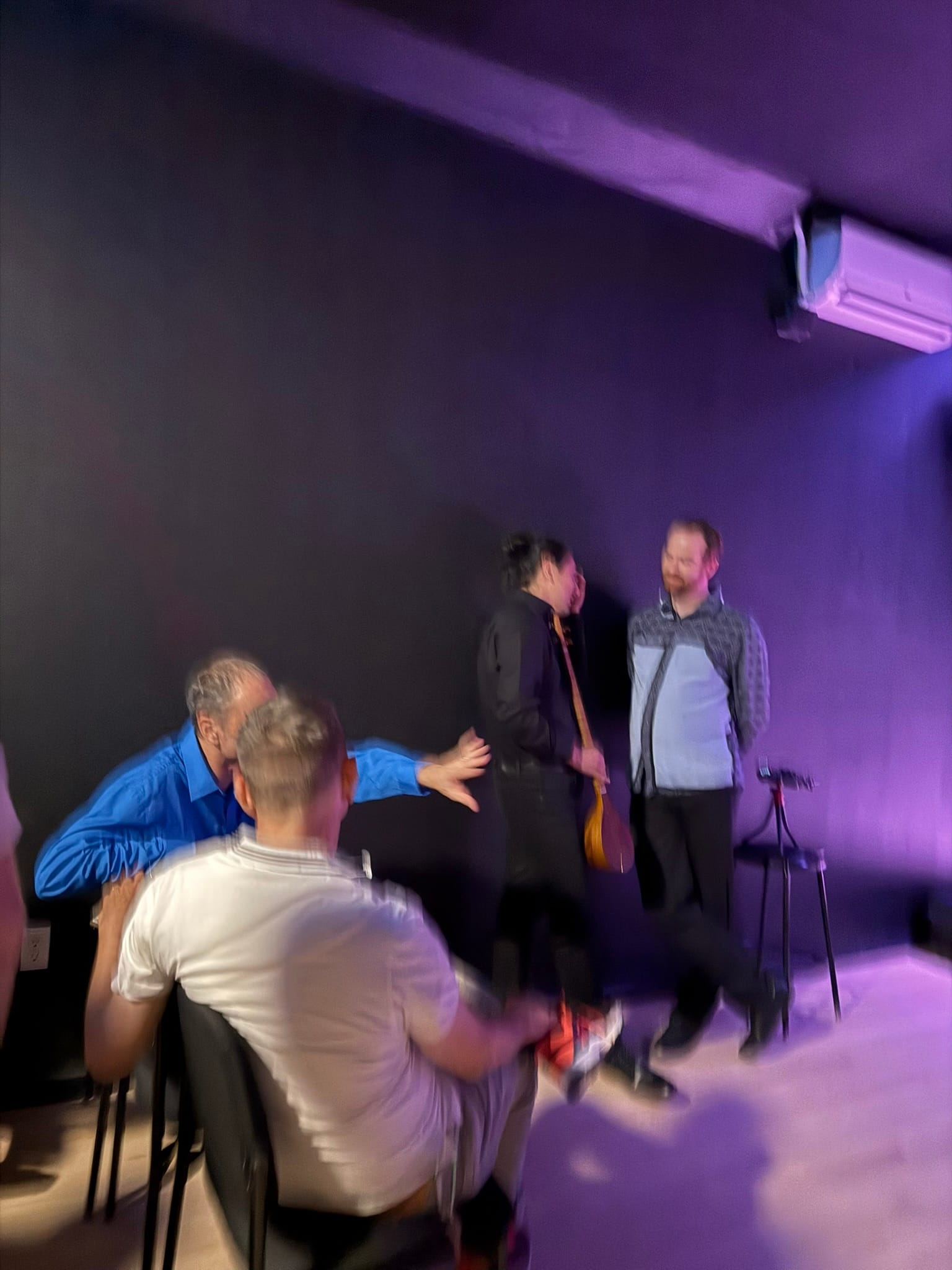
When I entered the venue, I met Ramin and John. Before Daniel’s recital, they performed a session with the Persian classical instrument setār and live electronics.
Ramin Roshandel is a composer whose work appears on Daniel’s album, as well as a setār player and improviser. He studied Iranian music performance and composition at the University of Tehran and earned a doctorate in composition from the University of Iowa. His father was an instrument maker, so traditional music was likely close to him from an early age. At the University of Iowa, he met Jean-François Charles, a composer and electronic music performer. Since 2019, they have performed together as Jamshid Jam, a duo combining Ramin’s setār with Charles’s live electronics.
Jean samples and remixes the sound of Ramin’s setār, transforming the live sound in real time. Ramin began by touching the setār and producing sound. Something felt slightly awkward in the way he handled the instrument. Where had this instrument come from? What kind of sound would it make? It felt as though he were encountering the setār for the first time, rediscovering where it came from and what it could do. Touch it. A sound appears. That simple sense of wonder became the performance itself.
Jean-François Charles recorded, sampled, and remixed that feeling. Ramin played a single note, then electronically stretched, layered, and transformed it. In the space of the performance, another world unfolded from a single sound in real time.
Ramin knows the traditional scales of Persia. At the same time, he knows the world he lives in now. Recently, I went to the Whitney Museum to see works by Iranian painters. In the center of Persian culture, conflict is still ongoing. Ramin’s setār was amplified, stretched, broken apart, and transformed into something entirely different through electronics. In those sounds, I heard a raw voice beyond society's distortions and human cruelty. Yet no matter how much John distorted the sound or allowed the rawness of reality to resonate, Ramin’s Persian scales never disappeared.
One could call them “experimental,” “radical,” or “non-social” simply by listening. But for those of us who do not know the reality in which they live, the sound I heard in this small gallery of roughly seventy seats was a cry, an acceptance, and the present itself. It was also the physical reality of Ramin’s setār. Through that small instrument's sound, I felt its existence for the first time.
Then Daniel’s recital began.
It opened with Brin, written in 1990 by the Italian composer Luciano Berio. Within a narrow range of small fragments, short sounds slowly descend. After the raw sounds of Jamshid Jam, after the chaos where history and the present collide, came the sudden sensation of simply staring at nothingness—or at something within nothingness.
The atmosphere changed. Daniel’s force traveled into the keys, and Ravel’s nocturne followed immediately. The hammers struck the strings. From the piano's body came Ravel’s mysterious waves of descending semitones, resonating against the gallery walls. It was a raw performance, with a strong accent of its own.
Did Ravel sound like this around 1900? Even now, listening to a concert grand in a large concert hall, it is difficult to experience this particular accent and texture of Ravel. Tiny particles of sound generated overtones, filling the space with Ravel’s colors. Within the sustained resonance, sharp fragments of sound emerged, and the world of Berio’s short piece Leaf reappeared. Time moved back and forth between dream and reality.
Then came Nina Shekhar’s Vocalise, written in 2021. The piano’s single melodic voice gradually grew stronger, trying to preserve itself even as it seemed about to be swallowed by the surrounding sound. Vocalise means a song without words. A piano without words searches for an emotion before language, for its own voice.
When Daniel sounds Shekhar’s voice, there is something like medieval or Renaissance chant. Shekhar wrote this work only recently. Her perspective, experience, and sensibility as an Indian American seem to resonate through Daniel, reaching deep into her interior and drawing out the resonance within. He uses the pedal to leave a rich resonance, allowing something like melismatic inflections to emerge. He grasps chords, lets them resonate, and makes them shine, as if accepting alienation and solitude. In the second half, when the music shifts into a minor key, the sound disperses into countless notes, while chords that seem to draw on the piano's weight sink deeply. A groove reminiscent of Detroit techno emerged, something like Jeff Mills.
The second half of the program began with Ramin Roshandel’s Three Short Dreams, composed in 2021. The work consists of three parts: “Introvert, Expressive, Rubato,” “Senza misura, Ad libitum,” and “Mantra.”
Improvisatory gestures across the piano's full register emerge and disappear from darkness, moving from one dream to the next. The piano's movement creates the sensation of time and place suddenly shifting, as they do in dreams. At the beginning, the low register writhes grotesquely. Then a lonely high voice appears. In “Senza misura, Ad libitum,” a single tone suddenly pops out into the space. The sounds seem to scatter in random directions, yet each one makes the piano's body resonate. The resonance between fragments changes the instrument itself, and the way time exists within it. Finally, in “Mantra,” an oriental resonance appears—a “da-da” sound. Within Daniel’s piano, the Persian resonance intertwines with the instrument, and the dream's fragmented time gradually sinks into the repetition of sound.
Then came Berio’s Wasserklavier, the piano of water. A tone caught by a mordent trembles; between tied notes lies a space of time and resonance; and the next chord creates a resonance like ripples spreading across the surface of water.
Then Ravel’s little boat on the open sea. From Berio’s water surface, a small boat released from its mooring begins to move. Refractions of light, free resonance—I no longer felt as though I were listening to a piano. It was nowhere and everywhere, and it was now. A slight sense of anxiety and anticipation rose about where the sound might go, somewhere between reality and dream. Daniel’s rendering uses the keys to carve a liquid sensation into space, as if sound were paint.
Then came Berio’s Erdenklavier, the piano of earth. Bold, thick single notes are followed by fine movements. It seemed like a prefiguration of the final work, Sato Matsui’s Oiseau solaire, the solar bird rising from the earth.
The final work, Sato Matsui’s (b. 1991) Oiseau solaire (“Solar Bird”), is a work in which a bird seems to rise from the sun. Matsui, a Japanese composer based in Paris, captures key characteristics of French music. Matsui’s bird song recalls Takashi Yoshimatsu, yet its resonance is unmistakably French. Its texture is deeply Japanese—delicate, careful, and precise—while its sound is remarkably direct.
Daniel’s attack is almost percussive. He transforms Matsui’s rendering into the beating of wings, revealing a free flight that belongs nowhere. Yet the sound always rebounds from somewhere, generating another movement from within its own resonance. At the end, it closes with a single “dan,” like a dot. I felt something distinctly French in the way it ended.
Through this experience, I came to think of Daniel as a pianist who moves time. At the same time, he reveals what a work looks and sounds like in the present—what form it takes now.
Past and present, composition and improvisation, instrument and body, sound and space, dream and reality, tradition and the contemporary. Daniel unsettles these boundaries and moves the time that exists between them. He connects music from different eras and cultures along a single line, drawing the time contained within each work toward the present.
On the album cover, a clock's hands appear between a light area and a dark one. The span of time itself—the distance between past and present—leads into now.
That is why, when I listen to Daniel perform, it feels as though works from different times can nevertheless exist simultaneously, here, in this very moment.

時を揺るがすピアニスト――ダニエル・シュライナー
9.12.2026
「私は時代の感覚を失いつつある」と、ピアニスト、ダニエル・シュライナーは私に言った。ダニエルは時代を超えるのではない。ピアノの振動、共鳴、身体、そして空間を操り、作品の現在を明らかにする。そして、異なる時代の作品は、ダニエルの身体と思考を通過することで互いに照らし合い、それぞれが持つ力を数倍にもする。9月12日、ニューヨーク・ハーレムのMISE-EN_PLACEで、ダニエル・シュライナーのアルバム『Unmoored』のリリースパーティが開催された。
1905年のラヴェルから、1960年代以降のベリオ、そして現在の作曲家たちへ。一見すると異なる時代、異なる文化、異なる音楽。しかしダニエルのピアノを通して聴くと、それらは一つの時間の中で互いに呼応し始める。
アルバム名の『Unmoored』とは、船をつないでいた係留を解き、固定されていた場所から離れることを意味する。これまで自分をつないでいたものから離れ、どこにも固定されていない状態になることだ。パンデミック後の世界で、自由であることと拘束されていることの境界はどこにあるのか。検閲や抑圧の中で、個人の声をどう表現するのか。不確実で予測できない状況の中で、何を支えに自分を保つのか。このアルバムでは、ジャンル、形式、時間感覚、楽器の境界、さらにはアイデンティティまでもが揺らいでいく。ピアノの音色と共鳴しながら、時間や形式を揺さぶり、音をこれまでの枠組みから解放していく。
先日のグバイドゥーリナ追悼フェスでも、異なる楽器とのアンサンブル、フリーセッション、当時のチャイコフスキーコンクール優勝者のために書かれたシャコンヌのソロで、打鍵の威力と表現の繊細さ、予想のできない偶然性のような展開、ロマンチックな音型を現代的なティンブレで扱う瞬間があった。または、その逆。しかし、その瞬間の判断と、聴き終えた後の納得感がある。彼がその時間にコミットし、作品の中に入り込み、その時間や瞬間を、そのまま私たちに届けているからだ。
会場に入ると、ラミンとジョンに出会った。彼らはダニエルの前に、ペルシャの古典楽器セターとライブエレクトロニクスのセッションを行った。
Ramin Roshandel(ラミン・ロシャンデル)は、作曲家で、彼の作品がダニエルのアルバムに収録されている。そして、setār(セター)の演奏家・即興演奏家だ。テヘラン大学でイラン音楽の演奏と作曲を学び、University of Iowaで作曲の博士号を取得。父親が楽器職人で、伝統音楽も身近だったに違いない。University of Iowaで、電子音楽の作曲家・演奏家であるJean-François Charlesと出会い、2019年からRaminのsetārとCharlesのライブ・エレクトロニクスによるデュオ、Jamshid Jamを結成し活動している。
Raminが演奏するsetārの音をジョンがサンプリング、リミックスすることで、生の音がリアルタイムで別の音へと変化していく。ラミンがセターを触って音を出し始めた。ラミンが楽器を触っているのが少し不器用に見えた。その楽器がどこから来て、どんな音が出るのか。まるでラミンが初めてsetārを手にしたときのような、楽器への興味が伝わってくる。触ってみる。音が出る。その単純な驚きが、そのまま演奏になっているようだった。
Jean-François Charlesは、そんなラミンのフィーリングを録音し、サンプリングし、リミックスしていく。ラミンが弾いた一つの音が、電子的に引き伸ばされ、重なり、変形される。その場で、ひとつの音から別の世界がリアルタイムで展開していった。
ラミンはペルシャの伝統スケールを知っている。同時に、いま生きている世界のことも十分に知っている。先日、Whitney Museumでイランの画家の作品を見に行った。ペルシャ文化の中心地では、いまも争いが続いている。ラミンのsetārの音色は、電子の力で増幅され、引き伸ばされ、破壊され、まったく別のものへと変えられていく。その音の中から、社会の歪みや人間の残酷さを超えた、生々しい声を聴いた。しかし、どれだけジョンが音を歪め、現実の生々しさを響かせても、ラミンのペルシャスケールは消えなかった。
彼らを「エクスペリメンタル」「実験的」「ラディカル」「非社会的」と呼ぶことは、この音だけを聴けばできるかもしれない。けれど、彼らが生きている現実を知らない私たちにとって、この70席ほどの小さなギャラリーで聴いた音は、叫びであり、受容であり、今そのものだった。そして、ラミンのsetārの実在だった。その小さな楽器の音を通して、初めてその実在を感じた。
その後、ダニエルのリサイタルが始まった。1990年、イタリアの作曲家Luciano Berioが書いたBrinは、小さな欠片のような短い音の幅の中で、音の欠片がゆっくりと下降していく。Jamshid Jamで聴いた生々しい音、歴史と現代がぶつかり合う混沌から、突然、何もない何かをただじっと見つめるような感覚だ。
気配が変わり、ダニエルの体から力が鍵盤へ伝わり、ラヴェルの夜想曲がすぐに続く。ハンマーがピアノ線を叩く。ピアノのボディから、夜のミステリーを帯びたラヴェル独特の半音下降のうねりが生まれ、ギャラリーの壁に反響する。生々しく、強い訛りを持った演奏だった。
ラヴェルが生きていた1900年当時は、こんな音がしたのだろうか。今、コンサートピアノを大きなコンサートホールで聴いても、このラヴェル独特の訛りと感触を味わうことはできない。細かな音の粒子が倍音を生み、ラヴェルの色彩で埋め尽くされた。その極端にサステインされた残響の中に、尖った音の欠片が埋め込まれ、葉と題された短いBerioの世界が再び現れる。夢と現実のはざまを往復するような時間。
つづく、Nina Shekhar — 《Vocalise》2021年の作品では、ピアノの単旋律の声が徐々に強くなり、周囲の音に飲み込まれそうになりながら自分の声を保とうとする。言葉のない歌を意味するVocalise。言葉を持たないピアノが、言葉になる前の感情や、自分の声を探す。
シェクハーの声をダニエルが鳴らすと、中世またはルネサンスの朗唱のような感覚がある。シェクハーがこの作品を作ったのは最近だ。インド系アメリカ人の視点、経験、感覚がダニエルに響いて、彼女の心の深いところまで達し、その響きを取り出しているようだ。ペダルを効かせ、響きをたっぷり残して、メリスマのようなクセを聴かせる。疎外感や孤独を受け入れるようにコードを掴んでは響かせ、輝かせる。後半、マイナーキーへシフトすると、数々の音に分散し、ピアノの重みを利用するようなコードが深く沈んでいく。デトロイト・テクノのJeff Millsのようなグルーヴがあった。
後半のセットは、ラミン・ロシャンデルが2021年に作曲した《Three Short Dreams》から始まった。3つの部分からなる作品で、第一部「Introvert, Expressive, Rubato」、第二部「Senza misura, Ad libitum」、第三部「Mantra」と続いていく。ピアノのレジスターを全てカバ-する即興の身ぶりが暗闇か現れては消えて一つの夢から次の夢へ移る。夢の中で時間や場所が突然切り替わる感覚をピアノの動きでつくっている。冒頭では低音がグロテスクにうごめく。途中は孤独な高音の声が現れ、Senza misura, Ad libitum では、一つの音色がポーンと空間に飛び出す。音はランダムな方向へ散っていくように聴こえるが、その一つひとつがピアノのボディを鳴らし、共鳴を生む。断片のあいだの響きが楽器そのもの、そして時間の在り方を変える。最後はのマントラはダダー、と現れるオリエンタルな響き。ダニエルのピアノの中で、ペルシャの響きが絡み、これまで断片的だった夢の時間が、反復する音の中へ沈んでいく。
べリオが続く、水のピアノ。モルデントでつかんだ音が揺れ、タイでつながれた音と音の間にある時間と響き、そして次の和音がまるで水面に広がる波紋のように、響きを作る。
ラベルの海原の小舟。べリオの水面から、係留を解かれた小さな小舟が進む。光の屈折、自由な響き、ピアノを聴いている気がしなかった。そこはどこでもなく今だった。この音の響きがどこに向かうのか、少しの不安と期待、そして現実と夢。ダニエルのレンダリングは、鍵盤を使って、空間に絵具のような液体の感覚を持つ音を刻んでいく。
べリオの大地のピアノ。大胆な太い単音に細かな動きが続く。最後の松井の太陽の鳥が大地から昇、前触れの様だ。
最後のSato Matsui(松井聡、1991–)の《Oiseau solaire(太陽の鳥)》は、太陽から鳥が飛び立つような作品である。日本人でパリ在住の作曲家、松井の音楽には、フランス音楽独特のキー感覚がある。松井の鳥の歌は、日本の吉松隆にも似ているが、その響きはフランスの響きがする。テクスチャーはとても日本的で、繊細で丁寧でありながら、とてもストレートな響きがある。
ダニエルの打鍵はまるでパーカッションのようだ。松井のレンディションを羽ばたきに変え、どこにも属さない自由な羽ばたきを見せる。それでも、その音は常にどこかに跳ね返り、その響きの中からまた新たな動きを生み出していく。最後、ドットのようにダンと閉じる。その終わり方に、フランスならではの感覚を感じた。
この体験を通して、ダニエルは時間を動かすピアニストだと思った。同時に、その作品がいま、どのような姿で存在しているのかを明らかにする人でもある。過去と現在、作曲と即興、楽器と身体、音と空間、夢と現実、伝統と現代。ダニエルは、それらの境界を揺らし、そのあいだにある時間を動かす。異なる時代や文化の音楽を一つの線でつなぎ、それぞれの作品が持つ時間を現在へと引き寄せる。
アルバムのジャケットには、明るい部分と暗い部分のあいだに時計の針が見える。過去と現在、その時間の幅そのものが、いまにつながっている。だから、ダニエルの演奏を聴いていると、それぞれが異なる時間を持ちながら、いま、この瞬間に同時に存在しているように感じられる。
Comments ()