Unlimited: Petrenko and the Berlin Philharmonic
10.9.2026
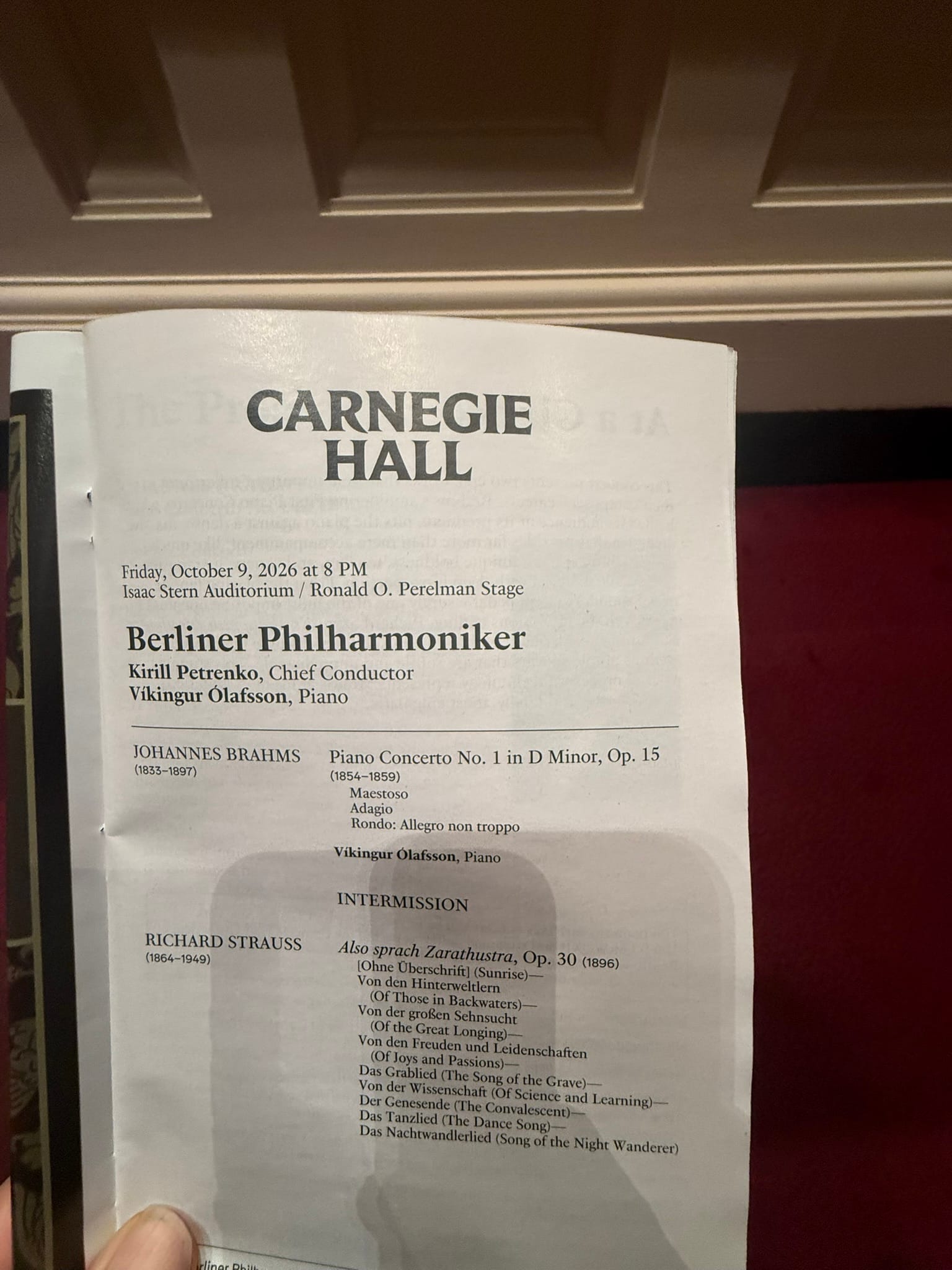
The second day of the Berlin Philharmonic’s Carnegie Hall residency.
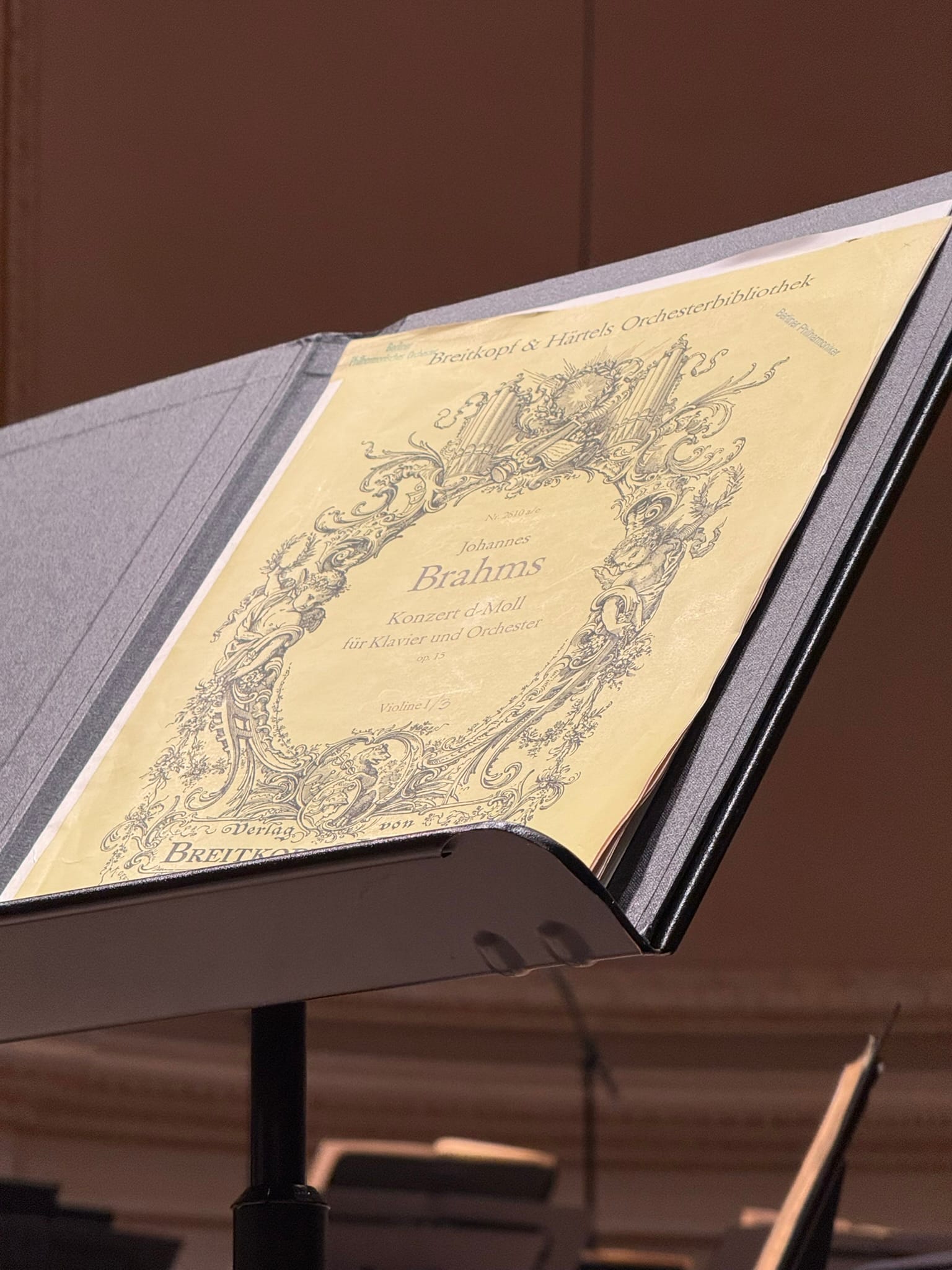
Brahms premiered Piano Concerto No. 1 in 1859. Written in his twenties, he took five years to complete the work, revising it repeatedly. The Berlin Philharmonic and Víkingur Ólafsson performed it together. During its composition, Brahms also went through a period in which Robert Schumann’s suicide attempt brought his work to a halt.
Petrenko reportedly told Ólafsson that the shattering opening sound speaks of Brahms’s anguish.
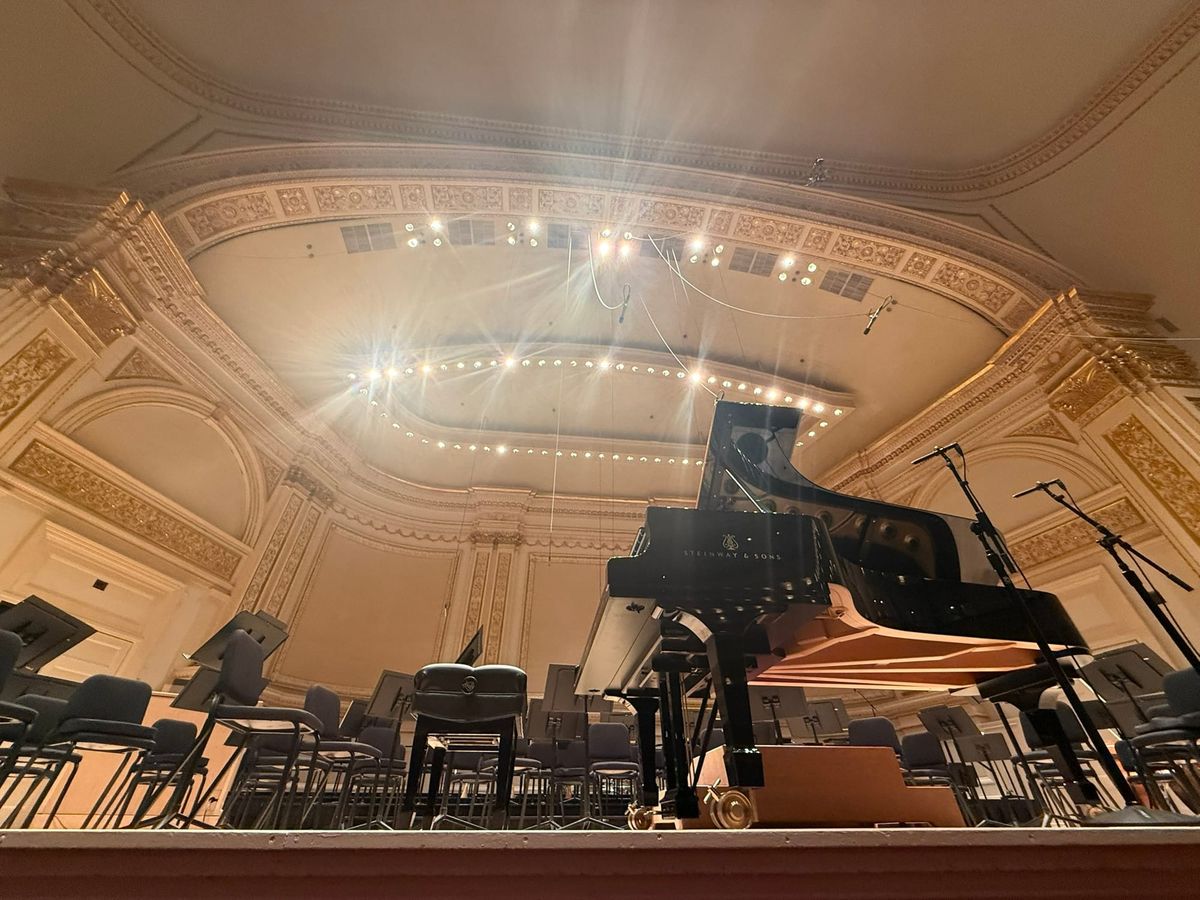
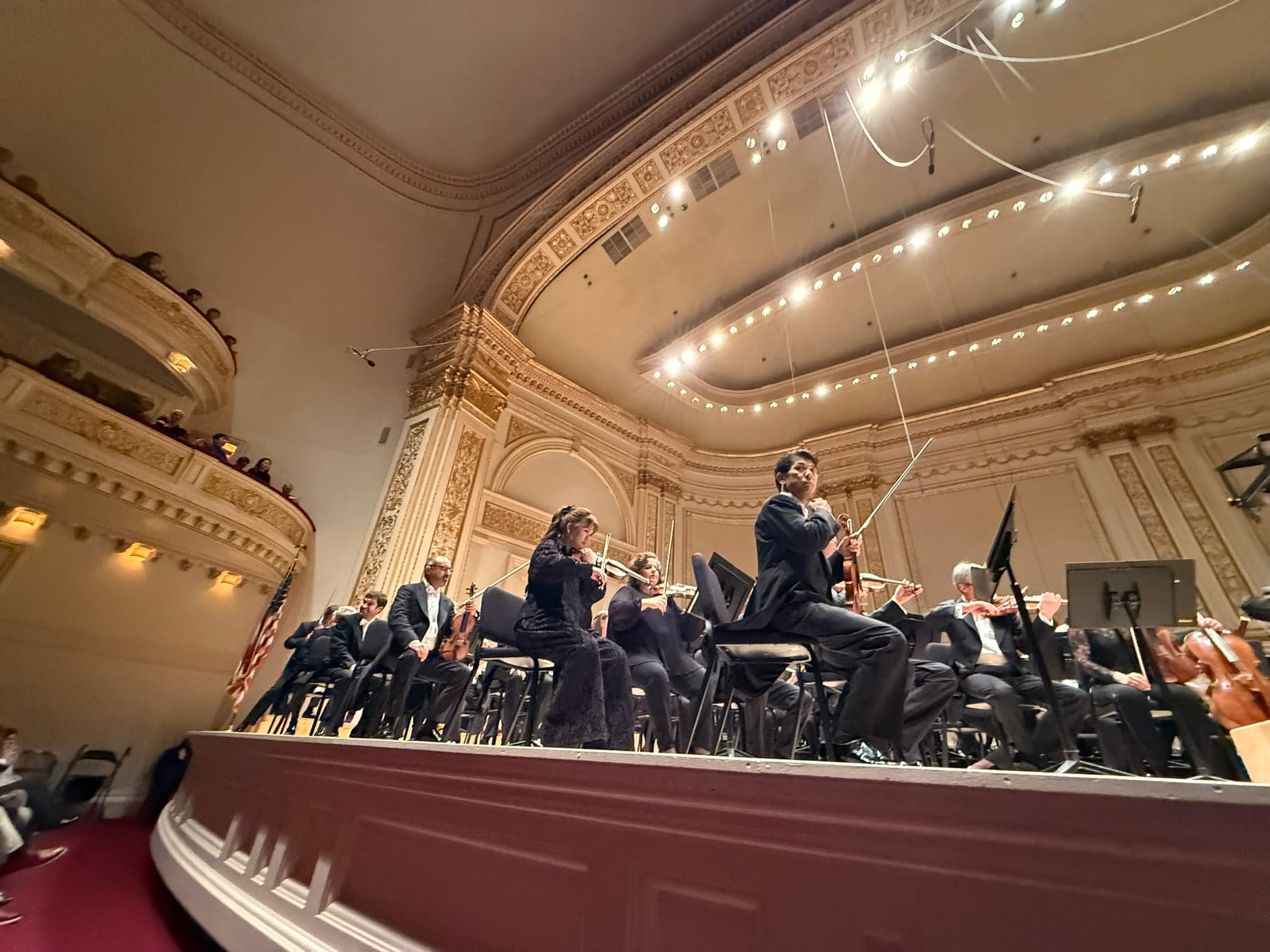
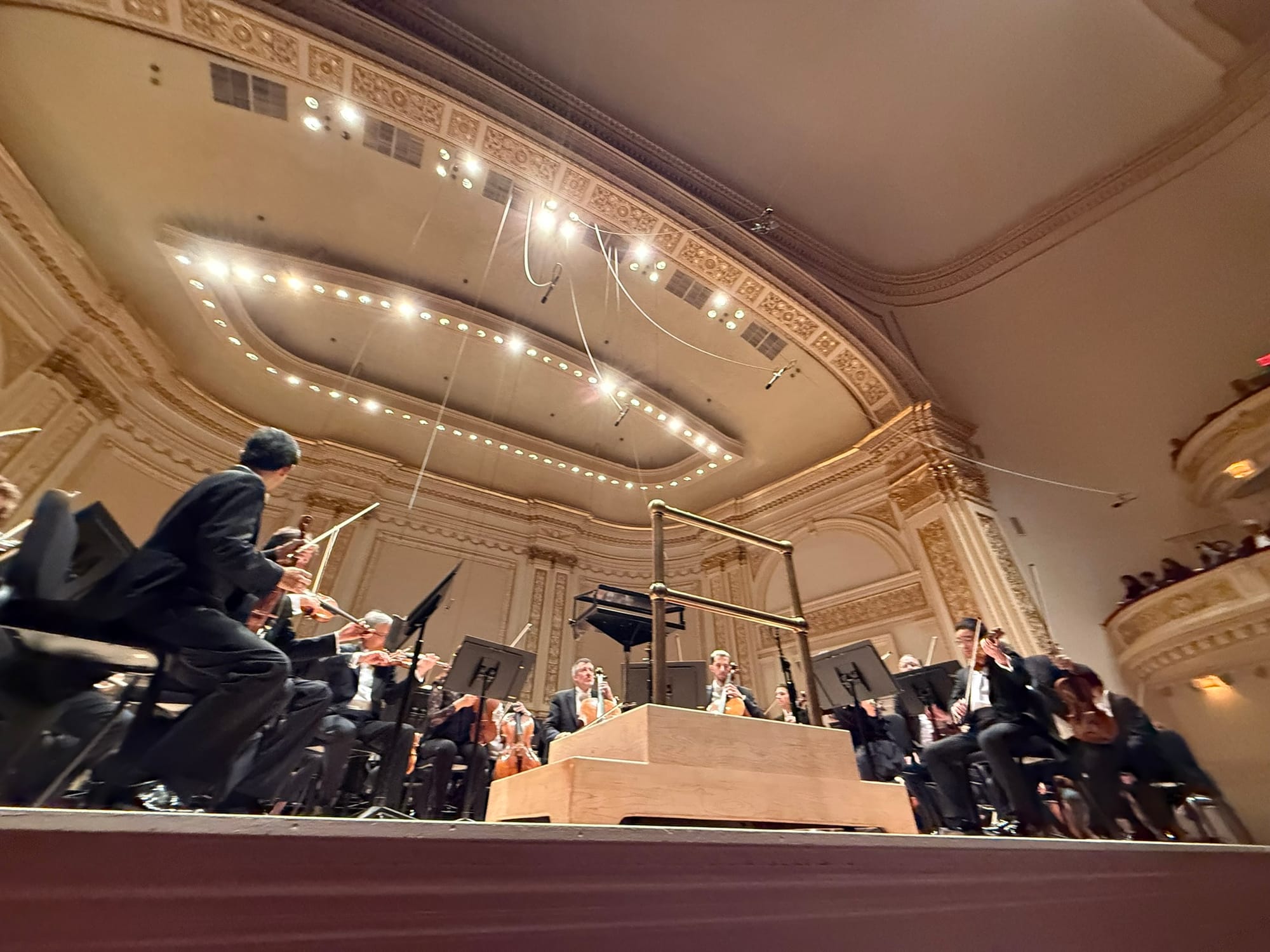
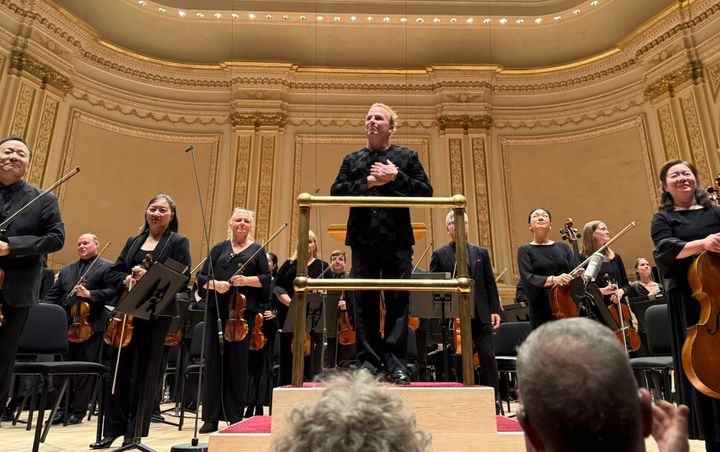
Looking up, I could see the enormous grand piano, with the first violins stretching out to its left. Daishin Kashimoto was the concertmaster, with Noah Bendix-Balgley seated beside him. Thomas Timm and Marlene Ito were among the second violins, while Ludwig Quandt and Bruno Delepelaire played cello. In the viola section, I spotted Diyan Mei.
Among the first violins, next to Hande Küden, was an Asian woman I had not seen before. She was Minami Yoshida, who joined the Berlin Philharmonic in 2025.
The concerto opened with a powerful strike from timpanist Wieland Welzel. The sound gradually softened, and Ólafsson’s scales and arpeggios began to intertwine with the orchestra’s melodies. The music felt intimate, as though it belonged to everyday rhythms. The tones flowed naturally, without affectation. Something profoundly human lived in this unassuming progression.
The solo piano wove through the orchestra’s long melodic lines and harmonies with precision. The more steadily the piano laid down its notes, the more the individual orchestral solos seemed to glow, their colors enriching one another. As one musical idea came to a close, a new wave of passion swept in, intensifying the orchestra's unity. Through these surging waves, the piano slipped, merged, and sometimes held itself apart.
In the latter part of the movement, I heard fragments of the piano’s sound peeling away from the orchestra like pieces of a sonic membrane. The resonance that had filled the orchestra seemed to condense into a single piano, its sound becoming ever more refined. The radiance held within the piano then spread into small instrumental ensembles before flowing back into the orchestra as a whole.
A symphonic ecosystem for piano and orchestra, conceived by Brahms in his twenties and brought to life over five years. Neither side overwhelmed the other. Each retained its own identity, and their interplay shaped the music.
Near the end of the first movement, the dialogue between Dohr's horn and Ólafsson’s piano was particularly striking. With a waltz-like motion, the piano and orchestra developed their variations, each seeming like an independent installation. Under Petrenko’s direction, they listened to one another, responded to each other’s assertions, and continually reshaped the music.
The second movement began with an orchestral prelude whose strings and winds evoked a medieval chorale. In the spaces between the orchestra’s breaths, Ólafsson’s piano marked out a steady progression. What was it marking? The notes continued, one after another, maintaining their measured pace. The waves of time and emotion seemed to disappear, and my mind sank deeper and deeper into solitude.
Suddenly, a fierce wind swept through. It passed before me and blew away into the distance. I felt as though I were watching it disappear. There was nothing before me but sound. Music rushed through the darkness, then drew close. I forgot everything and became absorbed in its world. Still, I kept looking ahead, trying to follow the waves of sound they were bringing into being.
When Quandt built a crescendo, the sound had physical force, as though vibrations rose from deep within my body. Daishin Kashimoto’s right hand also left its vibrato with me. In their playing, I sensed sound itself and the depth of awareness behind it. The piano moved forward one step at a time, and the orchestra enveloped its progress with a quiet sincerity. My attention gradually drew toward the piano until I felt held within the orchestra’s breathing.
The third movement was an Allegro. Its music evoked a Bach concerto, and Ólafsson played the Steinway concert grand almost as though it were a harpsichord. The orchestra transformed the vast concert hall into an intimate chamber salon, making music together with easy, convivial warmth.
Ólafsson continued to play without surrendering to personal emotion, maintaining a remarkably even composure. The piano spoke, and the orchestra answered; the orchestra posed a question, and the piano responded. As the rhythmic patterns continued, the piano sounded increasingly like a harpsichord. Eventually, the sound seemed to detach itself from the instrument and float through the space as a shape of its own.
During the fugue, I felt as though time itself were moving backward. The piano imitated the musical phrases, shifting keys before rising to another climax. The theme passed through the entire orchestra, and the music expanded into a vast, surging movement. Carnegie Hall became the setting for a magnificent musical spectacle, with the rondo's exuberance in Beethoven’s Piano Concerto No. 5.
I had always thought of Brahms as a composer whose music reflected the nineteenth-century world's growth and expansion. As the twentieth century gave way to the twenty-first, his music had seemed to me large, powerful, and intense.
But Petrenko's performance of the First Piano Concerto, with the Berlin Philharmonic and Ólafsson, revealed something different. What emerged was one human being surrounded by many friends. The surges of emotion, the stillness of a solitary heart, the full range of human feelings—all felt as familiar as experiences from our own lives. The grandeur of the symphonic sound coexisted with the intimacy of chamber music.
The piano and orchestra did not seek to overpower each other. They listened to one another, responding and shaping the music through dialogue. Every exchange revealed the striking originality of the young Brahms’s ideas. The performance seemed to answer the question of why Brahms had written music in the first place. Solitary, yet happy.
The encore was a short Bach concerto with orchestral accompaniment. As I listened, time moved forward, carrying me toward Richard Strauss's world.
The same program returned two days later. That evening, I noticed a new audience, people who had paid more than $300 for their tickets. They responded with unrestrained excitement, gesturing animatedly and occasionally calling out in surprise. For those who had followed the orchestra for decades, such reactions may have seemed disruptive, making it difficult to listen in the accustomed quiet.
New audiences were entering a musical space that people had loved for years. Their spontaneous responses could feel as though they were disturbing long-established ways of listening. Yet without new people, this tradition could not continue. The places where we listen to music, and the people who gather there, change with the times. That, too, is part of the natural course of human life.
And yet, I still found it unpleasant.
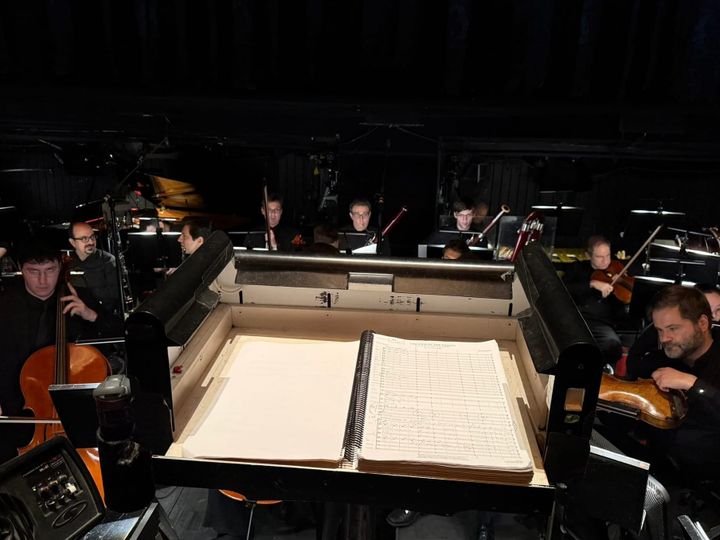
During the intermission, they removed the piano and rearranged the stage for the orchestra alone. On the conductor’s podium lay a Dover-published score, the same edition I own. It was worn and battered from years of use. I have always been fascinated by scores on conductors’ podiums, whether in the concert hall or the opera house.
I first saw Kirill Petrenko at a 2012 matinee performance at the Metropolitan Opera. It was the final performance of Mussorgsky’s Khovanshchina. From the center of the balcony, I watched the thick score resting on his podium. Even after he stepped away, I kept staring at the pages. I still remember that moment.
When the Berlin Philharmonic announced its successor to Simon Rattle, I hoped they would choose Petrenko. I think that hope began with the impression he had left on me that day.
Fourteen years later, Petrenko and the Berlin Philharmonic were performing Richard Strauss’s Also sprach Zarathustra, a work I had studied in a musicology seminar at Brooklyn College.
The seminar focused on the nineteenth-century symphonic poem. At a time when absolute music dominated, composers began to explore new possibilities for form and expression. We started with Gounod and Weber and eventually arrived at Strauss. I was in my twenties then.
Of all the works we studied, I became especially absorbed in Also sprach Zarathustra. After the opening fanfare, the strings enter, and I was captivated by the score itself. Human longing, held deep within us, seemed to coexist with nature's power. Strauss sets different keys against one another, unsettling the musical world. Within those sounds lay a reality that human will alone could never fully comprehend.
In 2001, I witnessed the September 11 attacks in real time and was deeply shaken. Afterward, I began attending concerts at Carnegie Hall. Whenever I heard Strauss’s music, I sensed that human conflict and nature's vast processes existed together in the same musical landscape. Human longing, struggle, and opposition were not separate from nature's larger movements; they were all present in the sound.
Also sprach Zarathustra is widely understood as a musical engagement with Nietzsche’s concept of the Übermensch, or “Overman.” Writing in a style reminiscent of the Bible, Nietzsche challenged Christian values and explored ideas such as eternal recurrence, the Dionysian affirmation of life, and the possibilities of human existence. Strauss translated these ideas into sound, bringing to life the forces and aspirations hidden within the human spirit.
What drew me to the work was not simply that philosophy had become the subject of music. It was that the human desire to understand the world existed alongside nature's power, which extends beyond the reach of human will.
The opening depicts a sunrise. Having withdrawn from the world, Zarathustra descends from his mountain as the sun rises.
Under Petrenko’s direction, the trumpet does not force its attack. The sound emerges naturally, like the sun slowly appearing above the horizon. Petrenko's approach had a realism to it, an attempt to let nature's movement unfold through sound itself.
In response to the trumpet’s ascent, the orchestra burst open like light flashing across a surface. The sound spread throughout the hall before merging with the trumpet’s overtones. It felt as though the very movement of the human spirit toward unity with nature had become music.
The timpani rolled like light bouncing off the earth. The organ and bass drum made the space of Carnegie Hall vibrate with a deep, almost grinding intensity. The heat generated by the Berlin Philharmonic and Petrenko filled the entire hall.
Could I, twenty-one years ago in Brooklyn, have heard Zarathustra by Petrenko and the Berlin Philharmonic with such depth?
Petrenko’s insight and vision shone through in how he shaped the sound. He understood the musical style of Strauss’s era deeply, while directing the music with an eye firmly fixed on the present. Petrenko himself had served as music director in Meiningen, where the young Strauss had once conducted. They shared a historical connection, yet Petrenko did more than recreate the sound of the past. He was bringing the music into being here and now.
In the passage representing human aspiration, sweet melodies intertwined in layers. This was exquisite. It felt like a session that began with Diyan in the viola section and returned to Diyan at its close.
In Von den Hinterweltlern (“Of Those Who Dwell Behind the World”), the strings, divided into more than twenty individual parts, unfolded into an ecstatic chorale. They sounded like human voices. Their sound filled the space before plunging into an orchestral surge of joy and passion. Layers of sound crossed and receded like scenes passing before the mind’s eye, while the English horn gave voice to human longing. The brass added the forward-driving energy of a military march, set against the weakness and smallness of human beings, condemned to repeat the same things over and over. The people's lament gradually drifted through the space like a disembodied soul.
In Von der Wissenschaft (“On Science”), I felt less like I was listening to a musical depiction of scholarship than watching a chemical reaction unfold before my eyes. Repeated wind patterns produced strange overtones. Against them, the strings introduced a nature-associated motif, while the trumpet and clarinet exchanged motifs suggesting mockery and ennui. Different elements reacted with one another, continually transforming the sound.
Then the music repeated, like water spraying from a fountain. Led by the trumpet’s nature motif, a dance-like solo emerged, almost like a duet with Noah.
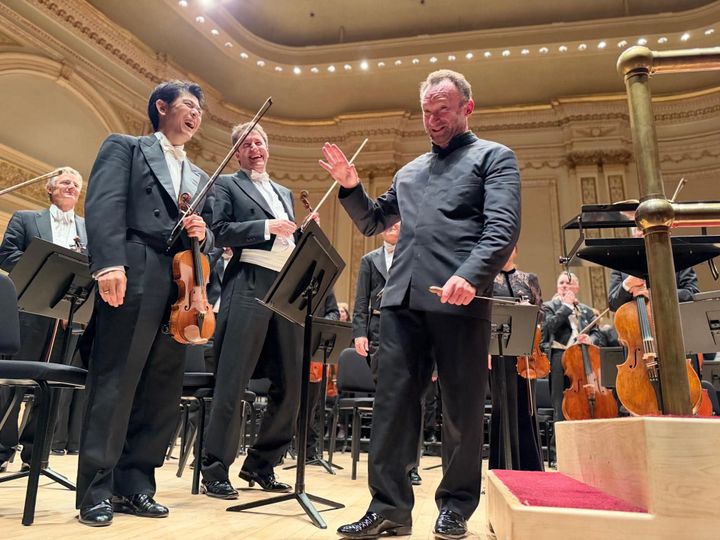
Concertmaster Daishin Kashimoto's long violin solo was another highlight. A fine, supple melody floated above the orchestra. As he sustained each note, the phrase seemed to breathe and turn. The melody did not move in a straight line; it paused, changed direction, and another voice drew it onward. His exchanges with the orchestra had the intimacy of two dance partners discovering one another. At times, he sang alongside the orchestra; at others, he slipped lightly away with the rhythm or moved ahead of it. Gradually, the waltz became more pronounced, and the melody swayed gracefully through a succession of emotions. Kashimoto’s violin sang on its own while remaining in constant dialogue with the orchestra’s countless voices.
At the end, a massive bell rang twelve times. A theme reminiscent of Der Rosenkavalier followed, played with a sweet, gentle warmth. The tonal worlds of nature and humanity continued in parallel without merging, until the sound finally stopped. The two worlds remained distinct, each preserving its own resonance as the music ended.
I was reminded of Der Rosenkavalier, which Petrenko conducted when he first appeared at Carnegie Hall with the Bavarian State Opera in 2018. He gives the entire orchestra room to breathe, making it sing as though it were an opera. At one moment, it becomes a storm or a wind; at another, it penetrates the deepest recesses of the human heart. Nature's power and human emotion emerge from a single orchestra. That is the music of Petrenko and the Berlin Philharmonic.
The performance was so profoundly human, so piercing in its emotional impact, that during the second half I could barely look at the stage. I kept my eyes closed, yet the music remained vivid and brilliant.
Performers
Berliner Philharmoniker
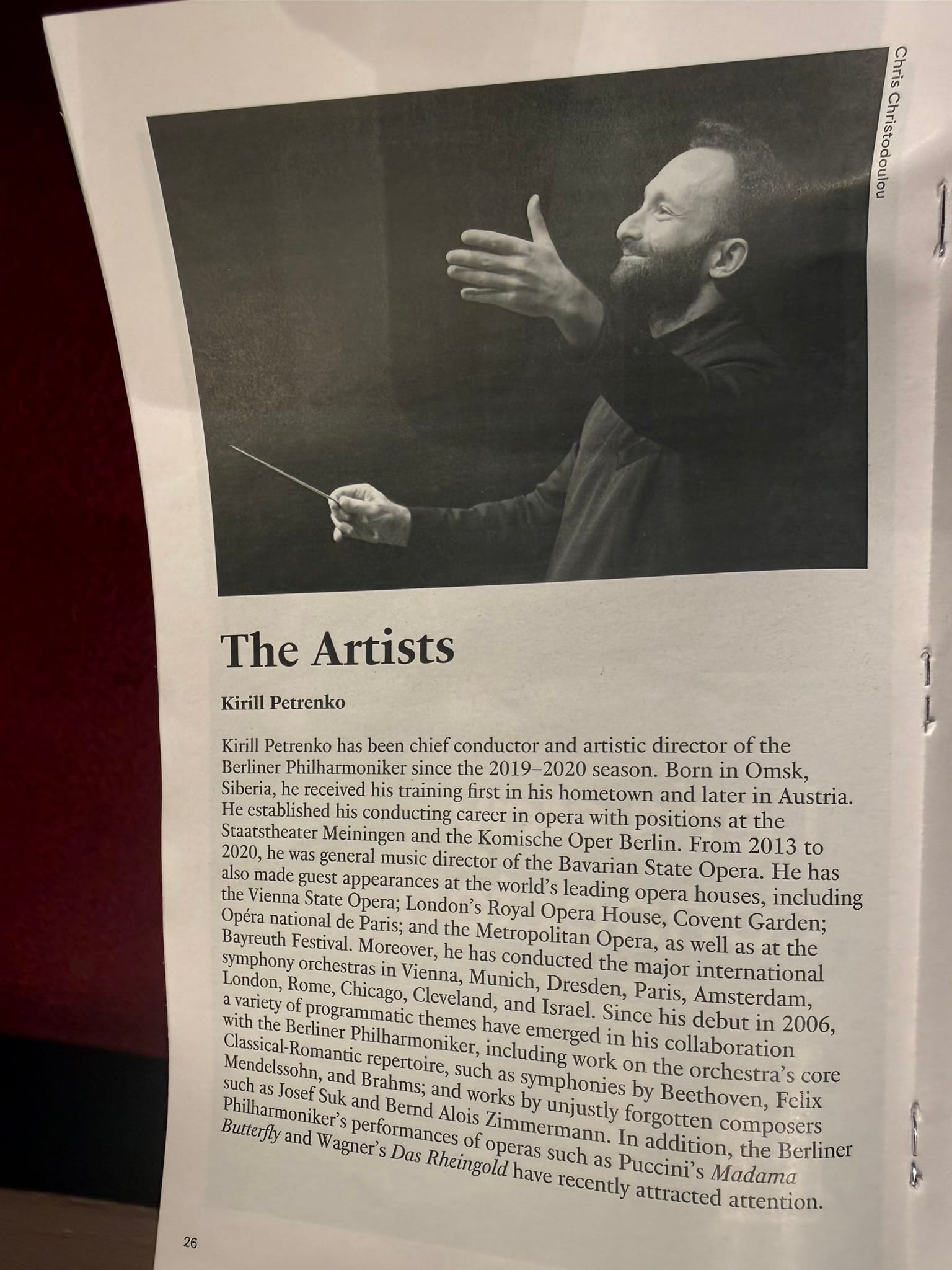
Kirill Petrenko, Chief Conductor
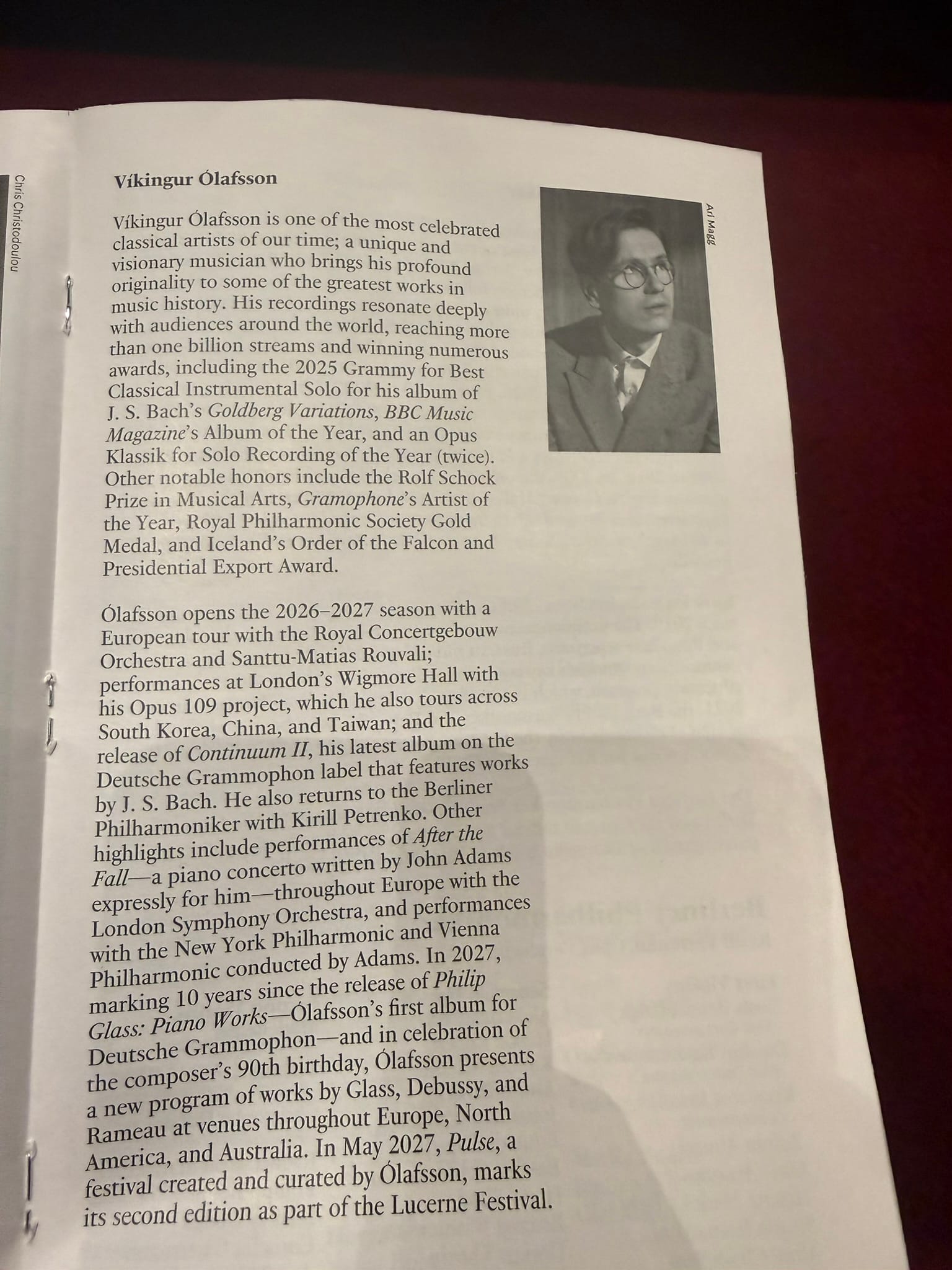
Víkingur Ólafsson, Piano
Program
BRAHMS Piano Concerto No. 1
R. STRAUSS Also sprach Zarathustra
1859年に初演されたブラームスのピアノ協奏曲第1番。20代のブラームスが何度も書き直し、5年の歳月をかけて完成させた作品を、ベルリン・フィルとヴィキングル・オラフソン(Víkingur Ólafsson)が演奏した。作曲の途中、シューマンの自殺未遂によって筆を止めた時期もあったという。
冒頭の、すべてを打ち砕くような衝撃的な響きについて、ペトレンコはブラームスの苦悩を物語るものだと、ピアニストのオラフソンに伝えたそうだ。
見上げると、巨大なピアノがあり、その左手にはファースト・ヴァイオリンの列が広がっている。コンサートマスターは樫本大進。その隣にはノア・ベンディックス=バルグリーが座っていた。セカンド・ヴァイオリンにはトーマス・ティムとマーレーネ・イトー、チェロにはルートヴィヒ・クヴァントとブルーノ・ドゥレピュレール。ヴィオラにはディヤン・メイの姿が見えた。
ファースト・ヴァイオリンでは、ハンデ・キューデンの隣に、これまで見たことのないアジア系の女性奏者がいた。2025年にベルリン・フィルに入団した吉田南(Minami Yoshida)だった。
曲は、ティンパニ奏者ヴィーラント・ヴェルツェルの強打で幕を開ける。やがて響きは穏やかになり、オーケストラの旋律にオラフソンのスケールや分散和音が絡み合っていく。そこには、日常の営みに寄り添うような親しみがあった。気取らない、ごく自然な音色が流れていく。その淡々とした営みが、実に人間らしい。
息の長いオーケストラの旋律やハーモニーに、ソロ・ピアノが精密に絡み合う。ピアノが淡々と音を重ねるほど、オーケストラの各ソロの音色は輝きを増し、豊かに響き合う。一つの楽想が閉じると、新たな激情の波が押し寄せ、オーケストラの一体感が高まっていく。その激しいうねりを、ピアノはすり抜け、溶け込み、時には距離を置く。
後半では、ピアノの音の欠片が、オーケストラの音の膜から剥がれ落ちていくように聴こえた。やがて、オーケストラが奏でていた響きが一台のピアノに凝縮され、その音は研ぎ澄まされていく。ピアノに宿った輝きは、いくつかの楽器によるアンサンブルへと広がり、再びオーケストラ全体へ注ぎ込まれていく。
20代のブラームスが5年をかけて生み出した、ピアノとオーケストラによるシンフォニー・エコシステム。両者は互いを圧倒するのではなく、それぞれが独立した存在として響き合いながら、音楽を形づくっていく。
第1楽章の終盤、ドールのホルンとオラフソンのピアノが絡み合う場面も印象的だった。ワルツを思わせる動きのなかで、変奏を重ねるピアノとオーケストラは、それぞれが独立したインスタレーションのようにも感じられた。ペトレンコの指揮のもと、互いの主張を受け止め、応答を重ねながら、音楽が形を変えていく。
第2楽章は、中世のコラールを思わせる弦楽器と管楽器の前奏で始まる。オーケストラの呼吸の合間に、オラフソンのピアノが音を刻んでいく。何を刻んでいるのだろう。一定の歩みを保ちながら、ピアノの音が続いていく。時間と感情の波が消え、心は孤独のなかへ、どんどん内側に沈んでいくようだった。
突然、激しい風が吹きつけてきた。風は目の前を通り過ぎ、はるか彼方へと吹き去っていく。その風を見送っているような感覚だった。目の前には音しかなかった。暗闇のなかを音が駆け抜け、寄り添ってくる。すべてを忘れ、音の世界に没頭していた。それでも前を向き、彼らが生み出す音の波動を見届けようとしていた。
クヴァントがクレッシェンドをかけるとき、身体の奥から振動が湧き上がるような力強さがあった。樫本大進の右手が生み出すビブラートも印象に残る。音の気配や、その背後にある意識の深さが、彼らの演奏には感じられた。ピアノが一歩ずつ進み、その歩みをオーケストラが真摯に包み込む。心は次第にピアノへと引き寄せられ、やがてオーケストラの呼吸に抱かれていた。
第3楽章はアレグロ。バッハの協奏曲を思わせる音楽のなかで、オラフソンはスタインウェイのフルコンサート・グランドピアノを、まるでハープシコードのように弾いてみせる。オーケストラも、巨大なコンサートホールをどこかの室内サロンに変えてしまうような親密さで、和気あいあいと音楽を繰り広げていく。
オラフソンは個人的な感情に溺れることなく、フラットな姿勢を保ちながら音を鳴らし続ける。ピアノが語りかけるとオーケストラが応え、オーケストラが問いかけるとピアノが応答する。縦の刻みが進むにつれて、ピアノはますますハープシコードのように聴こえてくる。やがて音は楽器そのものから離れ、形となって空間に浮かび上がる。
フーガの場面では、それまで流れていた時間が逆戻りしていくように感じられた。調を変えながら、ピアノがパッセージを模倣し、再び頂点へと向かう。テーマはオーケストラ全体へと伝わり、音楽は大きなうねりとなって広がっていく。ベートーヴェンのピアノ協奏曲第5番のロンドを思わせるような、華やかな大演舞がカーネギー・ホールで繰り広げられた。
ブラームスは、19世紀の世界の発展を反映した音楽を書いた作曲家だと思っていた。20世紀から21世紀へと時代が移るなかで、私には彼の音楽が大きく、強く、激しいものとして感じられてきた。
しかし、ペトレンコとベルリン・フィル、オラフソンが奏でたピアノ協奏曲第1番は、違う姿を見せてくれた。そこにいたのは、一人の人間と、その周りにいるたくさんの友人たちだった。感情の高まりも、孤独な心の静けさも、人間が持つ喜怒哀楽も、自分たちが経験してきた出来事のように身近に感じられた。大きな交響的な響きと、室内楽のような近さ。その二つが一つの音楽のなかに共存していた。
ピアノとオーケストラは、どちらかが相手を圧倒するのではなく、互いの声を聴き、応答しながら音楽を形づくっていく。その対話の一つひとつに、若きブラームスの斬新なアイディアが迸っていた。ブラームスが何のために音楽を書き残したのか。その答えが、演奏から伝わってきた。孤独に、しかし幸せに。
アンコールは、オーケストラの伴奏によるバッハの短い協奏曲だった。音楽を聴いていると、時間が少しずつ先へ進み、やがてリヒャルト・シュトラウスの世界へと移っていくような感覚があった。
この公演は2日後にも繰り返された。その日は、300ドル以上を払って聴きに来た新しい観客の姿もあった。演奏に素直に驚き、身振り手振りを交えながら、思わず声を上げる人もいた。何十年もこのオーケストラを見守ってきた人々にとっては、落ち着いて聴くことのできない、騒がしい一面もあっただろう。
長く愛してきた音楽の場所に、新しい観客が入ってくる。その率直な反応が、これまで大切にされてきた聴き方を壊してしまうように感じられることもある。しかし、新しい人々がやってこなければ、この営みは続いていかない。音楽を聴く場所も、そこに集まる人々も、時代とともに変わっていく。それもまた、人間の自然な営みなのだと思う。それでも、やはり不愉快だった。
休憩に入ると、ピアノが片付けられ、オーケストラだけの舞台が整えられた。指揮台には、私も持っているドーバー出版社のスコアが置かれていた。よれよれになるまで使い込まれた楽譜だった。指揮者のスコアも、オペラの指揮台に置かれた楽譜も、私はいつも気になる。
キリル・ペトレンコを初めて見たのは、2012年のメットオペラのマチネだった。ムソルグスキーの《ホヴァーンシチナ》の最終公演。バルコニーの中央から、ペトレンコの指揮台に置かれた分厚いスコアを見ていた。彼が指揮台を降りたあとも、私はその楽譜をずっと凝視していた。そのときのことを、今でも覚えている。
ベルリン・フィルがサイモン・ラトルの後任を発表する際、ペトレンコに決まってほしいという思いが頭をよぎったのは、あの経験があったからだと思う。
それから14年。ペトレンコとベルリン・フィルが演奏するのは、私がブルックリン・カレッジの音楽学のゼミで学んだ、リヒャルト・シュトラウスの《ツァラトゥストラはこう語った》だった。
ゼミのテーマは19世紀の交響詩だった。絶対音楽が大きな存在感を持っていた時代に、作曲家たちは自由な形式と表現の可能性を探り始めていた。グノーやウェーバーから始まり、最後にたどり着いたのがシュトラウスだった。当時、私は20代だった。
なかでも《ツァラトゥストラはこう語った》に夢中になった。冒頭のファンファーレから少し経って、弦楽器の合奏が始まる。その楽譜そのものに魅了された。人間が胸の内に抱え続ける憧れと、自然の力が隣り合わせに共存している。シュトラウスは異なる調性をぶつけ合い、音楽の世界を揺さぶっていく。その響きのなかに、人間の意志だけでは捉えきれない世界が広がっていた。
2001年、私は9.11の惨事をリアルタイムで目撃し、深いショックを受けた。その後、カーネギー・ホールに通うようになった。そしてシュトラウスの音楽を聴くたびに、人々が争い続ける世界と、自然の大きな営みとが、同じ音楽のなかに共存しているように感じられた。人間の憧れも、葛藤も、対立も、自然の流れから切り離されることなく、音のなかに存在していた。
《ツァラトゥストラはこう語った》は、ニーチェの「超人(Übermensch)」という理念を音楽で語る試みとして知られる。ニーチェは聖書を思わせる文体を用い、キリスト教の価値観を問い直した。永劫回帰、ディオニュソス的な生の肯定、人間の可能性。シュトラウスはこうした思想を音に移し、人間の内に潜む力や憧れを響きとして立ち上げている。
私が惹かれたのは、思想が単に音楽の題材になっていることではない。人間が世界を理解しようとする意志と、人間の意志を超えて広がる自然の力が、同時に存在していた。
冒頭は日の出から始まる。世を離れたツァラトゥストラが、日の出を浴びて山を下りていく場面だ。
ペトレンコの指揮では、トランペットの発音に勢いをつけすぎない。太陽が地平線からゆっくり姿を現すように、音が自然に立ち上がってくる。そこには、自然の動きをそのまま音にしようとするペトレンコのリアリズムがあった。
トランペットの上昇を受けて、オーケストラが光の反射のようにパシャーンと弾ける。響きは空間いっぱいに広がり、やがてトランペットの倍音と溶け合っていく。人間が自然と一体になる、その精神の動きそのものが音楽になっているようだった。
ティンパニは、光が大地に跳ね返るように転がっていく。オルガンとバスドラムが、カーネギー・ホールの空間をミリミリと震わせる。ベルリン・フィルとペトレンコが生み出す熱が、ホール全体に充満していった。
21年前、ブルックリンにいた私に、今のペトレンコとベルリン・フィルによる《ツァラトゥストラ》を、これほど深く聴き取ることができただろうか。
ペトレンコの洞察とビジョンは、音の動かし方に現れている。シュトラウスが生きた時代の様式を深く理解しながら、あくまでも現代を見据えたディレクションをしている。かつて若きシュトラウスが指揮を執ったマイニンゲンで、ペトレンコも音楽監督を務めた。歴史的なつながりを持ちながら、過去の様式を再現するだけではなく、今ここで音楽を生み出している。
人間の憧憬を象徴する場面では、甘美なメロディが幾重にも絡み合う。ここが絶妙だった。ヴィオラのディヤンから始まり、再びディヤンに戻って終わるようなセッションに感じられた。
《Von den Hinterweltlern(世界の背後を説く者について)》では、20を超える声部に分かれた弦楽器を中心に、陶酔的なコラールが広がる。人々の声だ。その声が空間に満ち溢れ、やがて喜びと情熱が渦巻くオーケストラへと突入する。音の層が走馬灯のように交錯するなか、イングリッシュホルンが人間の憧憬を奏でる。人間の弱さや卑小さ、同じことを繰り返す存在としての人間。その上に、ブラスが軍隊の行進のような前進するエネルギーを重ねていく。人々の嘆きは、やがて魂のように空間を漂い始める。
《Von der Wissenschaft(学問について)》では、学問というより、化学反応を目の前で見ているようだった。管楽器の細かな反復が不思議な倍音を生み、そこに弦楽器の自然の動機や、トランペットとクラリネットによる嘲笑や倦怠の動機が交錯する。異なる音の要素が反応し合い、響きが刻々と変化していく。
やがて、噴水の水しぶきのような勢いに満ちた音楽が繰り返される。そして、トランペットの自然の動機に導かれ、ダンスのソロがノアとのデュエットのように始まる。
コンサートマスターの樫本大進による長いヴァイオリン・ソロ。細くしなやかな旋律がオーケストラの響きの上に浮かび、音を伸ばすたびに、フレーズが呼吸するように揺れる。旋律はまっすぐ進むのではなく、ふと立ち止まり、向きを変え、また別の声に誘われる。オーケストラとの掛け合いには、踊りの相手を見つけたときのような親密さがある。寄り添うように歌ったかと思えば、リズムに乗って軽やかに身をかわし、時には相手を追い越す。やがてワルツの気配が濃くなり、旋律は優雅に揺れながら、さまざまな感情を通り抜けていく。大進のヴァイオリンは、ひとりで歌い続けながら、オーケストラの無数の声と対話している。
最後は、巨大な鐘の音が12回鳴り響く。続いて、《ばらの騎士》を思わせる主題が、甘く優しく奏でられる。自然と人間、それぞれの調性は交わることなく並行して続き、やがて音が止まる。二つの世界は溶け合うことなく、それぞれの響きを保ったまま、音楽は終わる。
2018年、ペトレンコがバイエルン州立歌劇場を率いて初めてカーネギー・ホールに登場したときの《ばらの騎士》を思い出していた。オペラのように、オーケストラ全体に呼吸を与え、歌わせる。あるときは嵐や風となり、あるときは人間の心の奥深くへと入り込む。自然の力も、人間の感情も、ひとつのオーケストラから生まれてくる。それが、ペトレンコとベルリン・フィルの音楽なのだ。
あまりにも人間的で、聴き手の心を抉る演奏に、後半はほとんどステージを見ることができなかった。目を閉じていたが、その音楽は鮮烈で鮮やかだった。
Comments ()