Carnegie Hall’s Opening Night Gala Berliner Philharmoniker
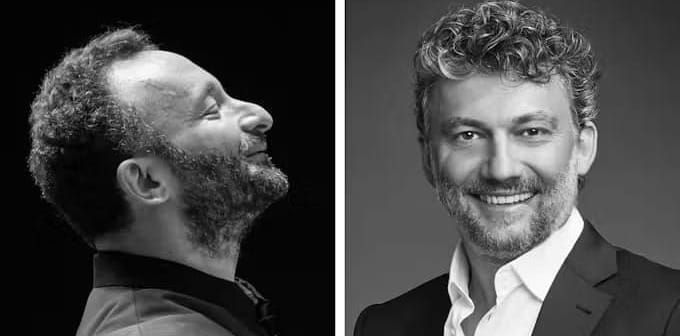
La forza del destino opens the doors of Carnegie Hall once again. Love is lost in despair, then confessed again. And the clown begins to speak:
“You are about to witness not a play, but the story of real human blood and tears.”
In the end, the road leads to Rome.
Jonas Kaufmann’s Italian opera and the Berliner Philharmoniker brought that road to life inside America’s great temple of classical music.
10.8.2026
Performers
Berliner Philharmoniker
Kirill Petrenko, Chief Conductor
Jonas Kaufmann, Tenor
Program
VERDI — Overture to La forza del destino
CILEA — “È la solita storia del pastore … Anch’io vorrei” from L’arlesiana
GIORDANO — “Amor ti vieta” from Fedora
RESPIGHI — Fountains of Rome
LEONCAVALLO — “Si può? Si può?” from Pagliacci
LEONCAVALLO — Intermezzo from Pagliacci
LEONCAVALLO — “Recitar! … Vesti la giubba” from Pagliacci
RESPIGHI — Pines of Rome
The Berliner Philharmoniker, conducted by Kirill Petrenko, opened Carnegie Hall’s 2026–27 season gala with Verdi’s Overture to La forza del destino. Then Jonas Kaufmann entered, followed by tenor arias from Cilea’s L’arlesiana and Giordano’s Fedora.
With Respighi’s Fountains of Rome, the orchestra turned from opera toward the city itself. Fountains, light, the city, time. From opera to Rome's landscapes.
The second half moved into Leoncavallo’s Pagliacci. It begins with “Si può? Si può?”—“May I?”—as the clown addresses the audience:
“You are about to witness not a play, but the story of real human blood and tears.”
The drama begins with this declaration that what follows is not fiction, but the exposure of human life itself.
After the Intermezzo, Kaufmann returns as Canio with “Recitar! … Vesti la giubba”—“Put on the costume and perform.” The man who must play the clown reveals the betrayal and anguish waiting behind the stage.
And finally, the road leads back to Rome with Respighi’s Pines of Rome.
カーネギーホール・オープニング・ナイト・ガラ — ベルリン・フィ
運命の力は再びカーネギーの扉を開き、恋に絶望し、再び愛を告白する。そして道化は語りだす。「これから皆様がご覧になるのは、作り物の劇ではなく、生身の人間の血と涙の物語」最後はローマへと続く街道を進む。カウフマンのイタリア・オペラとベルリン・フィルがアメリカのクラシック音楽の殿堂でローマへ続く街道を鳴らす。
ベルリン・フィル、指揮キリル・ペトレンコ、テノールのヨナス・カウフマンのカーネギー・ホールの2026–27シーズンガラ。ヴェルディ《運命の力》序曲でオーケストラが劇場の幕を開け、カウフマンが登場する。チレア《アルルの女》、ジョルダーノ《フェドーラ》からテノールのアリアが続く。レスピーギ《ローマの噴水》では、オーケストラがローマを映し出す。噴水、光、都市、時間。オペラからローマの風景へ。
後半はレオンカヴァッロ《道化師》。冒頭の「Si può? Si può?(よいでしょうか?)」から始まる。これから皆様がご覧になるのは、作り物の劇ではなく、生身の人間の血と涙の物。そんな内容を語り出すところから劇が始まる。間奏曲を挟み、カニオを歌うカウフマンが「Recitar! … Vesti la giubba(芝居をしろ! 道化服を着ろ)」と歌う。道化を演じる男が、舞台裏の裏切りと苦悩を訴える。最後はレスピーギ《ローマの松》。

Comments ()