Met brings Strauss back / Die Frau ohne Schatten

At the Met, Die Frau ohne Schatten has begun. In the pit, showing the score, is Maroon, now in his 11th year—always appreciated for his hard work. This was Hofmannsthal’s fourth collaboration with Strauss, which premiered in Vienna in 1919. The opera unfolds a mystery-filled romance, celebrating love and compassion through grand orchestration. With two intermissions and a four-hour runtime, it feels like a flight from New York to Chicago, offering the satisfaction of three concerts in one evening.
The story is imaginative, and Strauss’s masterful orchestration and songwriting shine throughout. Kapellmeister Yannick Nézet-Séguin was exceptional, bringing his own character to every theme and ensemble while guiding the orchestra through a kaleidoscopic range of expression, maintaining transparency, playfulness, and power. He sometimes raised both arms to the brass, shaking his head as they sounded—he embodied the Met Orchestra's shadows and essence. Strauss’s techniques for conveying emotions, perfected in Salome, Elektra, Der Rosenkavalier, and Ariadne auf Naxos, are abundantly present, and Yannick and the orchestra’s breathing and attention communicated every nuance.
For example, the flute conveys magic, a husband’s tenderness, or a wife or empress’s emotions, sometimes accompanying a song, sometimes in solo passages, each with distinct color and character. Even in subtle final notes, the clarinet stands out, revealing Strauss’s wit. Long violin and cello solos draw the listener further into the story, while Yannick maintains a smooth flow that resurrects Strauss at the Met. The strings can be venomous, golden, or crystalline; the woodwinds’ reeds are precise; harp and percussion balance perfectly. The band effects were well considered, though the organ and some voices came through the speakers, which was unfortunate—likely due to budget constraints.
The singers were all superb. Lindström resembled a Brünnhilde; the older ladies in the audience insisted she couldn’t be a wife—more like an initial greeting. Vandenheever was like Salome. Lasserre-Thomas had a strong, compelling voice. Yet Yannick’s Strauss made me long to hear Berlioz. When the cello solo in Act II resonated through the hall, I felt a warm, at-home comfort in this venue where I’ve been coming for over twenty years.
Met brings Strauss back to New York.
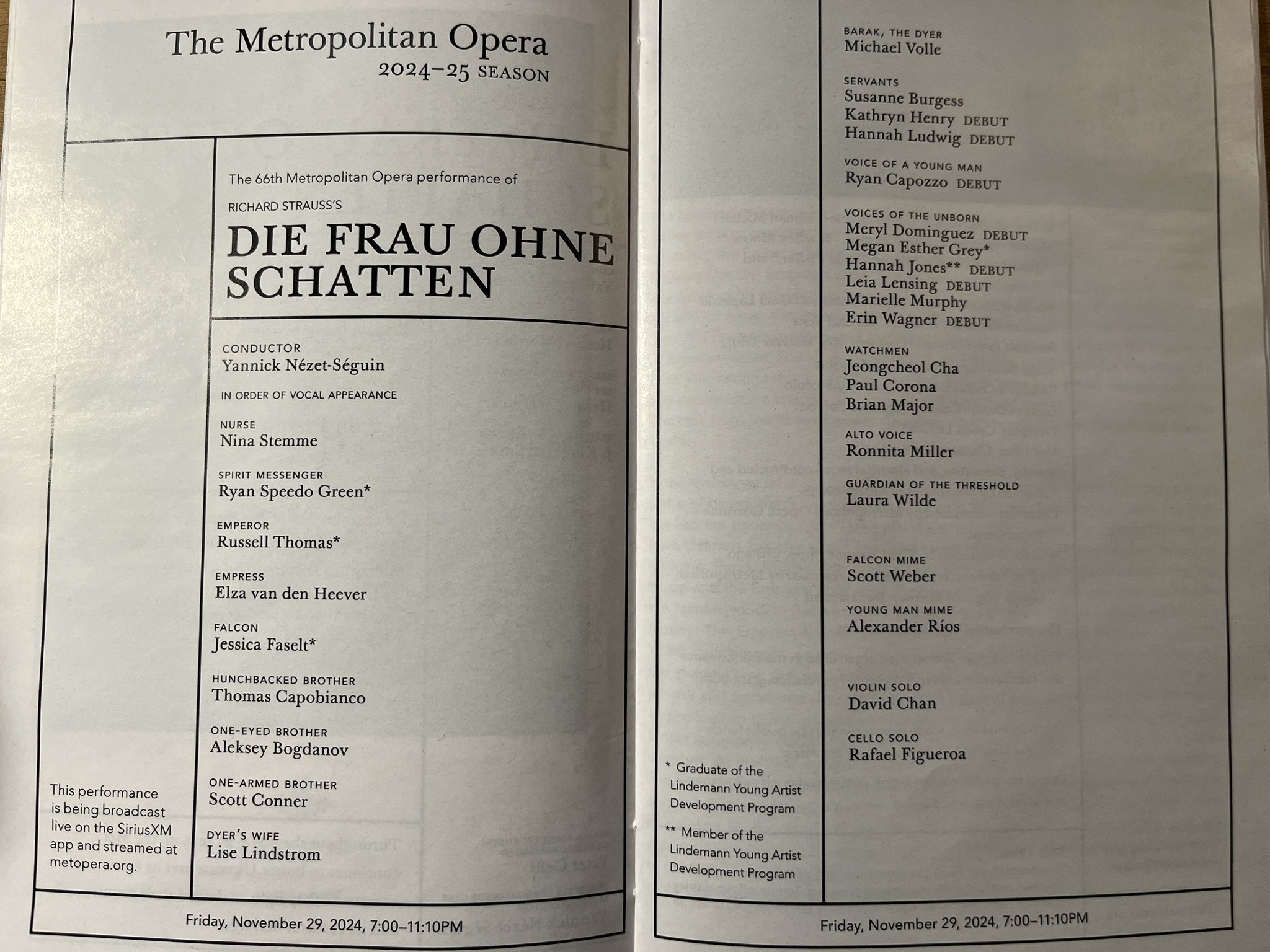
Friday, November 29, 2024 7:00–11:10 pm at The Met Opera, New York
RICHARD STRAUSS
CONDUCTOR, Yannick Nézet-Séguin
NURSE, Nina Stemme
SPIRIT MESSENGER, Ryan Speedo Green
EMPEROR, Russell Thomas
EMPRESS, Elza van den Heever
DYER'S WIFE, Lise Lindstrom
BARAK, THE DYER, Michael Volle
メットでシュトラウスの影のない女が始まった。ピットで楽譜を見せてくれているのは、勤続11年目のマルーンだ。いつもご苦労様です。ホフマンスタールと4作目、1919年にウィーンで初演。神秘とロマンに満ちた愛と慈しみを壮大なオーケストレーションと共に歌い上げていく。休憩2回4時間。ニューヨークからシカゴの飛行時間だ。演奏会に3回行ったくらいの満足感。中々奇抜な物語にシュトラウスの巧みな管弦楽と歌曲の数々が繰り広げられるが、カペルマイスター、ヤニックのぼうが素晴らしく、どのテーマとアンサンブルにも彼の個性とオーケストラが良く反応して、目まぐるしく変わる表現を透明で遊びと迫力に溢れた音楽の流れで、一瞬でもオペラの面白さから意識が逸れることがなかった。時に両腕をブラスに構えて顔をブルブル振ってブラスが鳴る。彼は影そのものでメットオーケストラそのものなのだ。シュトラウスがサロメやエレクトラ、薔薇の騎士、アリアドネなどで喜怒哀楽を音楽にして来た技がこのオペラにはふんだんに盛り込まれていて、それら一つ一つにヤニックとオケの呼吸や興味が伝わっていた。例えばフルートは魔法、夫の慈愛、妻や皇后などなど様々な感情表現に歌の伴奏やソロで演奏されるが、それぞれ音色も表現も違って面白い。クラリネットは、ほんの少しそのフレーズの最後に加わる音色さえクリアで存在感に溢れていてシュトラウスの面白さをより知ることができる。バイオリンとチェロに長い独奏があり、いつのまにか物語に引き込まれていく。ヤニックのぼうが澱みない流れを作りシュトラウスがメットに蘇る。弦は時に毒毒しく、時に黄金に、クリスタルに、木管のリードもばっちり。ハープや打楽器のバランス。バンダの効果もよく考えられていたが、オルガンと一部の声はスピーカーからでていて残念。予算か。歌手はみんな素晴らしかったが、リンドストロームはブリュンヒルデの様だった。おばちゃんたちも、あれは妻ではないと。まあ最初の挨拶の様なものだ。バンデンヒーバーはサロメの様だった。ラッセルトーマスが張りがあっていい声だった。しかしヤニックのシュトラウスはベルリオーズが聴きたくなる。2幕のチェロのソロの音色がハウスいっぱいに鳴り響いた時、20年以上通って来たこの場所にアットホームな居心地の良さ感じた。
Elza van den Heever as Kaiserin
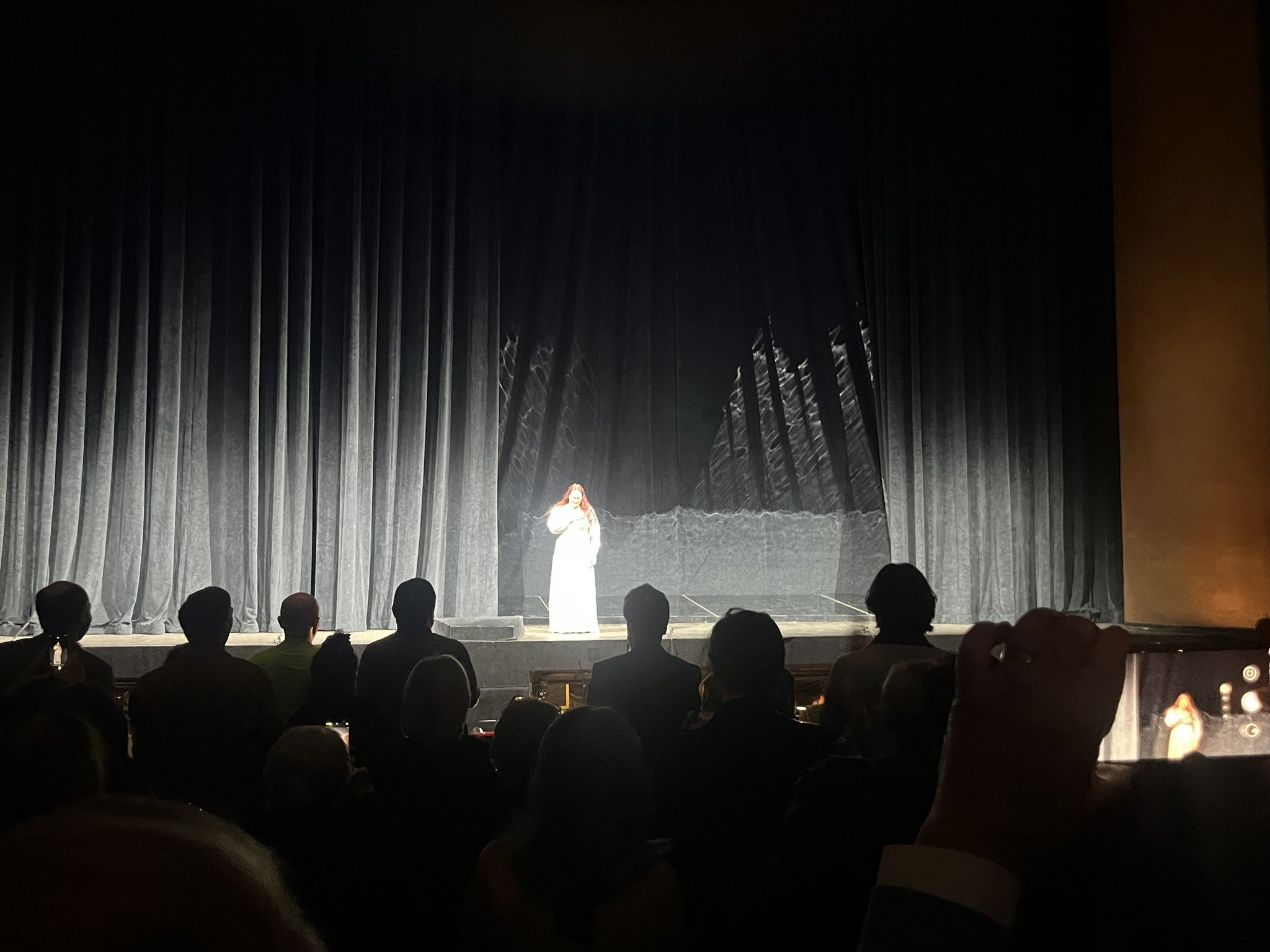
バンデンヒーバーはディーバと呼ぶにはあまりにも身近な存在。気取りがないのに歌は抜群。
メットオーケストラ、コンサートマスターのデビットとチェロのラファエル。どのソロも素晴らしかった。
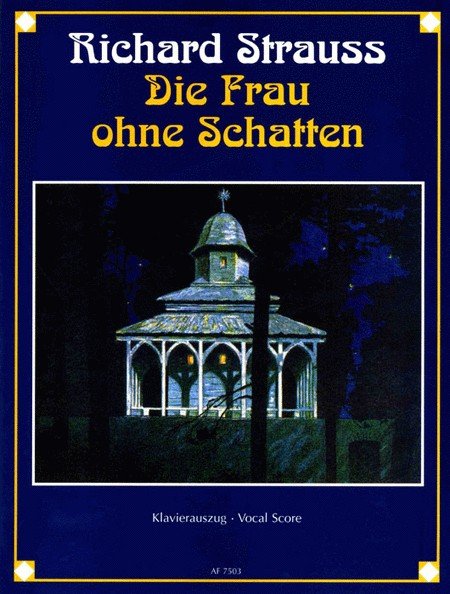
1919年、1次大戦開戦の翌年にウィーンで初演された。1幕ダイクの慈愛のテーマ。
Comments ()